
Children’s Anger Outbursts Solutions: A Parent’s Guide

TL;DR:
- Managing children’s anger outbursts requires understanding their triggers and modeling calm behavior to teach emotional control effectively.
- Consistent routines, clear expectations, and professional therapies like PMT, PCIT, or CBT significantly reduce outburst frequency and severity over time.
Your child slams the door so hard the pictures rattle. Or drops to the floor screaming because dinner wasn’t what they wanted. You feel exhausted, embarrassed, and honestly a little lost. You are not alone. Children’s anger outbursts solutions are not one-size-fits-all, but the research is clear: parents who learn specific, evidence-based strategies see real, lasting change in their children’s behavior. This guide walks you through exactly what to do, step by step.
Table of Contents
- Key takeaways
- Children’s anger outbursts solutions start with understanding why
- Building the foundation before the next outburst hits
- Practical strategies for managing outbursts in the moment
- Monitoring progress and sustaining long-term change
- My perspective after years of working with angry kids and exhausted parents
- When professional support makes all the difference
- FAQ
Key takeaways
| Point | Details |
|---|---|
| Know the triggers | Frustration, unmet needs, and poor communication are the most common sparks for outbursts in children. |
| Model calm behavior | Children mirror parents, so your regulated response directly teaches your child emotional control. |
| Use proven therapies | PMT and PCIT show a 65%–77% success rate in reducing outburst frequency and intensity at six months. |
| Reinforce the positive | Praising self-regulation attempts works better than punishment for reducing aggressive behavior long-term. |
| Get help early | Professional support through CBT or family therapy prevents mild outbursts from becoming chronic behavioral patterns. |
Children’s anger outbursts solutions start with understanding why
Before you can fix the problem, you need to understand what is driving it. Anger is a normal emotion at every age. It only becomes a clinical concern when it happens frequently, lasts a long time, or causes harm to the child or others.
Several factors typically fuel children’s outbursts:
- Frustration with unmet needs. Hunger, fatigue, and overstimulation are the most underestimated triggers, especially in kids under eight. A child who missed their nap is operating with a much shorter fuse than usual.
- Communication gaps. Children who lack the vocabulary to name what they feel default to behavior instead of words. The anger you see is often grief, fear, or shame wearing a loud costume.
- Inconsistent boundaries at home. When rules change depending on who is in the room or how tired the parent is, children lose their sense of safety. That uncertainty often comes out as defiance or explosive behavior.
- Underlying conditions. ADHD, sensory processing differences, and anxiety disorders can all lower a child’s frustration threshold significantly. If outbursts are frequent, intense, and unresponsive to your consistent efforts, a professional evaluation is worth pursuing.
- Parental modeling. Children mirror parental anger responses, which means your emotional climate at home is either part of the solution or part of the problem.
Understanding the root cause does not excuse the behavior. It tells you where to aim your efforts so you stop repeating strategies that do not match the actual problem.
Building the foundation before the next outburst hits
Most parents try to solve anger outbursts during the explosion. That is the hardest moment to teach anything. The real work of child anger management happens between episodes.
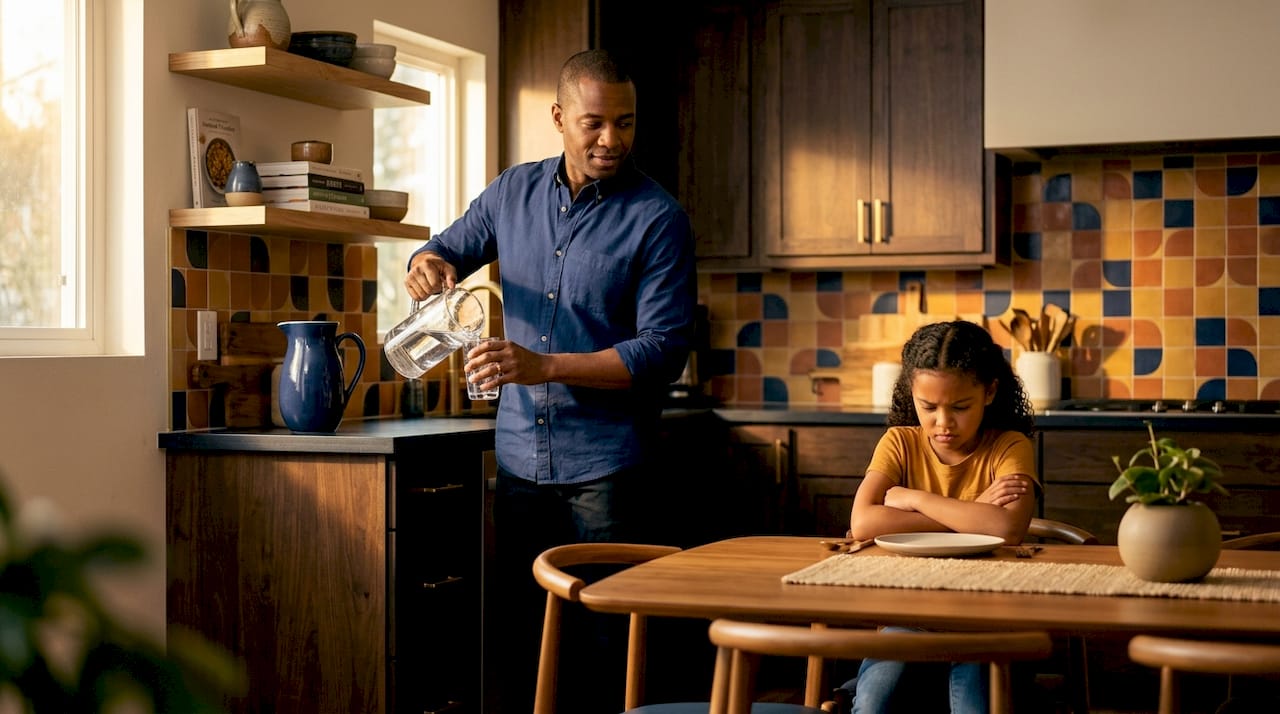
Start with your own regulation. When you stay calm during your child’s outburst, you are not being passive. You are modeling the exact skill you want your child to develop. Calm parental responses directly shape a child’s ability to self-regulate over time. Yelling back, threatening, or punishing harshly in the heat of the moment teaches a child that big emotions justify big reactions.
Set rules that your child understands before the anger arrives, not during it. The distinction matters: feeling angry is always acceptable; throwing things or hitting is not. Make that line crystal clear and repeat it during calm moments. Children need to hear expectations when their brains are receptive, not when they are flooded with emotion.
Predictable daily routines are one of the most underused calming strategies for kids. When children know what comes next, they feel safer. That sense of safety reduces the ambient anxiety that often feeds explosive behavior. A consistent after-school schedule, a reliable bedtime routine, and regular mealtimes make a measurable difference.
- Label emotions out loud throughout the day, not just during conflict. “You look frustrated that the game is taking so long” teaches your child the emotional vocabulary they need to communicate before they explode.
- Create a calm-down corner stocked with items your child finds soothing: a stress ball, a favorite book, noise-canceling headphones. Introduce it during a good moment, not as a punishment.
- Practice deep breathing together when everyone is relaxed. Trying to teach a breathing technique to a child mid-meltdown rarely works.
Pro Tip: Try the “emotion check-in” at dinner every night. Each person names one feeling they had that day. Over time, this builds the emotional vocabulary that reduces blow-ups dramatically.
Practical strategies for managing outbursts in the moment
When the outburst is already happening, your response determines how long it lasts and what your child learns from it. Here is a step-by-step approach that draws on the most effective children’s anger management techniques available.
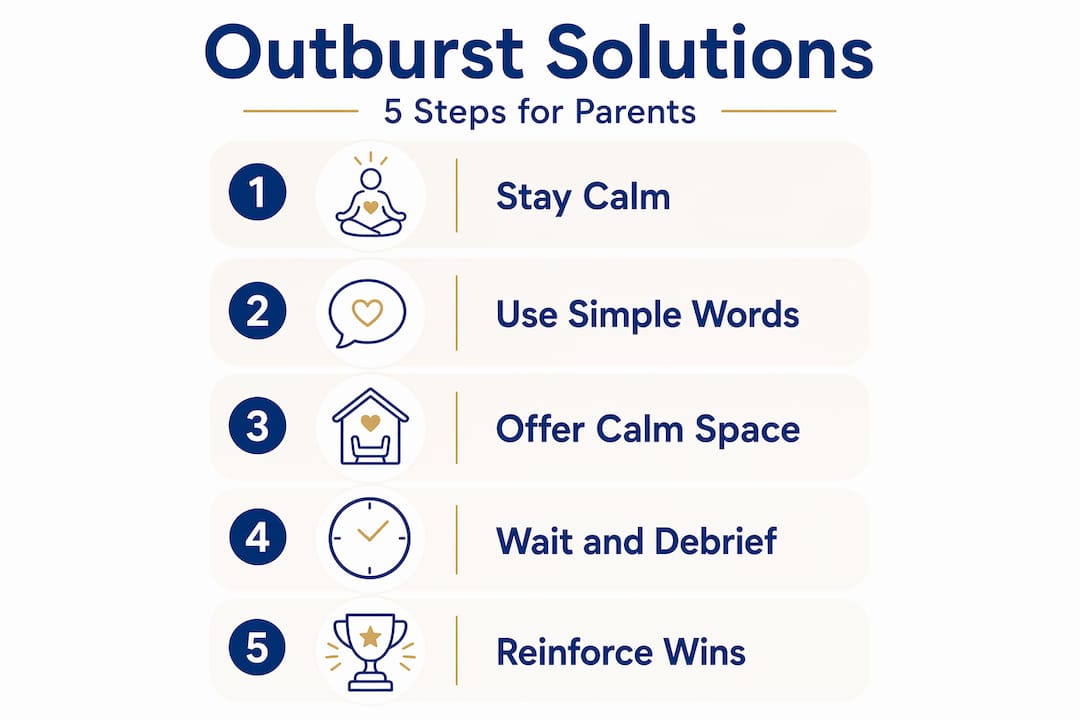
1. Stay regulated yourself first. Take one slow breath before you respond. Your nervous system is contagious, and so is your child’s.
2. Use simple, concrete language. During high emotion, children cannot process multi-step instructions or lengthy explanations. “Feet on the floor. Voice quiet” works. “How many times have I told you to stop this?” does not.
3. Offer a calm space, not a punishment. Direct your child to their calm-down corner. Frame it as help, not exile. “Go grab your stress ball. I’ll be right here when you’re ready to talk.”
4. Wait before problem-solving. Attempting to reason with a child who is still escalating wastes your energy and extends the episode. Wait until their body is physically calmer, then connect before you correct.
5. Debrief after. Once calm returns, spend five minutes talking through what happened. Ask what they felt, what set it off, and what they could try next time. This is where the real learning happens.
6. Reinforce the win. Positive reinforcement for self-regulation is more effective than punishment in reducing outbursts long term. When your child catches themselves and uses a coping skill, name it specifically. “You felt really angry and you walked away instead of hitting. That took real strength.”
For structured support beyond what you can do at home, two therapy models stand out. Behavioral interventions like PMT and PCIT reduce outburst frequency and intensity significantly, with strong success rates at the six-month mark. School-embedded PCIT goes even further: 90% of children improve to non-clinical behavior levels after treatment. These programs work because they coach parents live and reinforce skills consistently across both home and school.
| Therapy | Best for | Core method | Key benefit |
|---|---|---|---|
| Parent Management Training (PMT) | Ages 3–12 | Teaches parents behavioral reinforcement strategies | Reduces defiance and aggression at home |
| Parent-Child Interaction Therapy (PCIT) | Ages 2–7 | Live coaching of parent-child interactions | Immediate skill transfer in real situations |
| Cognitive Behavioral Therapy (CBT) | Ages 7 and up | Identifies triggers and builds coping responses | Teaches kids to interrupt the anger cycle early |
| Multisystemic Therapy (MST) | Teens with persistent aggression | Addresses family, school, and peer dynamics | Targets all environments driving behavior |
CBT helps children recognize the early signs of escalating anger and replace reactive behavior with deliberate coping strategies. For anger management techniques for 10 year olds specifically, CBT is often the right starting point because children that age can engage with cognitive concepts meaningfully.
Pro Tip: When choosing a therapist, look for one trained specifically in PMT or PCIT rather than a generalist. Specialized training makes a real difference in outcomes for managing child anger.
You can also explore anger management activities for kids that reinforce these clinical concepts through play and daily practice at home.
Monitoring progress and sustaining long-term change
Managing children’s anger outbursts is not a two-week fix. Progress is real, but it rarely moves in a straight line. Knowing what to look for helps you stay the course when things feel stuck.
Signs that your approach is working include:
- Outbursts are shorter in duration, even if they still occur
- Your child recovers faster and is open to connection sooner after episodes
- Your child begins using coping language like “I’m frustrated” before or instead of exploding
- You notice fewer triggers setting off a full meltdown
Setbacks are not failures. They are information. When a bad week hits, ask whether something has changed: a new stressor at school, less sleep, a disrupted routine. Most regressions have a cause, and finding it matters more than judging the relapse.
“The families who make the most progress aren’t the ones with the easiest kids. They’re the ones who stay consistent and reach out for help when they’re stuck.” This reflects what research consistently confirms: parental stress and anxiety negatively affect treatment outcomes, making your own mental health part of the treatment plan for your child.
When to seek professional help:
- Outbursts involve physical aggression toward people or property repeatedly
- Your child’s anger is affecting their ability to function at school or maintain friendships
- You have tried consistent behavioral strategies for six to eight weeks without improvement
- You suspect an underlying diagnosis like ADHD, anxiety, or oppositional defiant disorder
For older children and teens, family-based approaches that address relationship dynamics produce better outcomes than individual therapy alone. The anger may live in your child, but it often grows in the system around them.
Effective parent training works best when it includes ongoing coaching and skill reinforcement, not just a single session or handout. Look for programs that follow up over weeks and adapt to your specific situation. You can also review counseling options for children to understand which therapeutic approaches best match your child’s age and presentation.
My perspective after years of working with angry kids and exhausted parents
I have sat across from hundreds of parents who walked into my office convinced their child was broken. What I have found, almost without exception, is that the child’s anger was a signal, not a sentence.
What I have seen work, again and again, is parents who shift their focus from stopping the outburst to building the skill. Those two goals feel similar but require completely different approaches. Stopping an outburst is reactive. Building the skill is proactive, patient, and honestly harder.
The parents who struggle the most are not the ones with the most explosive kids. They are the ones who are also drowning in their own stress, shame, or conflict. You cannot consistently teach emotional regulation when you yourself are running on empty. Getting your own support is not a luxury. It is part of the treatment plan.
I also want to say plainly: the pacing of progress will frustrate you. A child who throws fewer tantrums after three weeks may backslide hard in week five. That is normal developmental learning, not evidence that nothing is working. Stay the course. Document what you see. Celebrate small wins with the same energy you bring to tracking setbacks.
The goal is not a child who never feels anger. The goal is a child who knows what to do with it. That is a learnable skill, and your consistent presence is the most powerful teaching tool in the room.
— Carlos
When professional support makes all the difference
If you have worked through these strategies and feel like you are still spinning your wheels, it is time to bring in clinical expertise. You do not have to figure this out alone.

At Masteringconflict, the team offers clinical services specifically designed for children struggling with anger and behavioral challenges, including formal assessments, individual therapy, and family counseling rooted in evidence-based models like PCIT and CBT. If scheduling in-person appointments is a barrier, teletherapy options make it possible to access qualified support from home. For families who want to start with a clear picture of what is driving their child’s behavior, an anger management assessment provides the foundation for a personalized treatment plan. Understanding child therapy can also help you feel more prepared before your first appointment. Reach out to book a consultation and take the next concrete step toward real change.
FAQ
What are the most effective children’s anger outbursts solutions?
The most effective solutions combine consistent behavioral strategies at home with evidence-based therapies like PMT, PCIT, or CBT. Research shows these approaches reduce outburst frequency significantly within six months.
What anger management techniques work best for 10 year olds?
CBT is particularly effective for 10 year olds because children that age can engage with concepts like identifying triggers and using coping strategies deliberately. Pair it with consistent routines and positive reinforcement at home for best results.
How do I stop my child’s anger outburst in the moment?
Stay calm, use short and clear instructions, and guide your child to a designated calm-down space. Avoid reasoning or lecturing until the child’s body has returned to a calm state.
When should I seek professional help for my child’s anger?
Seek professional support if outbursts involve repeated physical aggression, are disrupting school or friendships, or have not improved after six to eight weeks of consistent home-based strategies.
Can parental stress affect my child’s anger treatment?
Yes. Research confirms that parental stress and anxiety negatively impact the outcomes of parent training programs, which is why addressing your own mental health is a real part of helping your child.