
Is teletherapy effective? Evidence, outcomes, guidance

TL;DR:
- Research shows teletherapy is equally effective as in-person therapy for anxiety, depression, and conflict work.
- Digital family therapy outcomes are promising, with some outcomes even surpassing face-to-face interventions.
- Success depends more on client engagement, therapist skill, and preparation than on the delivery format.
Most people assume therapy only works when you’re sitting across from a clinician in a quiet office. That assumption is being challenged by a growing body of research. Meta-analyses show equivalence between teletherapy and in-person therapy for conditions like anxiety, depression, and systemic psychotherapy. If you’ve been skeptical about online counseling for anger management, conflict resolution, or family issues, the evidence might surprise you. This guide breaks down what the science actually says, where the nuances live, and how to make teletherapy work for you.
Table of Contents
- What science says: Teletherapy versus in-person
- Family therapy and systemic interventions: Nuanced evidence
- The strengths and limitations of teletherapy
- Expert guidelines and practical tips for teletherapy success
- Our perspective: What matters most for teletherapy outcomes
- Discover effective teletherapy resources for anger, conflict, and family needs
- Frequently asked questions
Key Takeaways
| Point | Details |
|---|---|
| Evidence supports efficacy | Meta-analyses show teletherapy achieves outcomes comparable to traditional therapy for many mental health conditions. |
| Family counseling viable | Digital delivery is as effective as face-to-face for most family and systemic therapy scenarios, though data can be mixed. |
| Strengths and challenges | Teletherapy offers access and flexibility but requires careful attention to technical reliability and crisis management. |
| Guidelines matter | APA sets clear standards for teletherapy, emphasizing therapist competence, consent, and privacy. |
| Client engagement is crucial | Successful teletherapy depends on active client participation and therapist skill in online formats. |
What science says: Teletherapy versus in-person
For years, the assumption was simple: face-to-face therapy is the gold standard, and anything online is a compromise. The latest research tells a different story.
Multiple meta-analyses confirm that teletherapy shows non-inferiority or equivalence to in-person therapy for anxiety and depression. That means online sessions aren’t just “good enough.” In many cases, they produce outcomes that are statistically indistinguishable from traditional therapy. A separate large-scale review found that teletherapy is as effective as in-person therapy across mental health conditions including depression and anxiety, with comparable effect sizes.
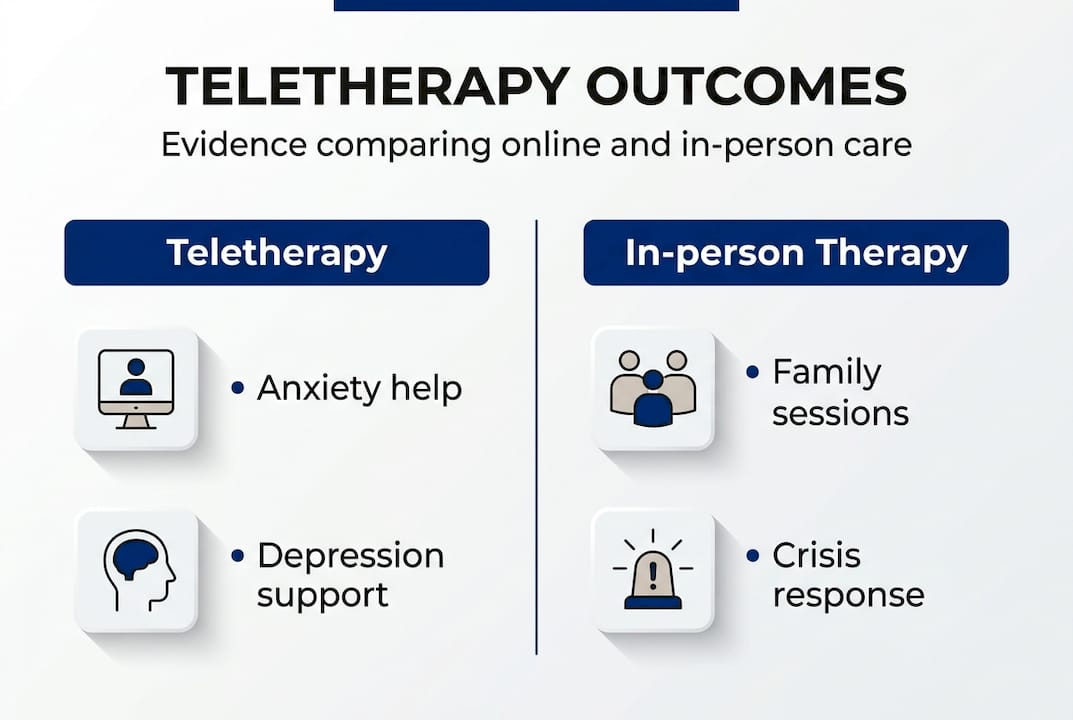
Effect sizes for teletherapy tend to fall in the small-to-moderate range, which mirrors what you’d expect from in-person interventions. That consistency matters. It means the format itself isn’t the limiting factor. What drives outcomes is the quality of the therapeutic relationship, the structure of the intervention, and client engagement.
Here’s a quick comparison of how teletherapy and in-person therapy stack up across key outcome areas:
| Outcome area | Teletherapy | In-person therapy |
|---|---|---|
| Anxiety reduction | Equivalent | Equivalent |
| Depression symptoms | Equivalent | Equivalent |
| Client satisfaction | Comparable | Comparable |
| Treatment dropout | Similar rates | Similar rates |
| Anger and conflict work | Emerging evidence | Established |
For those exploring teletherapy best practices, a few outcomes stand out:
- Symptom reduction for anxiety and depression is well-documented across formats
- Client satisfaction scores are consistently comparable between modalities
- Dropout rates do not significantly differ, which suggests teletherapy holds engagement
- Anger and conflict-focused work is increasingly supported by digital delivery research
If you’re considering teletherapy counseling for the first time, these findings should give you confidence that the format won’t compromise your progress.
Family therapy and systemic interventions: Nuanced evidence
General effectiveness is one thing. But what about the more complex work of family therapy and systemic interventions, where multiple people are involved and dynamics can shift quickly?
Systematic reviews of digital family therapy show comparable efficacy between online and face-to-face approaches, though the data is heterogeneous. That word matters. Heterogeneous means the studies vary in design, population, and outcome measures, so we can’t draw perfectly clean conclusions. What we can say is that the overall picture is encouraging.
In randomized controlled trials (RCTs) focused on systemic psychotherapy, digital delivery was actually superior for 18% of measured outcomes. Face-to-face therapy was superior for only 5% of outcomes. For the remaining 75%, equivalence was unclear, meaning neither format had a decisive edge. That’s not a failure of teletherapy. It’s a reflection of how complex family dynamics are to measure.
“The evidence suggests digital family therapy is not a lesser option. It’s a different delivery vehicle for the same clinical work.”
Here’s a breakdown of what RCT data shows for systemic psychotherapy:
| Outcome comparison | Percentage of RCT outcomes |
|---|---|
| Digital superior | 18% |
| Face-to-face superior | 5% |
| Equivalence unclear | 75% |
| Attrition differences | None significant |
| Session number differences | None significant |
A few key takeaways for anyone considering online couples therapy benefits or family counseling:
- No significant differences in dropout rates between digital and in-person family sessions
- Session frequency and duration remain consistent across formats
- Outcome uncertainty doesn’t mean ineffectiveness; it means more research is needed
- Digital delivery may actually outperform in-person for certain structured family interventions
The honest truth is that family therapy via teletherapy is a legitimate, evidence-backed option. The uncertainty in 75% of outcomes isn’t a red flag. It’s a call for better-designed research, not a reason to avoid online family counseling.
The strengths and limitations of teletherapy
Beyond the statistics, teletherapy has real-world advantages and real-world constraints. Understanding both helps you set realistic expectations and prepare effectively.
Strengths that matter for anger, conflict, and family work:
- Improved access: People in rural areas or those with transportation barriers can connect with specialized counselors they couldn’t otherwise reach
- Scheduling flexibility: Evening and weekend sessions are easier to arrange, which matters for couples and families with busy schedules
- Comfort of home: Some clients open up more readily in their own environment, which can accelerate progress in anger and conflict work
- Broader therapist selection: You aren’t limited to providers in your zip code, which means you can find someone with specific expertise in anger management or family conflict
Limitations you should know about:
Challenges in teletherapy include reduced non-verbal cues, technical disruptions, crisis management difficulties, and potential access inequities for those without reliable internet. These aren’t minor inconveniences. A therapist who can’t see your full body language may miss subtle signs of distress. A dropped connection mid-session can disrupt emotional momentum.
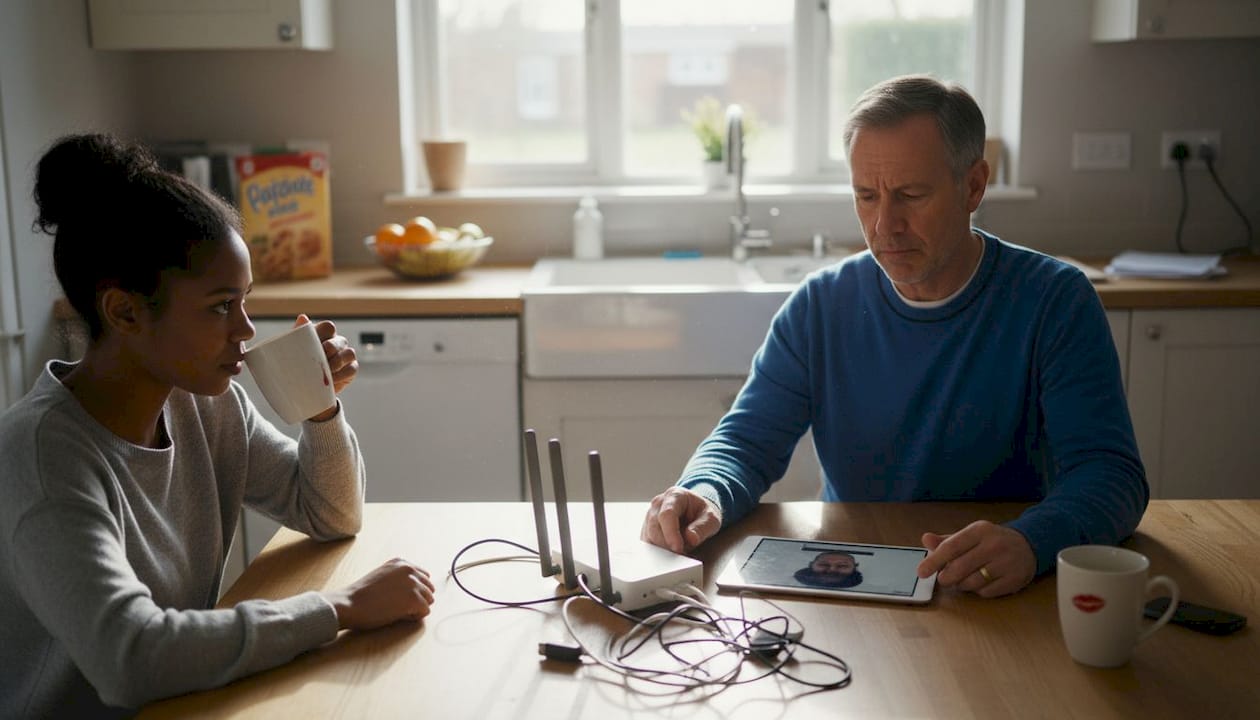
For anger management classes specifically, the structured nature of online sessions can actually work in your favor. But crisis situations, severe psychiatric conditions, or cases requiring physical intervention are better handled in person.
When teletherapy is a strong fit:
- Mild to moderate anxiety, depression, or anger concerns
- Conflict resolution and communication skill-building
- Ongoing couples or family counseling with stable dynamics
- Clients who have already established a therapeutic relationship
When in-person is the better choice:
- Active crisis or suicidal ideation
- Severe or complex trauma requiring somatic approaches
- Clients with limited digital literacy or unreliable internet
Pro Tip: Before your first session, test your internet connection, find a private room, and ask your therapist about their crisis protocol if you’re dealing with high-intensity anger or conflict. Knowing the plan in advance reduces anxiety and keeps sessions productive. You can also explore evidence-based anger strategies to supplement your sessions.
Expert guidelines and practical tips for teletherapy success
Knowing the evidence is one thing. Knowing how to choose and prepare for teletherapy is another. Professional guidelines give you a framework for making smart decisions.
The 2024 APA guidelines for telepsychology address therapist competence, informed consent, privacy protection, and clinical best practices. These aren’t suggestions. They’re standards that licensed teletherapists are expected to follow. When you’re choosing an online therapist, these guidelines give you a checklist for what to look for.
Here’s a practical numbered checklist for choosing and preparing for teletherapy:
- Verify licensure: Confirm your therapist is licensed in your state and has specific training in telepsychology
- Ask about privacy: Ensure sessions are conducted on HIPAA-compliant platforms
- Clarify consent: You should receive and sign informed consent documents before your first session
- Discuss your goals: Be specific about whether you’re seeking help for anger, conflict, family dynamics, or individual issues
- Prepare your space: Choose a private, quiet location with reliable internet for every session
- Set backup plans: Know what to do if the connection drops or a crisis emerges during a session
- Evaluate fit: After two or three sessions, assess whether the therapist’s digital delivery style works for you
For anger reduction through therapy, the structure and consistency of your sessions matter as much as the format. The same applies to teen anger management, where parental involvement and clear session goals are especially important in a digital setting.
Pro Tip: At the start of your first session, tell your therapist exactly what you hope to achieve and ask how they typically structure online work. Therapists who are skilled in digital delivery will have a clear answer. Those who don’t may not be the right fit for teletherapy.
Our perspective: What matters most for teletherapy outcomes
The research is promising, but it doesn’t tell the full story. After working with clients across anger management, conflict resolution, and family counseling in digital settings, we’ve learned something the studies don’t always capture: the technology is the least important part.
What actually drives teletherapy outcomes is client readiness, therapist digital competence, and the quality of the therapeutic relationship. A technically perfect session on a flawless platform with a disengaged client will produce nothing. A slightly glitchy session with a motivated client and a skilled therapist can be transformative.
The contrarian insight here is that people often spend too much time worrying about whether teletherapy “counts” as real therapy, and not enough time preparing to engage fully. Confidentiality, behavioral goals, and crisis planning matter far more than the delivery format.
“Effectiveness isn’t just about format. It’s about connection, engagement, and readiness for behavioral change.”
If you’re pursuing proven anger management strategies through an online platform, prioritize finding a therapist who is specifically trained in digital delivery. That expertise changes everything.
Discover effective teletherapy resources for anger, conflict, and family needs
If you’ve read this far, you’re serious about finding real support. That’s exactly who we work with at Mastering Conflict.
Our clinical services are designed for individuals, couples, and families navigating anger, conflict, and relationship challenges through online therapy. Whether you need a structured anger management assessment to understand your patterns or you’re a practitioner seeking clinical supervision in telepsychology delivery, we have specialized options built for digital formats. Our team brings evidence-based approaches to every session, tailored to your specific goals and circumstances. Take the next step and connect with professionals who understand both the science and the practice of effective teletherapy.
Frequently asked questions
Is teletherapy as effective as in-person therapy for anger management?
Recent studies confirm teletherapy is generally as effective as in-person therapy for anger management, though therapist digital competence and client engagement are key factors that shape outcomes.
Are there any limitations to teletherapy for family counseling?
Teletherapy shows comparable efficacy for family counseling, but outcomes depend on session structure, engagement, and clear communication since physical cues are more limited online.
What challenges should I expect with teletherapy?
Common challenges include technical disruptions, reduced non-verbal cues, and crisis management difficulties, all of which proper preparation and a skilled therapist can significantly reduce.
How can I maximize my teletherapy experience?
Communicate your goals clearly from session one, have a backup plan for connectivity issues, and choose a therapist with verified experience in digital delivery, as APA guidelines emphasize competence and informed consent as foundational to effective telepsychology practice.
Recommended
- Teletherapy Best Practices: Effective Online Counseling – Mastering Conflict
- Online therapy for teens: parent’s guide to support 2026 – Mastering Conflict
- Top Couples Therapy Benefits for Families in 2025 – Mastering Conflict
- How to Find a Therapist for Effective Support – Mastering Conflict
- Online therapy safety for UK adults: 2026 guide