
Coping With Workplace Conflict: Practical Steps for Resolution

TL;DR:
- Workplace conflict reflects diverse priorities and communication styles, impacting productivity and morale.
- Preparing with empathy, clarity, and goal-setting enhances conflict resolution effectiveness.
- Developing conflict intelligence helps teams address issues proactively and build trust.
Workplace conflict is not a sign that something has gone terribly wrong. It’s a sign that real people with different priorities, communication styles, and pressures are working together. Still, the cost is staggering. Employees spend 2.8 hours weekly dealing with conflict, adding up to $359 billion annually in lost productivity across the US. Most professionals know conflict happens, but far fewer know how to handle it well. This guide walks you through exactly what workplace conflict is, how to prepare for it, how to resolve it step by step, and how to avoid the mistakes that keep disputes from getting better.
Table of Contents
- Understanding workplace conflict and its impact
- Preparing to address conflict: Mindset and groundwork
- Step-by-step: Effective conflict resolution techniques
- Troubleshooting: Common mistakes and how to address obstacles
- A fresh perspective: Why embracing conflict transforms teams
- Next steps: Professional support for lasting conflict resolution
- Frequently asked questions
Key Takeaways
| Point | Details |
|---|---|
| Conflict is normal | Clashes at work happen to everyone and can be managed instead of avoided. |
| Preparation matters | Understanding causes and preparing your mindset helps prevent escalation. |
| Act with empathy | Focusing on empathy and clear communication leads to better outcomes. |
| Mistakes are recoverable | Most missteps during conflict can be fixed with genuine follow-up and openness. |
| Training builds skills | Ongoing learning and support help turn conflict into an advantage for your team. |
Understanding workplace conflict and its impact
Workplace conflict is any situation where two or more people experience friction that disrupts collaboration or productivity. But not all conflict looks the same. Understanding the type you’re dealing with changes how you respond.
Task conflict involves disagreements about work processes, goals, or priorities. When handled well, it can actually push teams to think more carefully. Relationship conflict is personal. It centers on interpersonal friction, perceived disrespect, or personality clashes, and it tends to be far more damaging if left unaddressed.
Common causes professionals run into include:
- Personality clashes and communication style differences
- Unclear roles or overlapping responsibilities
- Hybrid and remote work creating visibility gaps
- Resistance to organizational change
- Unequal workloads or recognition
The business consequences of letting conflict fester go well beyond hurt feelings. Absenteeism climbs. Productivity drops. Talented people leave.
| Conflict impact | Short-term effect | Long-term effect |
|---|---|---|
| Team morale | Tension and disengagement | High turnover |
| Productivity | Missed deadlines | Loss of top performers |
| Communication | Avoidance and silence | Toxic team culture |
| Client relationships | Inconsistent service | Reputation damage |
Here’s a number that puts the stakes in perspective: 76% of employees witnessed incivility at work in the past month, and the cost of incivility to businesses runs $2 billion every single day. That’s not a soft, feel-good concern. That’s a serious operational problem.
“Most organizations treat conflict as an HR issue. The highest-performing teams treat it as a leadership skill.”
Understanding why conflict persists in workplaces gives you the clarity to stop reacting and start responding deliberately. Conflict is rarely random. When you recognize its patterns, you gain real leverage to change them.
Preparing to address conflict: Mindset and groundwork
Once you understand what you’re facing, the next step is preparation. Jumping straight into a difficult conversation without groundwork often makes things worse, not better.
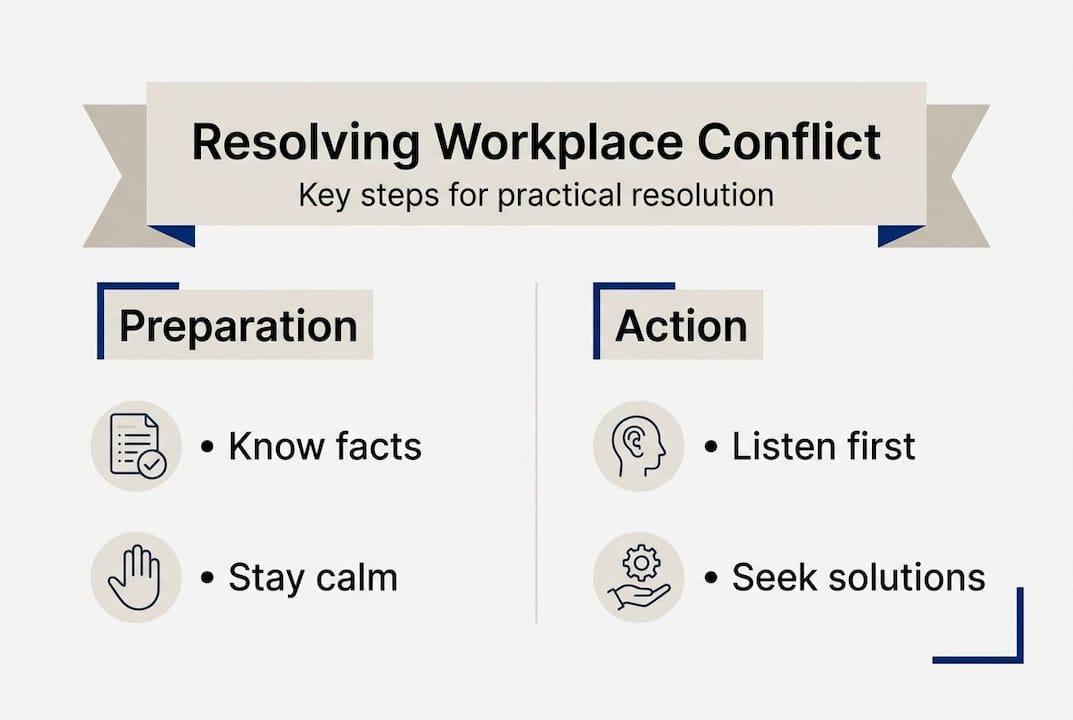
Start with your mindset. Most people enter conflict with one goal: to win, or at least to not lose. That framing keeps you stuck. Shift your intention toward resolution and mutual understanding instead. Conflict, when approached with skill, is an opportunity to strengthen a working relationship rather than damage it.
Before initiating any conversation, do some internal work:
- Gather the facts. What actually happened? What did you observe versus assume?
- Note patterns. Is this a one-time issue or part of a recurring dynamic?
- Identify your triggers. What emotional reactions are you bringing to this situation?
- Check your assumptions. Have you given the other person the benefit of the doubt?
- Set a clear intention. Are you going in to be right, or to find a workable solution?
Empathy is a skill that many professionals undervalue in conflict situations. Empathy in conflict resolution doesn’t mean agreeing with the other person. It means genuinely trying to understand what they’re experiencing and why they responded the way they did.

This matters especially in hybrid and remote settings. A short message can read as cold or dismissive when the sender meant nothing of the sort. Remote misunderstandings often resolve through empathy and clarification rather than confrontation.
Pro Tip: Before any difficult conversation, write down three possible reasons the other person may have acted the way they did. This exercise interrupts automatic negative assumptions and activates genuine curiosity.
Strong conflict resolution skills are built through practice, not instinct. Preparation is not overthinking. It’s the foundation that makes every step after this more effective.
Step-by-step: Effective conflict resolution techniques
With preparation behind you, it’s time to engage directly. Here’s a clear process you can apply to most workplace conflict situations.
- Initiate the conversation privately. Ask to speak one-on-one. Public confrontations rarely end well for anyone.
- Set the tone from the start. Open with your intention: “I want us to find a solution that works for both of us.”
- State your perspective using “I” statements. “I felt overlooked when…” lands differently than “You always…”
- Listen without interrupting. Let the other person fully explain their experience before you respond.
- Ask clarifying questions. “Can you help me understand what you meant by…?” keeps the dialog open.
- Identify shared goals. Most workplace disputes share at least one common interest. Find it.
- Agree on specific next steps. Vague resolutions dissolve fast. Put actions, owners, and timelines in writing.
Distinguishing conflict types changes what tools you reach for. Task conflict managed with “conflict intelligence” can actually improve outcomes, while unaddressed relationship conflict erodes trust fast.
| Conflict type | Best resolution approach | When to escalate |
|---|---|---|
| Task conflict | Structured discussion, shared goals | Repeated impasses |
| Relationship conflict | Mediation, empathy, 1:1 dialogue | Personal attacks or hostility |
| Remote misunderstandings | Written clarification, video call | Pattern of miscommunication |
For hybrid and remote teams, improving communication channels is especially important. Default to video when tone matters, and document agreements in writing so there’s no ambiguity later.
Pro Tip: If you manage a team, invest in conflict management training before problems escalate. Prevention costs far less than repair.
When you’re dealing with persistently difficult people, remember that their behavior often reflects their own unmet needs or fears. Shifting your frame from “this person is a problem” to “this person is struggling” opens new options for resolution.
Troubleshooting: Common mistakes and how to address obstacles
Even with preparation and the right steps, things don’t always go smoothly. Knowing where professionals most often go wrong helps you course-correct quickly.
The most common mistakes include:
- Avoiding the conversation entirely. Silence doesn’t resolve conflict. It lets it grow.
- Letting emotions lead. Strong feelings are valid, but decisions made in the middle of them rarely hold up.
- Focusing on blame instead of behavior. Blaming the person shuts conversation down. Addressing specific behavior keeps it open.
- Making assumptions about intent. People rarely conflict out of malice. Assuming the worst escalates tension unnecessarily.
- Waiting too long. Small issues are far easier to resolve than entrenched ones.
“The conversation you keep avoiding is usually the one you most need to have.”
If you hit resistance after your initial attempt, don’t abandon the process. Revisit expectations, ask whether the other person is open to mediation, or bring in a manager or HR professional as a neutral party. Escalation is not failure. It’s a tool.
Remote misunderstandings and leadership inconsistencies are among the most common obstacles in today’s workplaces. For remote teams, always clarify agreements in writing after verbal conversations. Check that your tone reads the way you intend it, especially in text-based communication. Documentation protects everyone.
And even after a resolution, keep the door open. One conversation rarely fixes everything. A brief follow-up a week later, asking how things are going, signals that resolution was genuine rather than performative.
If you’re ready to build a more structured approach to long-term resolution, looking into a treatment plan for conflict can offer a repeatable, evidence-based framework you can apply consistently.
A fresh perspective: Why embracing conflict transforms teams
Here’s the uncomfortable truth most leadership advice skips: organizations that avoid conflict don’t become peaceful. They become stagnant.
The teams that perform best over time are not the ones with the fewest disagreements. They’re the ones that have developed what researchers call “conflict intelligence,” the ability to recognize different types of conflict and respond to each with skill and intention. These teams surface problems faster, correct course before small issues become crises, and build deeper trust because people know that honesty is safe.
Most professionals have been conditioned to see conflict as a threat to harmony. But when you reframe it as information, as a signal that expectations need alignment or that something important has gone unaddressed, it becomes an asset rather than a liability.
Developing conflict management skills is not about becoming someone who loves difficult conversations. It’s about becoming someone who doesn’t run from them. That shift, replicated across a team or organization, changes everything.
Next steps: Professional support for lasting conflict resolution
Reading about conflict resolution is a strong start. Putting it into practice consistently, especially under pressure, is where most professionals need real support.
At Mastering Conflict, we offer structured conflict resolution courses designed for professionals who want more than surface-level strategies. Whether you’re navigating a recurring team dynamic or a high-stakes interpersonal situation, our evidence-based programs provide practical tools you can apply immediately. Not sure whether coaching or therapy is the right fit for your situation? Exploring the differences between coaching vs therapy can help you make the best choice for your specific needs. The right support structure makes the difference between a temporary fix and a lasting change in how you handle conflict at work.
Frequently asked questions
What are the most common causes of workplace conflict?
Workplace conflicts commonly stem from personality clashes, hybrid work visibility gaps, leadership inconsistencies, resistance to change, and remote misunderstandings. Poor communication and unclear roles amplify all of these.
How can I quickly de-escalate a tense situation with a colleague?
Stay calm, lower your voice, and focus on facts rather than feelings or blame. Empathy and clarification are the fastest routes to lowering tension and reopening productive dialog.
When should I involve a third party in workplace conflict?
If the conflict turns personal, repeats despite direct conversation, or affects team performance, mediation resolves disputes more effectively than continued one-on-one attempts. HR or a professional mediator can help.
Is all workplace conflict negative?
No. Task conflict is productive when managed with skill, pushing teams to think more carefully. Only unresolved relationship conflict consistently causes harm to individuals and team culture.
Recommended
- Effective Conflict Resolution Steps for Couples, Families, and Professionals 2025 – Mastering Conflict
- Dealing With Difficult People: Proven Strategies for Resolution – Mastering Conflict
- Mastering Empathy in Conflict Resolution: A Step-by-Step Guide – Mastering Conflict
- Conflict Management Method: Enhancing Therapy Outcomes – Mastering Conflict