
How to Argue Respectfully and Resolve Conflict Effectively

Heated disagreements can quickly turn personal, leaving even the most compassionate North Carolina couples and mental health professionals feeling discouraged. Clear, respectful communication is not just helpful, it is the foundation for resolving conflicts and building trust in both families and workplaces. By focusing on active listening, thoughtful preparation, and setting shared ground rules, you transform challenging conversations into real opportunities for connection and understanding.
Table of Contents
- Step 1: Prepare by Clarifying Your Intentions
- Step 2: Set Ground Rules for Respectful Exchange
- Step 3: Listen Actively and Validate Perspectives
- Step 4: Express Your Needs Calmly and Clearly
- Step 5: Verify Mutual Understanding and Agree on Solutions
Quick Summary
| Key Point | Explanation |
|---|---|
| 1. Clarify Your Intentions | Understand your true goals before starting a difficult conversation to enhance focus and reduce reactivity. |
| 2. Establish Ground Rules | Set clear boundaries for discussion that respect everyone’s dignity and promote constructive dialogue. |
| 3. Practice Active Listening | Engage deeply with what others say, validating their perspectives to build trust and understanding. |
| 4. Express Needs Calmly | Use ‘I’ statements to communicate your needs without triggering defensiveness and encourage collaborative solutions. |
| 5. Verify Mutual Understanding | Confirm shared comprehension and brainstorm solutions together to ensure a lasting resolution and growth. |
Step 1: Prepare by Clarifying Your Intentions
Before diving into any difficult conversation, you need to understand and articulate your true goals. Conflict resolution skills are fundamentally about knowing what you really want to accomplish.
Start by asking yourself some critical questions about your underlying intentions. Are you seeking understanding, resolution, or simply wanting to be heard? Your preparation involves three key steps:
- Identify your core objectives
- Examine your emotional state
- Determine your desired outcome
This self-reflection helps prevent reactive responses and creates space for constructive dialogue. Effective conflict management begins with understanding your own motivations before engaging with someone else.
By taking time to clarify your intentions, you transform potential conflict from a confrontational experience into an opportunity for mutual understanding. Your goal is not to win an argument, but to create meaningful communication that respects both parties’ perspectives.
Pro tip: Write down your intentions before the conversation to maintain clarity and focus during potentially emotional exchanges.
Step 2: Set Ground Rules for Respectful Exchange
Successful conflict resolution depends on establishing clear boundaries that create a safe and constructive dialogue environment. Ground rules for respectful conversations are essential to ensuring everyone feels heard and valued.
To create effective ground rules, involve all participants in the collaborative process. Your key objectives should include:
- Promote active listening
- Ensure equal participation
- Protect individual dignity
- Maintain topic focus
- Prevent personal attacks
Consider implementing specific guidelines that support respectful communication policies. These might include turn-taking protocols, confidentiality agreements, and explicit expectations about tone and language.
Effective ground rules transform potential conflict into an opportunity for mutual understanding and growth.
By establishing these boundaries collaboratively, you create a framework that encourages open, honest communication while protecting everyone’s emotional safety.

Pro tip: Write down and visibly display your agreed-upon ground rules to provide a clear reference point during potentially challenging discussions.
Step 3: Listen Actively and Validate Perspectives
Mastering conflict resolution requires developing deep listening skills that go beyond simply hearing words. Active listening techniques are crucial for understanding the emotional landscape of any challenging conversation.
Effective active listening involves several key strategies:
- Give full attention to the speaker
- Observe non-verbal communication
- Reflect back what you hear
- Ask clarifying questions
- Suspend immediate judgment
To truly validate someone’s perspective, you must first commit to understanding communication subtexts. This means listening not just to the words, but to the emotions and underlying meanings behind them.
True understanding comes from listening to comprehend, not just to respond.
Practicing active listening transforms potential conflicts into opportunities for deeper connection and mutual respect. By demonstrating genuine interest and empathy, you create a safe space for honest dialogue.
Pro tip: Practice paraphrasing what you hear to confirm understanding before formulating your response.
Step 4: Express Your Needs Calmly and Clearly
Communicating your needs effectively is an art that requires strategy, patience, and emotional intelligence. Conflict resolution skills emphasize the importance of expressing yourself without triggering defensiveness in others.
To communicate your needs constructively, focus on these key strategies:
- Use ‘I’ statements
- Stay emotionally regulated
- Focus on specific behaviors
- Avoid accusatory language
- Be direct and concise
The goal is to articulate your perspective using appropriate assertiveness techniques. This means being clear about your feelings and needs while maintaining respect for the other person’s perspective.
Effective communication is not about winning, but about understanding and being understood.
By practicing calm, clear communication, you transform potential conflicts into opportunities for mutual understanding and collaborative problem-solving.
Pro tip: Practice your key message in front of a mirror to ensure you sound calm, clear, and compassionate.
Step 5: Verify Mutual Understanding and Agree on Solutions
The final stage of conflict resolution requires careful navigation to ensure both parties feel heard and respected. Conflict resolution strategies emphasize the critical importance of confirming shared understanding before moving toward solutions.
To verify mutual comprehension and develop collaborative agreements, consider these key approaches:
- Paraphrase each other’s perspectives
- Ask clarifying questions
- Confirm shared goals
- Brainstorm multiple solutions
- Evaluate potential outcomes together
Successful resolution depends on systematic negotiation techniques that transform disagreement into mutual problem-solving. This means moving beyond individual positions to explore underlying interests and shared objectives.
True resolution emerges when both parties feel their needs are genuinely understood and respected.
By systematically working through misunderstandings and co-creating solutions, you transform potential conflict into an opportunity for deeper connection and mutual growth.
Pro tip: Write down your agreed solutions and individual responsibilities to create a clear, shared roadmap for moving forward.
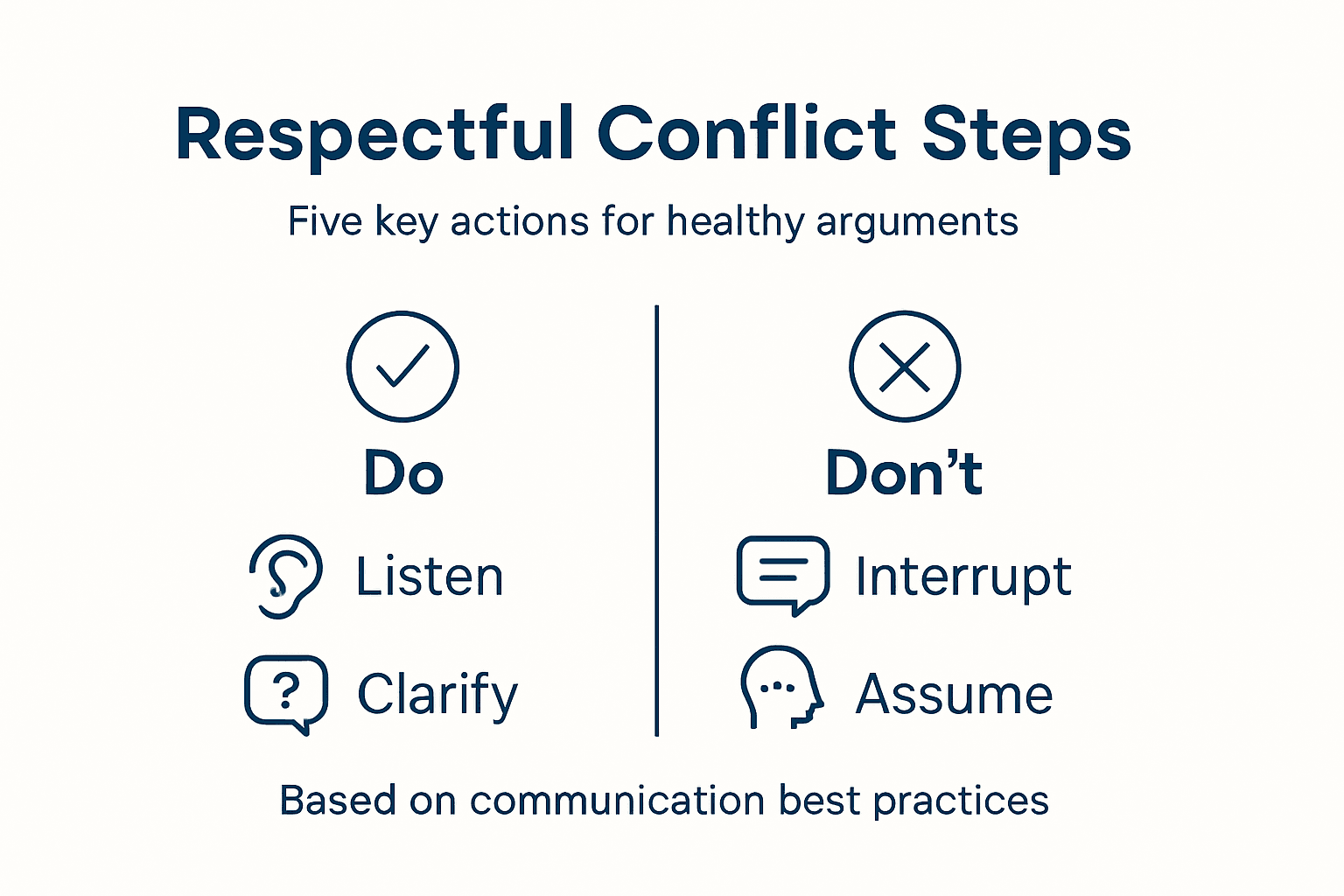
Here is a comparison of common communication mistakes vs. effective conflict resolution techniques:
| Communication Mistake | Effective Alternative | Impact |
|---|---|---|
| Interrupting speaker | Active listening | Reduces defensiveness, builds trust |
| Using accusatory language | ‘I’ statements | Lowers tension, fosters understanding |
| Avoiding core issues | Focus on needs and goals | Increases clarity, leads to solutions |
| Rushing to respond | Pausing to paraphrase | Prevents miscommunication |
| Personal attacks | Maintain respect | Protects emotional safety |
Here is a summary of each step in the conflict resolution process:
| Step | Main Focus | Benefit |
|---|---|---|
| 1. Clarify Intentions | Know your true goals | Prevents reactivity, increases focus |
| 2. Set Ground Rules | Establish respectful dialogue | Ensures safety, enables open exchange |
| 3. Listen Actively | Deep listening and validation | Builds trust, prevents misunderstanding |
| 4. Express Needs Clearly | Communicate needs calmly | Avoids defensiveness, encourages solutions |
| 5. Agree on Solutions | Verify understanding, co-create | Ensures lasting resolution, mutual growth |
Transform Your Conflict Into Connection with Expert Support
Navigating tough conversations without triggering defensiveness or misunderstanding can feel overwhelming. This article highlights key challenges like clarifying intentions, active listening, and expressing needs calmly. If you find yourself stuck in cycles of argument or frustration, these are signs you’re ready for guidance that respects your emotional experience and helps you build lasting solutions.
At Mastering Conflict, we specialize in personalized conflict resolution approaches grounded in clinical expertise. Whether you are seeking help through anger management classes, specialized counseling for couples or families, or coaching programs focused on personal development and burnout recovery, our evidence-based services provide the tools you need to resolve conflict effectively and respectfully.
Start transforming your communication today. Visit Mastering Conflict to explore how our anger management programs and therapeutic services can help you express your needs clearly, listen actively, and build respectful dialogue. Take action now to create healthier relationships and empower yourself with practical conflict resolution skills.
Frequently Asked Questions
How can I prepare for a difficult conversation?
To prepare for a difficult conversation, take time to clarify your true intentions. Identify your core objectives, examine your emotional state, and determine your desired outcome before the dialogue begins.
What ground rules should I establish for respectful dialogue?
Establish ground rules such as promoting active listening, ensuring equal participation, and maintaining topic focus. Collaboratively create guidelines that everyone agrees upon to encourage a safe and constructive environment.
What are some effective active listening techniques?
Effective active listening techniques include giving full attention to the speaker, observing non-verbal cues, and reflecting back what you hear. Practice suspending immediate judgment and asking clarifying questions to ensure true understanding.
How do I express my needs without causing defensiveness?
To express your needs calmly, use ‘I’ statements and focus on specific behaviors rather than accusatory language. Being clear and concise helps maintain open communication and reduces the chances of triggering defensiveness in others.
How can I verify mutual understanding during conflict resolution?
To verify mutual understanding, paraphrase each other’s perspectives and ask clarifying questions. Confirm shared goals and brainstorm possible solutions together to ensure both parties feel heard and respected.
What common communication mistakes should I avoid when resolving conflict?
Avoid interrupting the speaker, using accusatory language, and rushing to respond. By practicing active listening and maintaining respect, you can create a more constructive dialogue that fosters understanding and leads to effective conflict resolution.
Recommended
- How to Deal With Parenting Conflicts
- 21 Ways to Control Anger in a Relationship
- How to Resolve Arguments Effectively and Rebuild Trust – Mastering Conflict
- Effective Conflict Resolution Steps for Couples, Families, and Professionals 2025 – Mastering Conflict
- Fight Negative Energy with These Home Remedies! – Home Remedies