
Best Treatment for Anxiety and Depression: A Clinical Guide

TL;DR:
- Effective treatment for anxiety and depression involves personalized combinations of therapy, medication, and lifestyle changes.
- Integrated approaches, including CBT and medications like SSRIs, generally produce better results than single treatments alone.
The best treatment for anxiety and depression is typically a personalized combination of psychotherapy, medication, and lifestyle changes. Combined approaches often yield superior clinical results compared to either treatment alone. Cognitive Behavioral Therapy (CBT) stands as the most studied and frequently used psychotherapy for both conditions, while SSRIs and SNRIs remain the first-line medications. Lifestyle modifications, including exercise, sleep hygiene, and stress reduction, serve as important adjuncts to formal treatment.
Here is a quick summary of the most effective approaches:
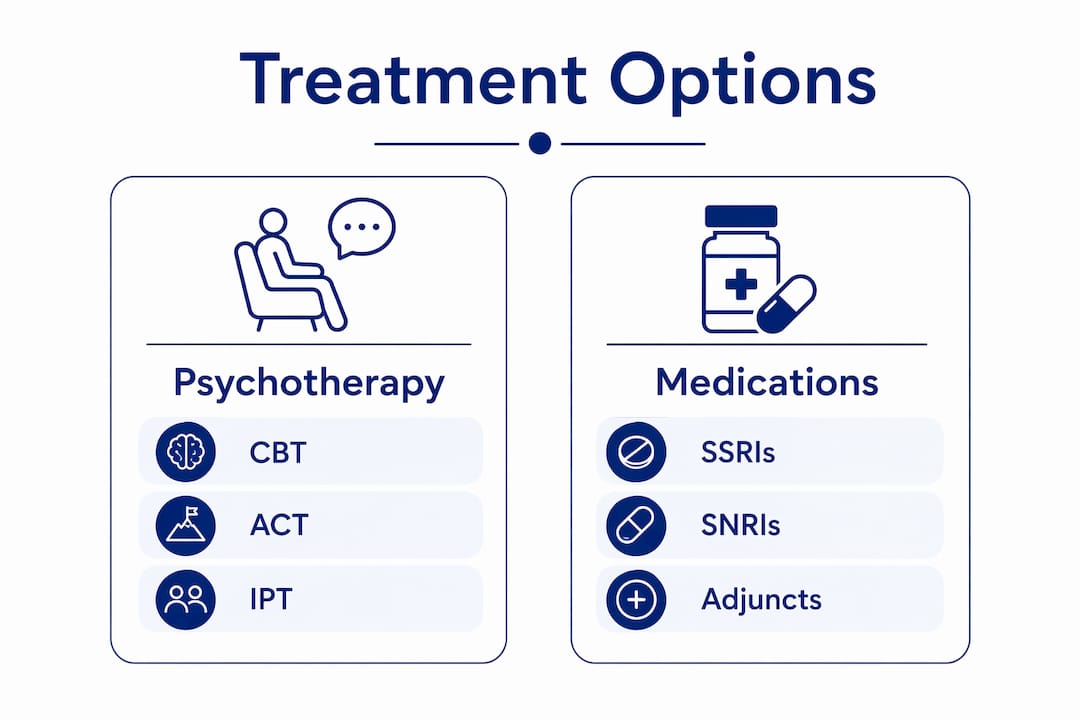
- Psychotherapy: CBT, Acceptance and Commitment Therapy (ACT), Interpersonal Therapy (IPT), and exposure therapy
- Medications: SSRIs (e.g., sertraline, fluoxetine), SNRIs (e.g., venlafaxine, duloxetine), and adjunctive agents when needed
- Combination therapy: Psychotherapy plus medication often outperforms either alone, especially for moderate to severe cases
- Lifestyle interventions: Regular exercise, consistent sleep, a balanced diet, and mindfulness practices
- Personalized planning: Treatment should match symptom severity, patient preferences, and clinical history
No single approach works for everyone. The most effective path forward depends on an honest clinical evaluation and a willingness to adjust the plan as you learn what works.
Table of Contents
- How anxiety and depression are diagnosed and evaluated
- What are the most effective psychotherapy options?
- What medications are used to treat anxiety and depression?
- How do you personalize treatment for the best outcomes?
- Additional resources and lifestyle strategies that support recovery
- Masteringconflict offers clinical support for anxiety and depression
- Key Takeaways
How anxiety and depression are diagnosed and evaluated
Accurate diagnosis is the foundation of effective treatment. Both anxiety and depression are diagnosed based on symptom duration, severity, and the degree to which they impair daily functioning. A clinician will typically assess whether symptoms have persisted for at least two weeks (for depression) or six months (for generalized anxiety disorder), and whether they cause meaningful distress or interference in work, relationships, or self-care.
The clinical evaluation process usually involves several components:
- Structured interviews: Clinicians use tools like the PHQ-9 (Patient Health Questionnaire) for depression and the GAD-7 (Generalized Anxiety Disorder scale) to quantify symptom severity
- Medical history review: Thyroid disorders, cardiovascular conditions, and certain medications can mimic or worsen anxiety and depression, so ruling these out matters
- Differential diagnosis: Clinicians distinguish between major depressive disorder, persistent depressive disorder (dysthymia), generalized anxiety disorder, panic disorder, and social anxiety disorder, among others
- Comorbidity assessment: Anxiety and depression co-occur frequently. When both are present, the clinical picture is more complex and treatment must address both simultaneously
- Psychiatric and family history: A personal or family history of mood disorders, trauma, or substance use shapes both diagnosis and treatment selection
One thing worth knowing: when depression and anxiety appear together, NICE guidelines recommend treating the depression first in most cases, unless the anxiety disorder is the primary driver. Getting the diagnosis right from the start saves months of trial and error later.

What are the most effective psychotherapy options?
Psychotherapy is often the first treatment recommended for mild to moderate anxiety and depression, and for good reason. CBT is the most frequently used method to treat anxiety and has strong evidence for depression as well. It works by identifying negative thought patterns and systematically changing the behaviors those patterns drive. Most CBT courses run 12–20 sessions, making it a time-limited, goal-focused option.
Beyond CBT, several other modalities have solid clinical backing:
- Exposure therapy: Particularly effective for phobias, panic disorder, and PTSD. A therapist guides you through gradual, controlled contact with feared situations until the anxiety response diminishes. Studies show that 8–12 sessions of exposure therapy produce significant, lasting results, with symptoms improving in 60%–80% of people and benefits continuing for two to six years
- Acceptance and Commitment Therapy (ACT): Rather than fighting anxious thoughts, ACT teaches psychological flexibility. You learn to accept thoughts and feelings without letting them dictate behavior, while clarifying personal values and acting in line with them
- Interpersonal Therapy (IPT): Focuses on relationship patterns and life transitions that fuel anxiety and depression. Particularly useful when symptoms are tied to grief, role changes, or interpersonal conflict
- Mindfulness-Based Cognitive Therapy (MBCT): Recommended by NICE for recurrent depression, MBCT combines mindfulness practices with cognitive techniques to reduce relapse risk
The therapeutic alliance between patient and therapist is one of the strongest predictors of outcome, regardless of which modality is used. If you do not feel heard or understood by your therapist, that is worth addressing directly or seeking a different provider. Therapy is most effective when it is collaborative, adaptable, and responsive to your values and goals.
If you are exploring individual therapy techniques beyond CBT, options like ACT and IPT offer meaningful alternatives for people who do not respond to the standard approach.

Pro Tip: When choosing a therapy modality, ask a potential therapist how they would adapt their approach if you are not making progress after six sessions. A good clinician will have a clear, flexible answer. One who insists on a single method regardless of your response is a red flag.
What medications are used to treat anxiety and depression?
Medication is a well-established part of treatment for depression and anxiety, particularly when symptoms are moderate to severe or when psychotherapy alone has not produced adequate relief. SSRIs and SNRIs are the first-line agents for both conditions, and they are generally well tolerated compared to older drug classes.
First-line medications:
- SSRIs (Selective Serotonin Reuptake Inhibitors): Sertraline (Zoloft), fluoxetine (Prozac), escitalopram (Lexapro), and paroxetine (Paxil) are among the most commonly prescribed. They work by increasing serotonin availability in the brain and typically take 4–6 weeks to show full effect
- SNRIs (Serotonin-Norepinephrine Reuptake Inhibitors): Venlafaxine (Effexor) and duloxetine (Cymbalta) target both serotonin and norepinephrine. They are particularly useful when anxiety and depression co-occur, or when pain symptoms are part of the picture
Second-line and adjunctive options:
- Tricyclic antidepressants (TCAs): Older agents like amitriptyline and nortriptyline are effective but carry a higher side effect burden, including sedation, dry mouth, and cardiac risks. They are generally reserved for cases where SSRIs and SNRIs have failed
- MAOIs (Monoamine Oxidase Inhibitors): Phenelzine and tranylcypromine are rarely used today due to serious dietary restrictions and drug interactions, but they remain an option for treatment-resistant cases
- Buspirone: A non-benzodiazepine anxiolytic used specifically for generalized anxiety disorder. It does not carry the dependence risk of benzodiazepines
- Benzodiazepines: Effective for short-term anxiety relief but not recommended for long-term use due to tolerance and dependence. Typically used for acute episodes or as a bridge while waiting for an SSRI to take effect
One thing clinicians should always communicate upfront: starting antidepressants can temporarily increase anxiety or agitation in some patients during the first one to two weeks. This side effect usually resolves on its own, but it requires monitoring. Patients beginning antidepressants should also be advised about the small risk of increased suicidal ideation, particularly in younger adults, and should have a follow-up appointment scheduled within the first two weeks.
Medication adherence matters more than most people realize. Missing doses or stopping abruptly can trigger withdrawal symptoms and relapse. Any decision to taper off medication should be made with a prescribing clinician.
How do you personalize treatment for the best outcomes?
Personalization is not a luxury in treating anxiety and depression. It is the mechanism by which treatment actually works. NICE guidelines recommend a stepped-care model, starting with the least intrusive intervention appropriate for a person’s clinical needs and escalating only when lower-level treatments have not produced sufficient improvement.
What that looks like in practice:
- Mild symptoms: Guided self-help based on CBT principles, psychoeducation groups, or digitally enabled therapy are often sufficient and recommended as first steps
- Moderate symptoms: High-intensity CBT, IPT, or antidepressant medication, depending on patient preference and clinical history
- Severe symptoms: Combination of psychotherapy and medication, with closer monitoring and potentially more frequent sessions
- Treatment-resistant cases: Augmentation strategies, medication switches, or referral for advanced interventions
When anxiety and depression co-occur, transdiagnostic treatments that target the underlying psychological patterns common to both disorders are gaining clinical favor. Rather than treating each condition separately, these approaches address shared mechanisms like emotional avoidance, cognitive distortions, and intolerance of uncertainty.
A key finding from meta-analysis research: the overall effect size difference between psychotherapy and pharmacotherapy across depressive and anxiety disorders is g=0.02, which is not statistically significant. In practical terms, this means the choice between therapy and medication often comes down to patient preference, tolerability, and access rather than a clear superiority of one over the other.
Treatment rarely works perfectly on the first attempt. Consistency and patient engagement are what separate people who eventually find relief from those who give up too soon. Completing therapy homework, attending sessions regularly, and communicating openly with your provider about what is and is not working are all part of the process.
Pro Tip: Before your first appointment, write down your three most disruptive symptoms, any treatments you have tried before, and what you are hoping to feel differently about in six months. Bringing that list gives your clinician a concrete starting point and signals that you are an active participant in your own care.
If you are trying to find the right provider, this guide on how to find a therapist walks through what to look for and how to evaluate fit.
Additional resources and lifestyle strategies that support recovery
Formal treatment is the core, but what you do outside of sessions and prescriptions shapes how quickly and completely you recover. Lifestyle interventions including exercise, healthy diet, sleep hygiene, and stress reduction significantly support anxiety and depression management as adjuncts to medical treatment.
Reputable information sources and support:
- The CDC’s mental health resources provide accessible, evidence-based information on depression and anxiety
- The National Institute of Mental Health (NIMH) publishes updated clinical guidance and research summaries at nimh.nih.gov
- The Anxiety and Depression Association of America (ADAA) offers therapist directories, support groups, and self-help tools
- NAMI (National Alliance on Mental Illness) runs peer support programs and a helpline (1-800-950-NAMI)
Lifestyle changes with clinical backing:
- Exercise: Aerobic activity three to five times per week has demonstrated antidepressant and anxiolytic effects in multiple clinical trials. Even 30-minute walks reduce cortisol and improve mood regulation
- Sleep hygiene: Disrupted sleep worsens both anxiety and depression. Consistent sleep and wake times, limiting screen exposure before bed, and avoiding caffeine after noon are practical starting points
- Diet: A diet rich in whole foods, omega-3 fatty acids, and fermented foods supports gut-brain health. Ultra-processed foods and excess sugar are associated with worse mood outcomes
- Stress reduction: Mindfulness meditation, progressive muscle relaxation, and diaphragmatic breathing all have evidence supporting their use as adjuncts to formal treatment. A guide to meditation benefits grounded in clinical research offers a practical starting point for building a regular practice
Emerging and advanced treatments:
- Transcranial Magnetic Stimulation (TMS): A non-invasive procedure that uses magnetic fields to stimulate nerve cells in the brain. Approved by the FDA for treatment-resistant depression and increasingly used for anxiety. Sessions typically run 30–40 minutes, five days a week, for four to six weeks
- Electroconvulsive Therapy (ECT): Still the most effective treatment available for severe, treatment-resistant depression. Modern ECT is performed under general anesthesia and is far safer than its historical reputation suggests. ECT and TMS are effective options when standard therapies have failed
- Ketamine and esketamine (Spravato): FDA-approved for treatment-resistant depression, ketamine-based treatments work through the glutamate system rather than serotonin, producing rapid relief in some patients within hours
A word on supplements: Products marketed as natural remedies for anxiety, including certain herbal supplements, vary widely in quality and evidence. Some, like St. John’s Wort, interact dangerously with SSRIs. Always discuss any supplement with your prescribing clinician before adding it to your regimen. Unregulated products carry real risks that are easy to underestimate.
For people managing anxiety and depression alongside relationship stress or family conflict, counseling for depression and anxiety that addresses both the individual and relational dimensions can accelerate recovery in ways that individual treatment alone sometimes cannot.
Masteringconflict offers clinical support for anxiety and depression
Most people reading this article are not just looking for information. They are trying to figure out their next step. Masteringconflict, led by Dr. Carlos Todd, a licensed clinical mental health counselor and psychologist, offers evidence-based clinical services for individuals dealing with anxiety, depression, and the relationship and conflict dynamics that often make both worse.
What sets Masteringconflict apart from a standard therapy directory is the integration of individual therapy, couples counseling, and conflict coaching under one clinical roof. If your anxiety or depression is tangled up with relationship stress, workplace conflict, or family tension, treating only the individual symptoms often leaves the root causes untouched. Masteringconflict’s approach addresses both the clinical and relational dimensions together. Services are available online, with a regional focus on North and South Carolina and Florida, and Dr. Todd’s team works with adults, teens, children, and couples. To get started, visit the clinical services page and book a consultation directly.
Key Takeaways
The most effective treatment for anxiety and depression combines personalized psychotherapy, appropriately selected medication, and consistent lifestyle support, guided by clinical severity and patient preference.
| Point | Details |
|---|---|
| Combination therapy works best | Combined psychotherapy and medication often yields superior outcomes compared to either treatment alone. |
| CBT leads psychotherapy options | Cognitive Behavioral Therapy is the most frequently used and evidence-backed therapy for both anxiety and depression. |
| Stepped care guides treatment intensity | NICE guidelines recommend starting with the least intrusive intervention and escalating based on clinical response. |
| Lifestyle changes accelerate recovery | Exercise, sleep hygiene, diet, and mindfulness support mood regulation as adjuncts to formal treatment. |
| Masteringconflict provides integrated care | Masteringconflict offers individual therapy, couples counseling, and conflict coaching for anxiety and depression, available online. |
Recommended
- Counseling Near Me for Depression and Anxiety: 2026 Guide – Mastering Conflict
- Understanding Therapy for Anxiety: Key Concepts Explained – Mastering Conflict
- Why Assessment Is Important: Complete Guide – Mastering Conflict
- Managing Anxiety, Depression and Stress: Your 2026 Guide – Mastering Conflict