
Women’s mental health: 5 strategies for lasting resilience

TL;DR:
- Women face higher rates of depression medication use and mental health conditions globally.
- Biological, social, and cultural factors contribute to women’s unique mental health challenges.
- Building resilience through self-awareness, self-care, social support, and professional help is essential.
Women are more than twice as likely as men to take depression medication, yet the conversation around women’s mental health still feels incomplete. Anxiety, depression, and emotional exhaustion touch millions of women every year, shaped by biology, social roles, and cultural pressures that rarely get addressed together. The good news is that resilience is not a fixed trait you either have or don’t. It’s a skill you can build. This article walks you through the real landscape of women’s mental health, the challenges most likely to show up in your life, and practical, evidence-backed steps you can take starting today.
Table of Contents
- Understanding the unique landscape of women’s mental health
- Common mental health challenges women face
- Proven strategies for building resilience and emotional well-being
- Accessing the right help: Support systems and treatment options
- Our perspective: Why a gender-aware approach matters and what often gets missed
- Ready for specialized support? Next steps with Mastering Conflict
- Frequently asked questions
Key Takeaways
| Point | Details |
|---|---|
| Women face higher risks | Women experience a wider range and greater burden of mental health challenges than men. |
| Resilience is learnable | Simple, consistent practices and support networks can greatly enhance emotional well-being. |
| Personalized care matters | Choosing resources tailored to women’s needs delivers better outcomes. |
| Start with small steps | Even small changes in self-care and outreach can have a lasting positive impact. |
Understanding the unique landscape of women’s mental health
The numbers are striking. 15.3% of women took depression medication compared to just 7.4% of men. That gap doesn’t appear by accident. Women face a distinct combination of biological, hormonal, social, and cultural factors that create a heavier mental health burden over a lifetime.
Hormonal shifts across the menstrual cycle, pregnancy, postpartum recovery, and menopause all influence mood regulation. Social roles add another layer. Many women carry the invisible weight of caregiving, household management, and workplace performance simultaneously, often without enough support. Cultural expectations about how women should express emotions or ask for help can make things worse.
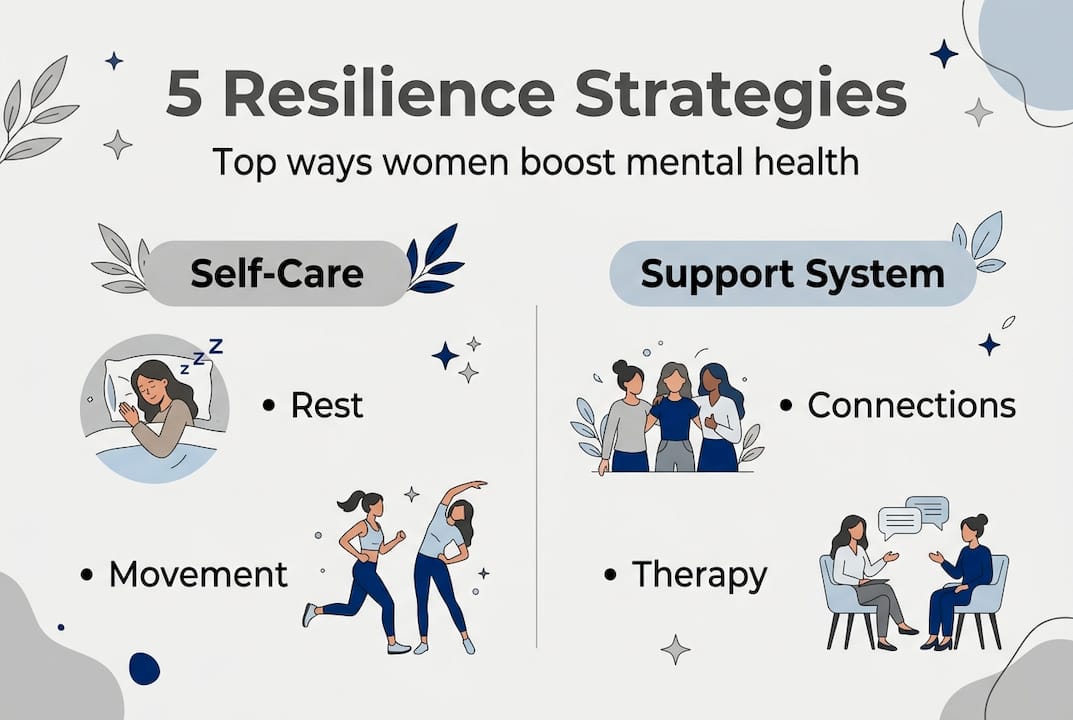
Globally, 24.2% of women in England faced common mental health conditions in 2023 to 2024, a figure that reflects a worldwide pattern. Women also carry a 60% greater disability burden from mental health conditions than men globally. That’s not a small difference. It signals a systemic gap in how mental health care has historically been designed and delivered.
Key factors driving women’s mental health challenges:
- Hormonal fluctuations tied to reproductive cycles
- Disproportionate caregiving and domestic responsibilities
- Higher exposure to gender-based violence and trauma
- Workplace discrimination and wage inequality
- Cultural stigma around seeking help
- Limited access to gender-aware specialized care
| Factor | Impact on women | Impact on men |
|---|---|---|
| Depression medication use | 15.3% | 7.4% |
| Common mental health conditions | Higher prevalence | Lower prevalence |
| Global disability burden | 60% greater | Baseline comparison |
| Caregiving responsibilities | Disproportionately higher | Generally lower |
Barriers to care remain real. Cost, geographic access, and the shortage of providers trained in gender-aware approaches all slow down the path to support. Reading about counseling for women empowerment can help you understand what specialized, woman-centered care actually looks like and why it matters for your recovery.
Common mental health challenges women face
Knowing the scale of the problem is one thing. Recognizing it in your own life is another. Women report significantly higher rates of anxiety, depression, and emotional distress compared to men, and the symptoms often show up differently.
For women, depression frequently looks like persistent sadness, tearfulness, fatigue, and a loss of interest in things that once brought joy. Anxiety can feel like constant worry, physical tension, trouble sleeping, and a sense of dread that won’t lift. These aren’t just bad moods. They’re signals worth taking seriously.
Warning signs to watch for:
- Persistent low mood lasting more than two weeks
- Difficulty sleeping or sleeping too much
- Withdrawing from relationships and social activities
- Feeling overwhelmed by everyday tasks
- Physical symptoms like headaches or stomach issues with no clear medical cause
- Irritability or emotional numbness
Some mental health challenges are unique to women’s biology. Postpartum depression (PPD) affects up to 1 in 5 new mothers and goes far beyond the “baby blues.” Premenstrual dysphoric disorder (PMDD) is a severe form of premenstrual syndrome that causes significant mood disruption in the days before menstruation. Both are real, clinical conditions that deserve professional attention, not dismissal.
“The pressures women face, from caregiving demands to workplace stress and gender-based expectations, don’t just cause temporary stress. Over time, they compound into chronic emotional strain that changes how the brain and body function.”
One important distinction: women tend to internalize distress, meaning they turn difficult feelings inward as self-blame, shame, or withdrawal. Men are more likely to externalize through anger or substance use. This difference matters because internalized distress is easier to miss and easier to dismiss, both by the person experiencing it and by others around them. Understanding how stress management for men differs from women’s experiences can actually sharpen your self-awareness about your own patterns.
| Experience | Women | Men |
|---|---|---|
| Primary expression | Internalized (sadness, withdrawal) | Externalized (anger, risk-taking) |
| Unique conditions | PPD, PMDD, perinatal anxiety | Lower prevalence of these |
| Help-seeking tendency | More likely to seek therapy | Less likely to seek help |
Proven strategies for building resilience and emotional well-being
Resilience is not about bouncing back as if nothing happened. It’s about moving forward with what you’ve learned. Building resilience involves recognizing stress early, practicing consistent self-care, reframing problems, and reaching out for support before you hit a wall.
Here are steps that work, backed by research and real-world practice:
- Name what you’re feeling. Self-awareness is the foundation. When you can label an emotion accurately, you reduce its power over your behavior.
- Move your body daily. Even 20 minutes of walking changes brain chemistry. Physical movement is one of the most effective, accessible tools for managing anxiety and depression.
- Prioritize sleep. Poor sleep amplifies every mental health symptom. Create a consistent wind-down routine and protect your sleep like an appointment.
- Eat to support your brain. Nutrition directly affects mood. Foods rich in omega-3s, magnesium, and B vitamins support emotional regulation.
- Build and lean on connections. Isolation feeds depression. Regular, meaningful contact with people who support you is protective, not optional.
- Reframe setbacks as data. When something goes wrong, ask what it’s teaching you rather than using it as evidence of your worth.
- Seek professional support early. Waiting until you’re in crisis makes recovery harder. Therapy and coaching are tools for growth, not just crisis intervention.
For everyday stress relief, exploring how to manage stress naturally offers practical techniques you can build into your routine. You might also find ways to relax your mind useful for those moments when anxiety spikes and you need a fast reset. For additional tips to release stress, there are evidence-informed options worth exploring.
Pro Tip: Deep breathing activates your parasympathetic nervous system, which is the body’s built-in calm response. Try inhaling for four counts, holding for four, and exhaling for six. Do this for just two minutes when stress peaks.
Accessing the right help: Support systems and treatment options
Personal resilience habits are powerful, but they work best alongside external support. Many women face barriers to specialized care, including cost, stigma, lack of insurance coverage, and a shortage of gender-aware providers. Knowing your options makes it easier to find the right fit.
Support options to consider:
- Trusted friends and family: Informal support is valuable, but it has limits. Don’t rely on it as a substitute for professional care.
- Online support communities: Peer communities for women dealing with anxiety, depression, or specific conditions like PPD can reduce isolation and provide practical advice.
- Therapists and counselors: Licensed professionals trained in evidence-based approaches like cognitive behavioral therapy (CBT) or trauma-informed care can create lasting change.
- Coaches: Coaching focuses on goals, growth, and accountability. It’s a strong option when you’re functioning but want to move forward more intentionally.
- Psychiatrists: If medication is part of your care plan, a psychiatrist can manage that alongside therapy.
- Crisis lines: If you’re in acute distress, crisis resources are available 24/7 and are a valid first step.
Choosing between therapy and coaching depends on what you need right now. Therapy is best for processing trauma, diagnosing conditions, and working through deep emotional pain. Coaching is better suited for goal-setting, building habits, and navigating life transitions when your baseline functioning is solid.
Pro Tip: When searching for a therapist, ask directly whether they have experience working with women’s mental health issues. A provider who understands the gendered dimensions of anxiety and depression will approach your care very differently from one who doesn’t.
Exploring empowerment counseling for women can help you understand what to look for in a provider and how to advocate for yourself in the process. Taking even one small step, whether that’s a single phone call or a quick online search, can shift the momentum entirely.
Our perspective: Why a gender-aware approach matters and what often gets missed
Most mental health frameworks were built around research conducted primarily on men. Women were underrepresented in clinical studies for decades. That history matters because it means many standard approaches don’t fully account for the biological, hormonal, and social realities that shape women’s mental health.
At Mastering Conflict, we see this play out regularly. Women come in having tried interventions that didn’t quite fit, not because they weren’t trying hard enough, but because the tools weren’t designed with their experience in mind. Real progress requires combining evidence-based clinical tools with a genuine understanding of gender-specific pressures.
The most overlooked piece? Teaching women to trust their own experience and advocate for themselves within systems that have historically minimized their symptoms. When you walk into a provider’s office knowing what you need and why, everything changes. That’s the kind of self-knowledge that counseling for women can help you build, alongside the clinical skills to move forward.
Ready for specialized support? Next steps with Mastering Conflict
Understanding your mental health landscape is a powerful first step. But knowing what to do and having the right support to do it are two different things.
At Mastering Conflict, we offer specialized services designed to meet women where they are, whether that means individual therapy, coaching, or a combination of both. If you’re not sure where to start, our coaching vs therapy guide can help you figure out which path fits your goals. You can also explore our full range of clinical services or browse resilience resources to find the right entry point. Reaching out is not a sign of weakness. It’s one of the most strategic things you can do for your future self.
Frequently asked questions
Why do women experience mental health challenges more often than men?
Women are more likely to face mental health challenges due to a combination of biological differences and unique social pressures, such as caregiving roles and gender-based expectations. Women bear a 60% greater global disability burden from mental health conditions than men.
What are effective ways for women to build resilience?
Daily self-care, cultivating social connections, reframing challenges, and reaching out for professional support all effectively strengthen resilience. Stress awareness and self-care are foundational steps recommended by the NIH.
How can women find gender-sensitive mental health support?
Look for providers or organizations that specialize in women’s mental health, or seek out community resources and support groups tailored for women. Specialized options are increasing even as barriers to gender-aware care persist.
Is medication always necessary for managing women’s mental health conditions?
No, medication is one option among many. While 15.3% of women currently take depression medication, self-care, therapy, and coaching often help significantly, and a personalized plan developed with a provider works best.
Recommended
- 7 Practical Steps to Building Resilience in Everyday Life – Mastering Conflict
- 7 Personal Development Steps to Build Emotional Resilience – Mastering Conflict
- How to Manage Stress Naturally for Lasting Relief – Mastering Conflict
- Emotional Regulation: Building Resilience in Relationships – Mastering Conflict
- Brain health support: Evidence, mushrooms, and strategies – LongevityBotanicals
- Your Ultimate Guide to Evening Routines for Better Sleep and Improved Mental Health – Simple Empathy KC