
Understand anger triggers in marriage: 36% argue over tone

Many couples believe their arguments stem from incompatible personalities or irreconcilable differences, but research reveals a different story. The real culprits are specific, identifiable anger triggers that surface repeatedly in marital conflicts. When you understand what sparks anger in your relationship, you gain the power to interrupt destructive patterns before they escalate. This guide identifies the most common anger triggers married couples face, explains how these triggers intensify conflicts, and provides practical strategies to manage them effectively for healthier communication and lasting resolution.
Table of Contents
- Key takeaways
- Common emotional and communication triggers in marriage
- How anger escalates: emotion, stress, and coping patterns
- Gender differences and health impacts on anger in marriage
- Practical strategies to identify and manage anger triggers in marriage
- Explore expert support for managing anger triggers in your marriage
- What are the main anger triggers in marriage?
Key Takeaways
| Point | Details |
|---|---|
| Key anger triggers | Anger commonly arises from emotional factors, communication breakdowns, and external stress rather than incompatible personalities. |
| Top sources of conflict | Tone of voice, money, and emotional needs are the leading triggers in marital arguments. |
| Escalation drivers | Anger escalates when vulnerability and poor communication meet external pressures and maladaptive coping patterns. |
| Gender aware strategies | Understanding gender differences helps tailor anger management approaches for better communication and resolution. |
Common emotional and communication triggers in marriage
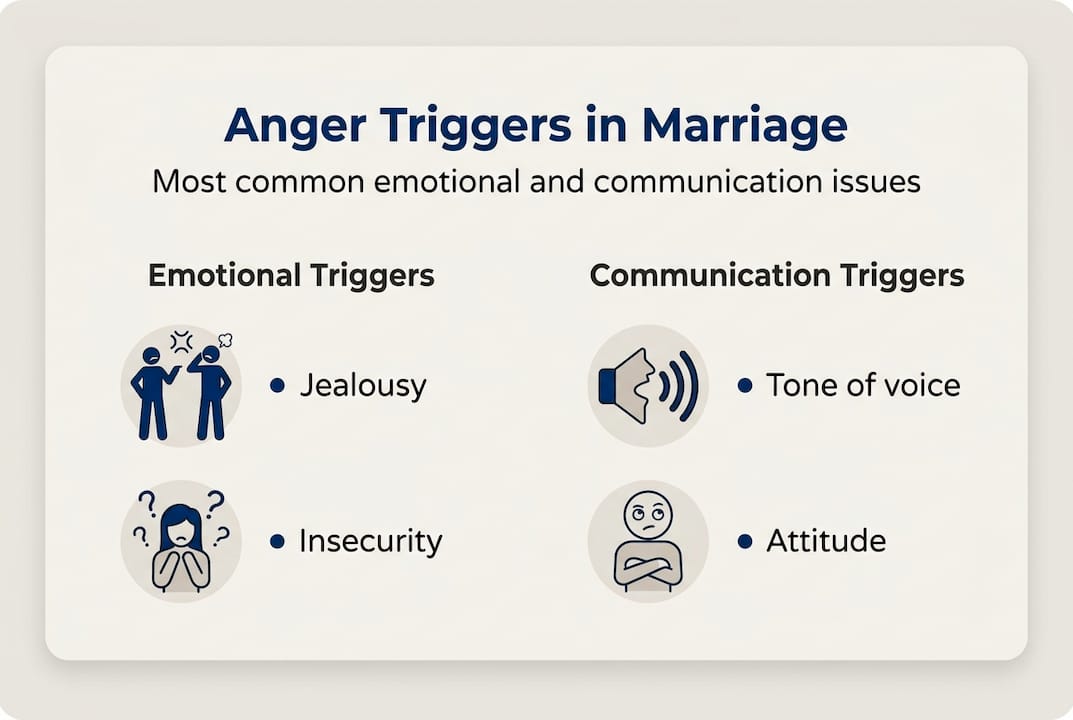
Common anger triggers in marriage include emotional factors like jealousy, insecurity, unresolved past hurts, sudden mood shifts, and financial anxiety. Communication breakdowns such as criticism, defensiveness, and stonewalling frequently spark anger. These emotional vulnerabilities create fertile ground for conflict when couples lack the skills to navigate them constructively.
Survey data reveals that 36% of couples argue about tone of voice or attitude, making it the leading source of marital disputes. Communication styles follow at 29%, money at 26%, emotional needs at 23%, and life decisions and chores at 21%. Women are significantly more likely than men to identify tone issues, household chores, and quality time as conflict triggers, highlighting important gender differences in what sparks anger.
Recognizing these patterns in your own relationship builds emotional awareness. When you notice jealousy surfacing during social events or financial anxiety triggering defensiveness, you can pause and address the underlying emotion rather than reacting to surface behaviors. The communication skills for couples guide offers specific techniques for navigating these vulnerable moments.
Key emotional and communication triggers include:
- Jealousy and insecurity about attention, time, or past relationships
- Unresolved hurts from previous conflicts that resurface unexpectedly
- Sudden mood shifts that catch your partner off guard
- Financial stress and disagreements about spending priorities
- Criticism that feels like character attacks rather than behavior feedback
- Defensiveness that blocks genuine listening and understanding
- Stonewalling or withdrawal that leaves issues unresolved
- Tone of voice that conveys disrespect or dismissiveness
- Communication style mismatches between direct and indirect approaches
Understanding these emotional and communication triggers sets the foundation to explore how they escalate anger conflicts in marriages.
How anger escalates: emotion, stress, and coping patterns
Anger escalates through an interplay of emotional vulnerability, ineffective communication, external pressures, and maladaptive coping. When emotional arousal runs high, your capacity for self-regulation diminishes, making it harder to think clearly or respond constructively. This physiological reality explains why conflicts that start small can spiral into destructive arguments within minutes.
External stressors amplify this escalation process. Work pressure, family interference, health concerns, and financial strain all increase the risk of angry outbursts. When you arrive home already stressed from work, minor irritations that you would normally brush off suddenly feel intolerable. Your partner’s innocent comment about dinner plans becomes the trigger for accumulated frustration.

Maladaptive coping patterns worsen this cycle. Avoidance prevents resolution, allowing resentment to build over time. Rumination keeps you mentally rehearsing grievances, priming you for the next conflict. Blame-shifting blocks accountability and prevents genuine repair. These patterns create a feedback loop where each unresolved conflict makes the next one more likely and more intense.
Pro Tip: Create a personal escalation awareness scale from 1 to 10. When you notice yourself reaching level 5, implement a structured timeout to prevent further escalation. This simple self-monitoring tool dramatically reduces destructive conflicts.
Recognize the escalation stages in your conflicts:
- Initial trigger occurs, often related to tone, needs, or expectations
- Emotional arousal increases as vulnerability or threat is perceived
- Communication breaks down through criticism, defensiveness, or withdrawal
- External stressors amplify the emotional intensity
- Maladaptive coping patterns take over, preventing resolution
- Conflict escalates beyond the original issue into character attacks or past grievances
The stress management techniques and how to control anger issues in a relationship resources provide specific interventions for interrupting this escalation cycle at each stage.
With insight into how anger escalates, we next examine how gender differences and health factors influence anger expression and marital satisfaction.
Gender differences and health impacts on anger in marriage
Research reveals significant gender differences in how anger affects health and relationships. High expressor, low hostile women report the lowest pain levels and highest activity levels among chronic pain patients. Conversely, low expressor, high hostile men experience the highest pain and interference. These findings suggest that suppressing anger while harboring hostility creates worse health outcomes than expressing anger constructively.
Less anger predicts higher marital satisfaction in couples managing type 2 diabetes, demonstrating the direct link between anger management and relationship quality. High neuroticism predicts more psychosocial problems related to anger, indicating that personality factors influence how anger impacts your marriage. Understanding these connections helps you prioritize anger reduction as a relationship health investment.
These gender patterns have practical implications. Women often benefit from expressing anger directly but maintaining low hostility, focusing on the specific behavior rather than attacking character. Men frequently need support in recognizing and expressing anger before it builds to explosive levels. Both partners benefit from understanding their natural tendencies and adapting their approach accordingly.
| Gender pattern | Health impact | Relationship strategy |
|---|---|---|
| Women: high expression, low hostility | Lowest pain, highest activity | Express anger directly about specific behaviors |
| Women: suppression with hostility | Moderate pain and interference | Practice constructive expression techniques |
| Men: low expression, high hostility | Highest pain, most interference | Recognize and express anger earlier |
| Men: balanced expression | Better health outcomes | Maintain awareness of escalation triggers |
Pro Tip: Identify your natural anger expression style by tracking conflicts for two weeks. Notice whether you tend to express immediately or suppress until you explode. This awareness allows you to adjust your approach for better health and relationship outcomes.
The signs of anger issues in women and signs of anger issues in men resources help you recognize gender-specific patterns in your relationship.
Now that we understand underlying patterns and impacts of anger, let’s explore practical strategies to manage anger triggers in your marriage.
Practical strategies to identify and manage anger triggers in marriage
Start by identifying your specific triggers using the research-backed data. Remember that 36% of couples argue about tone of voice, 29% about communication styles, 26% about money, and 23% about emotional needs. Track your conflicts for one week, noting what sparked each disagreement. Patterns will emerge quickly, revealing your unique trigger profile.
Implement communication techniques that prevent escalation. Own your feelings using statements that start with your experience rather than accusations. Listen actively by reflecting what your partner says before responding. Avoid the four horsemen of relationship conflict: criticism, contempt, defensiveness, and stonewalling. These behaviors guarantee escalation and block resolution.
Key communication practices:
- Use specific observations instead of generalizations or character attacks
- Validate your partner’s feelings even when you disagree with their perspective
- Take responsibility for your contribution to the conflict
- Express appreciation for positive behaviors regularly to build goodwill
- Request specific changes rather than demanding broad personality shifts
Practice relaxation methods when you notice early warning signs of escalation. Deep breathing, progressive muscle relaxation, and brief physical separation all interrupt the physiological arousal that fuels anger. Schedule regular check-ins to discuss sensitive topics like money, chores, and emotional needs when you are both calm and focused.
Pro Tip: Establish a conflict ritual that includes a structured timeout, individual reflection time, and a scheduled reconvene time. This framework prevents avoidance while giving both partners space to regulate emotions.
Implement a step-by-step conflict resolution process:
- Identify the specific trigger without blame or judgment
- Share your emotional response using statements about your experience
- Listen to your partner’s perspective without interrupting or planning your rebuttal
- Acknowledge valid points in their experience
- Brainstorm solutions together that address both partners’ needs
- Agree on one specific action each person will take
- Schedule a follow-up to assess progress
| Trigger type | Recognition strategy | Management technique |
|---|---|---|
| Tone of voice | Notice physical tension when hearing certain tones | Pause and ask for clarification before assuming intent |
| Money disagreements | Track spending triggers that spark anxiety | Schedule monthly budget conversations when calm |
| Emotional needs | Identify patterns of feeling unseen or unheard | Express needs proactively before resentment builds |
| Communication styles | Recognize direct versus indirect approach conflicts | Discuss preferences outside of conflict moments |
The ways to control anger in a relationship and anger management in relationships guides provide additional techniques tailored to common marital triggers.
With these practical tools, you are better equipped to understand and manage anger triggers, enhancing your marital harmony.
Explore expert support for managing anger triggers in your marriage
While self-help strategies provide a strong foundation, professional support accelerates your progress and addresses complex patterns that resist change. Many couples find that working with a trained therapist helps them identify hidden triggers and develop personalized management strategies that fit their unique relationship dynamics.
Mastering Conflict offers comprehensive clinical services designed specifically for couples navigating anger triggers and communication challenges. Teletherapy counseling provides convenient access to expert guidance on your schedule, removing barriers to getting help. The anger management assessment creates a personalized roadmap for addressing your specific triggers and patterns, ensuring your efforts target the areas that will make the biggest difference in your marriage.
What are the main anger triggers in marriage?
The most common anger triggers include tone of voice, communication style differences, money disagreements, unmet emotional needs, and household responsibility conflicts. Research shows tone of voice alone triggers arguments in 36% of couples. External stressors like work pressure and family interference amplify these core triggers, making minor irritations feel overwhelming.
Recognizing anger warning signs early prevents escalation. Physical tension, increased heart rate, racing thoughts, and the urge to withdraw or attack all signal rising anger. When you notice these signs, pause and use a relaxation technique before continuing the conversation. This simple awareness dramatically reduces destructive conflicts.
How can couples effectively manage anger triggers?
Effective management starts with identifying your specific triggers through tracking and self-awareness. Use communication techniques that own your feelings, validate your partner’s experience, and focus on specific behaviors rather than character attacks. Practice relaxation methods when you notice early warning signs, and schedule regular check-ins to discuss sensitive topics when both partners are calm.
Professional support through anger management in relationships programs helps develop healthy coping mechanisms. Therapy provides personalized strategies for your unique trigger patterns and relationship dynamics. The combination of self-help practices and professional guidance creates lasting change that improves both communication and conflict resolution.
Are there gender differences in how anger is expressed in marriage?
Yes, research reveals significant gender differences in anger expression and health impacts. Women who express anger directly with low hostility report better health outcomes than those who suppress anger. Men who suppress anger while harboring high hostility experience worse pain and interference in daily activities. These patterns suggest that suppressing anger creates worse outcomes than constructive expression.
Recognizing these differences improves how you support each other during conflicts. Women often need validation for expressing anger about specific behaviors, while men frequently benefit from encouragement to recognize and express anger before it builds to explosive levels. Understanding anger issues in women and anger issues in men helps you tailor your approach to your partner’s natural style.
When should couples seek professional help for anger issues?
Seek professional help when anger leads to frequent conflicts that damage emotional safety, when self-help strategies fail to create lasting change, or when either partner feels afraid during arguments. Physical aggression, threats, or patterns of emotional abuse require immediate professional intervention. Early support prevents escalation and protects relationship health.
Clinical services provide structured assessment and treatment for anger patterns that resist self-help approaches. Professional guidance helps you break destructive cycles, develop healthy communication skills, and rebuild trust after anger has damaged your connection. Investing in therapy early saves years of accumulated resentment and conflict.
Recommended
- Why Couples Fight – Mastering Conflict
- Anger Management in Relationships – Lasting Change – Mastering Conflict
- How to Control Anger Issues in a Relationship Easily – Mastering Conflict
- Why Couples Fight: Root Causes and Real Solutions for 2025 – Mastering Conflict
- WhiteClover • Wedding Mistakes Nobody Talks About