
30–60 Second Resets Give Fast Stress Relief for Teens

The fastest fix is a one to two minute reset: slow breathing paired with a quick muscle release, done the moment stress hits. Pair that with two daily habits, consistent sleep and regular movement, to keep your baseline stress lower overall. This approach builds these same principles into teen counseling work because small, repeatable actions beat one big effort every time.
TL;DR:
- Quick stress relief techniques like breathing exercises and muscle releases can be effective within 30 seconds to a few minutes and should be repeated regularly.
- Consistent daily habits such as regular sleep schedules, physical activity, balanced nutrition, and outdoor time significantly lower overall stress levels over time.
- Building a personalized stress management plan involves identifying top stressors, selecting practical tools, scheduling practice, and adjusting strategies as needed for sustainability.
- Social support from friends and boundaries with screen time influence stress, with active connection reducing anxiety and passive scrolling potentially increasing it.
- Seeking professional help is crucial when stress symptoms last more than two weeks, interfere with daily life, or if coping techniques are ineffective.
Table of Contents
- Stress Relief for Teens: Techniques You Can Use in Minutes
- Daily Habits That Lower Your Baseline Stress
- How to Build Your Own Stress-Management Plan
- When to Ask for Help and How Adults Can Support You
- Why These Techniques Actually Work
- How Social Media and Screen Time Affect Your Stress
- Why Friends Matter More Than You Might Think
- Building Emotional Resilience and Coping Skills
- Managing Academic Pressure Without Burning Out
- Setting Boundaries Without Feeling Guilty About It
- Clinician Perspective: What Actually Works and What Trips Teens Up
- How Mastering Conflict Supports Teens Through Stress
- Sources
- FAQ
Stress Relief for Teens: Techniques You Can Use in Minutes
You don’t need thirty minutes and a quiet room to calm your nervous system down. Most of the techniques that actually work take less time than scrolling through one social media feed.
Here’s a toolkit you can pull from depending on the moment:
- Box breathing (4-4-4-4). Inhale for 4 counts, hold for 4, exhale for 4, hold for 4. Repeat 4 to 6 times before a test or a hard conversation.
- 4-8 breathing. Inhale for 4 counts, exhale slowly for 8. The longer exhale signals your body to slow down, which works well right before bed.
- Micro-PMR (progressive muscle relaxation). Clench your jaw, shoulders, and fists for 5 seconds, then release. Do this for 30 to 60 seconds. Targeting tension spots like the jaw and shoulders and pairing that release with breathing speeds up relief.
- 5-4-3-2-1 grounding. Name 5 things you see, 4 you can touch, 3 you hear, 2 you smell, 1 you taste. This pulls your brain out of a spiral and back into the room.
- Finger-count breathing. Trace each finger with your opposite hand, inhaling as you trace up and exhaling as you trace down. Useful when you can’t close your eyes, like mid class.
- Micro-movement breaks. Neck rolls or a 30-second desk stretch after an argument, before bed, or between classes reset physical tension fast.
Pro Tip: Skip the idea that relaxation only counts if it takes twenty minutes. A 30 to 60 second reset, repeated several times a day, calms your body more reliably than one long session you never get around to doing.
Daily Habits That Lower Your Baseline Stress
Quick techniques handle the spike. Daily habits determine how high that spike gets in the first place. Major mental health organizations point to a consistent set of routines that reduce stress in teens: sleep, exercise, nutrition, time outdoors, and social connection.
- Sleep. Set a consistent bedtime and turn screens off 30 to 60 minutes before it. Teens generally need more sleep than adults get by on, and irregular sleep is a quick way to spike stress hormones.
- Exercise. Aim for regular physical activity most days, but don’t let a packed schedule kill the habit entirely. Short movement bursts between classes or during homework breaks still add up and are easier to sustain than one long workout you keep skipping.
- Nutrition. Eat on a regular schedule and go easy on high-sugar snacks and caffeine, which cause energy crashes that mimic anxiety. Choosemyplate has straightforward guidance on building balanced meals without overthinking it.
- Outdoor and social time. Time in green spaces correlates with lower depression, anxiety, and stress in young people, and hanging out with friends face to face does something a group chat can’t replicate.
Pick one habit, not all four at once. Run it for two weeks before adding another. Trying to fix your sleep, diet, exercise, and social life simultaneously usually collapses within a week.
How to Build Your Own Stress-Management Plan
A plan you can actually stick to fits on one page. Healthychildren outlines a structured approach for teens built around identifying problems, active relaxation, exercise, sleep, and problem-solving. Here’s a simplified version you can write out in ten minutes:
- Name your top stressors. Write one sentence each for your top two or three sources of stress. Being vague (“school is stressful”) doesn’t help; being specific (“I fall behind on chemistry homework on Wednesdays”) does.
- Choose your tools. Pick two immediate techniques (box breathing and micro-PMR, for example) and two daily habits (consistent bedtime and a short walk after school).
- Schedule it. Set two or three specific times a day for micro-practice, like right after your last class or before opening homework. Add a five to ten minute weekly check-in with yourself to see what’s working.
- Problem-solve the obstacles. If your plan keeps failing at the same point, change that point, not the whole plan. And drop the idea that you need to do this perfectly. A “good enough” version you actually follow beats a flawless one you abandon by Thursday.
When to Ask for Help and How Adults Can Support You
Some stress is normal. Some stress is a signal that you need more support than a breathing exercise can offer. Watch for these signs in yourself or a friend:
- Sleep or appetite changes that last more than two weeks
- Losing interest in things you used to enjoy
- Withdrawing from friends or family
- Irritability or anger that feels bigger than the situation
- Talk of hopelessness or not wanting to be here
If any of that sounds familiar, tell a trusted adult. It can be as simple as, “I’ve been really stressed lately and I don’t think I can handle it on my own.” Caregivers help most by modeling their own coping instead of just telling teens to calm down, letting teens work through problems instead of solving everything for them, and staying consistent about sleep and exercise routines at home. If you or someone you know is in crisis, contact the 988 Suicide and Crisis Lifeline by calling or texting 988.
Why These Techniques Actually Work
Stress isn’t just a feeling. It’s a physical loop. Tension builds in your jaw, shoulders, and neck, and that muscle tightness sends a signal back to your brain that danger is still present, even after the actual stressor has passed. Progressive muscle relaxation interrupts that loop by physically releasing the tension, which tells your nervous system it’s safe to power down.
Mindfulness works on a similar principle but through repetition rather than a single release. A structured mindfulness program run over five weeks with teens ages 13 to 18 showed meaningful drops in anxiety, depression, and stress symptoms, and short techniques like box breathing helped regulate the nervous system in the moment. The pattern that shows up across this research is consistency, not intensity.
The body doesn’t distinguish much between a 30-second reset done five times a day and one 20-minute session. What matters more is whether you actually do it. Micro-doses win because they fit into a real schedule.
This is the same logic applied in clinical work with teens: small, repeatable interventions outperform sporadic big efforts.
How Social Media and Screen Time Affect Your Stress
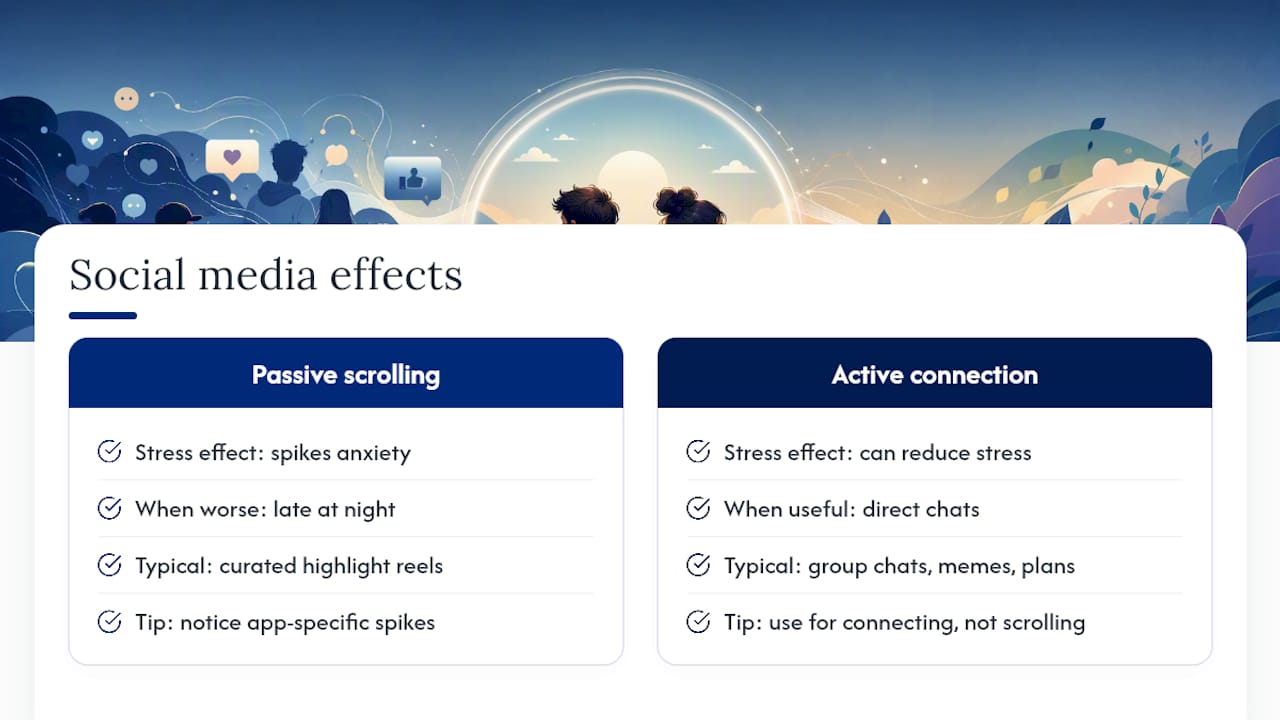
Your phone isn’t neutral. It’s either lowering your stress or actively raising it, depending on how you use it. Comparison is the biggest driver: scrolling through curated highlight reels of other people’s lives tends to spike anxiety, especially late at night when you’re already tired and less able to put it in perspective.
Notifications play a role too. Every buzz pulls your attention and keeps your nervous system in a low-grade alert state, even when the message itself is nothing urgent. That’s part of why screens off 30 to 60 minutes before bed matters so much. It’s not just about blue light. It’s about giving your brain a stretch of time where nothing is competing for its attention.
That doesn’t mean social media is the enemy. Group chats with real friends, sharing memes, or coordinating plans can genuinely reduce stress by keeping you connected. The difference is passive scrolling versus active connection. If you notice your stress spikes specifically after scrolling but not after texting a friend directly, that’s useful information about where to set limits. Try tracking it for a few days. Most teens are surprised by which apps actually correlate with feeling worse.
Why Friends Matter More Than You Might Think
Peer relationships aren’t just a nice-to-have when it comes to stress. Social support functions almost like a buffer, softening how hard a stressful event hits you in the first place. Talking to a trusted friend, or a trusted adult, is one of the strategies experts consistently point to for helping teens manage stress.
There’s a reason venting to a friend after a bad day feels different from just stewing on it alone. Saying the problem out loud forces you to organize it, and hearing someone else respond, even just with “that sounds rough,” reduces the sense of isolation that makes stress feel bigger than it is.
The flip side is real too. Friend group drama, exclusion, or constant conflict can become its own major stressor, sometimes a bigger one than school. If your peer relationships are adding more stress than they’re relieving, that’s worth naming directly rather than assuming it’s just part of being a teenager. Not every friendship deserves the same amount of your energy, and pulling back from one that consistently drains you isn’t a betrayal, it’s boundary setting.
Building Emotional Resilience and Coping Skills
Resilience isn’t a personality trait some people are born with. It’s a skill built through repetition, mostly by facing manageable stress and coming out the other side. Every time you use a coping tool, breathing, grounding, talking to someone, and it works even a little, you’re teaching your brain that stress is survivable.
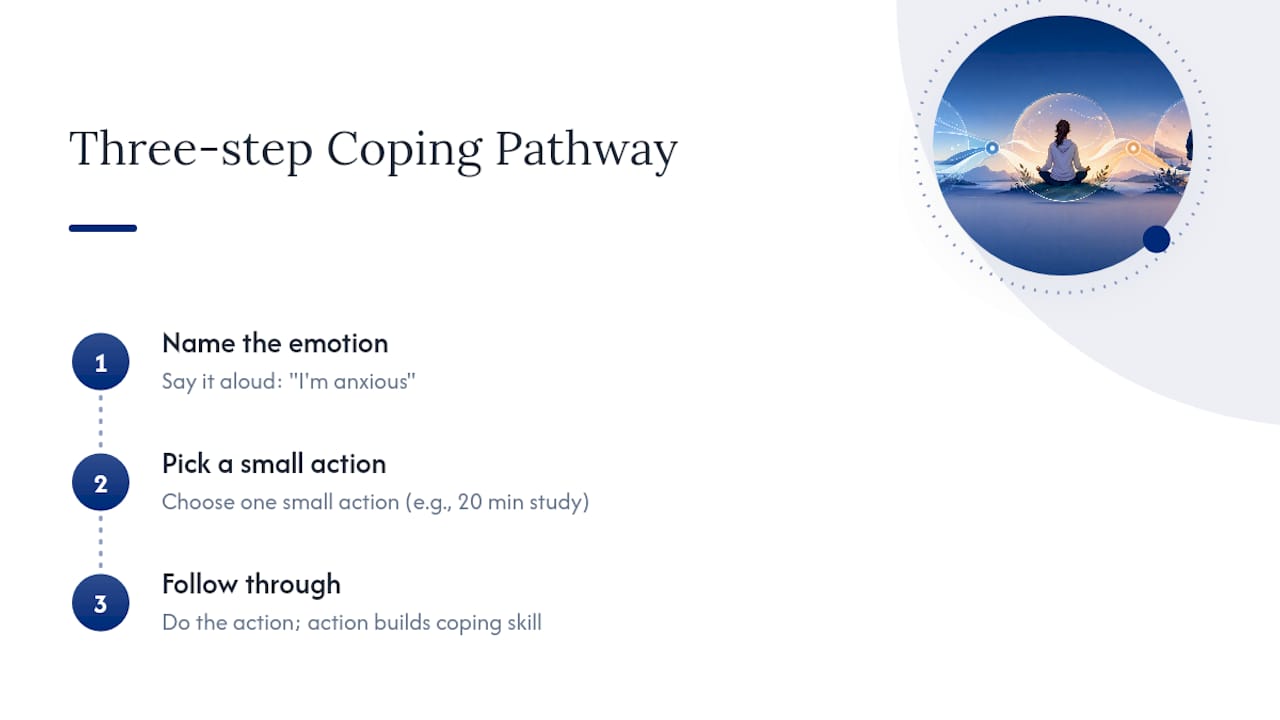
The mistake a lot of teens make is trying to avoid every uncomfortable feeling rather than build a tolerance for it. Avoidance feels good short term but tends to make anxiety bigger over time because you never prove to yourself you can handle it. A more resilient approach: name the emotion (“I’m anxious about this test”), pick one small action (“I’ll study for 20 focused minutes”), and follow through. That combination, naming plus acting, builds coping skill faster than distraction alone.
Writing about your feelings, even briefly, is another underused resilience tool. Putting stress into words on paper, rather than just replaying it mentally, tends to shrink its intensity. You don’t need a full journal habit. Three sentences at the end of a hard day counts.
Managing Academic Pressure Without Burning Out
Academic stress hits differently than other kinds because it’s constant and often tied to your sense of identity. A bad grade can feel like it says something about your worth, not just your understanding of the material, and that emotional weight makes the stress worse than the workload itself.
Breaking big assignments into smaller steps helps more than most students expect. A research paper due in three weeks feels overwhelming as one item on a to-do list. Broken into “pick a topic,” “find three sources,” “write an outline,” it becomes a series of manageable tasks instead of one looming deadline. Schedule those steps across the weeks instead of stacking them all at the end.
Perfectionism is the other major driver of academic stress, and it’s worth naming directly if it applies to you. Aiming for a “good enough” standard on lower-stakes assignments, rather than perfect on everything, frees up energy for the assignments that actually matter. That’s not lowering your standards across the board. It’s spending your effort where it counts instead of spreading it evenly and running yourself down.
Setting Boundaries Without Feeling Guilty About It
A lot of teen stress comes from saying yes to more than you can actually handle, extra commitments, favors for friends, family expectations, because saying no feels uncomfortable. Boundaries are simply the practice of protecting your time and energy on purpose instead of by accident.
Setting one doesn’t require a dramatic conversation. It can be as small as telling a friend, “I can’t talk right now, can I call you after dinner?” instead of dropping everything. Or telling a parent, “I need Sunday afternoon to finish homework before I can help with that.” Specific, direct requests work better than vague ones, and they don’t require an apology attached.
The habit worth building is pausing before you agree to something. A five-second delay, “let me check and get back to you”, gives you room to actually consider whether you have the capacity, instead of defaulting to yes out of guilt or habit.
Clinician Perspective: What Actually Works and What Trips Teens Up
The teens who make real progress aren’t the ones who try five techniques at once. They’re the ones who pick one or two and repeat them until they become automatic. The most common mistake I see is waiting for a big block of free time to “really” practice relaxation, time that rarely shows up. Thirty seconds between classes works better than a twenty-minute session you keep postponing.
It’s also worth saying plainly: needing more support than self-help techniques provide isn’t a failure. Counseling exists for exactly that gap.
— Carlos
How Mastering Conflict Supports Teens Through Stress
Some stress responds well to breathing exercises and a better bedtime. Some needs a professional in the room. Mastering Conflict works with teens directly through individual counseling, family counseling, and anger management support, often for situations where stress has started showing up as irritability, conflict at home, or difficulty regulating emotions rather than just everyday pressure.

A first visit typically starts with a confidential intake conversation focused on what’s actually going on, not a lecture. From there, goals get set that are specific to the teen, not generic advice pulled from a worksheet. If you’re not sure whether what you’re dealing with calls for counseling or just a better daily routine, the difference between coaching and therapy is worth reading before you decide. For families who want a clearer picture of what’s driving a teen’s stress or anger, an anger management assessment is a practical starting point. While you weigh that decision, try one of the breathing techniques above today and see how it feels.
This article is general information, not a substitute for advice from a qualified doctor. Consult a qualified healthcare professional about your own circumstances before acting on anything here.
Sources
- Six relaxation techniques to reduce stress — Harvard Health
- How to help children and teens manage their stress — APA
- Healthychildren
- Choosemyplate
FAQ
How do you calm down a stressed teenager?
Guide them through one slow breathing cycle, like inhaling for 4 counts and exhaling for 8, while staying calm yourself. Follow up afterward by naming what’s stressing them out rather than jumping straight to solutions.
What are the symptoms of stress in teens?
Common signs include sleep or appetite changes, irritability, withdrawing from friends, trouble concentrating, and physical complaints like headaches or stomachaches. Symptoms lasting more than two weeks or interfering with daily life warrant a conversation with a trusted adult.
How can you reduce stress immediately?
Box breathing, a 30 to 60 second muscle release for the jaw and shoulders, or the 5-4-3-2-1 grounding technique all work within a couple of minutes. Micro-doses used consistently tend to work better than waiting for one longer session.
What are the 4 A’s of stress management?
The 4 A’s, avoid, alter, adapt, and accept, are a common framework for sorting stressors by whether you can remove them, change them, adjust your response, or need to accept what you can’t control. They pair well with the personal stress plan outlined earlier: naming your stressor is the first step to figuring out which of the four applies.
When should a teen see a counselor for stress?
If self-help techniques aren’t reducing symptoms after a few weeks, or if stress is affecting sleep, grades, or relationships significantly, it’s time to involve a professional. Mastering Conflict’s clinical services offer counseling options built specifically for teens navigating this level of stress.