
Repairing After Infidelity: Steps to Rebuild Trust

Discovering betrayal can shake the foundation of any relationship, leaving couples across North Carolina and South Carolina feeling lost, hurt, and uncertain about the future. In the aftermath of infidelity, restoring trust and rebuilding connection often depends on learning new ways to communicate, set boundaries, and process emotions together. This guide delivers practical steps for establishing transparency, validating each other’s feelings, and using expert strategies to create a healthier, more trusting partnership.
Table of Contents
- Step 1: Prepare for Honest Conversations
- Step 2: Acknowledge and Validate Emotions
- Step 3: Establish Clear Boundaries Together
- Step 4: Practice Forgiveness and Empathy
- Step 5: Strengthen Communication Daily
- Step 6: Monitor Progress and Adjust Plans
Quick Summary
| Key Point | Explanation |
|---|---|
| 1. Set Clear Communication Guidelines | Establish rules for discussions, like respecting each other’s feelings and avoiding blame, to foster a safe environment for healing. |
| 2. Create a Judgment-Free Zone for Emotions | Encourage open emotional expression and validate each other’s feelings without judgment, which is essential for rebuilding trust. |
| 3. Establish Practical Boundaries Together | Develop clear and mutual boundaries that promote accountability and safety in the relationship to help restore trust and intimacy. |
| 4. Practice Empathy and Compassion | Cultivate understanding by acknowledging each other’s feelings and working towards forgiveness, which are critical for personal healing. |
| 5. Monitor Progress and Adapt Strategies | Regularly assess the relationship’s healing journey, making adjustments as necessary to ensure both partners feel heard and valued during the process. |
Step 1: Prepare for Honest Conversations
Preparing for honest conversations after infidelity requires emotional courage and strategic communication. Your goal is to create a safe environment where both partners can discuss painful experiences without escalating conflict.
To successfully navigate these delicate discussions, start by setting clear ground rules. Transparency becomes crucial for healing and rebuilding trust. Consider establishing these key communication guidelines:
- Choose neutral ground where both partners feel comfortable
- Set specific time boundaries for discussions
- Commit to listening without interrupting
- Agree to use respectful language
- Prohibit blaming or defensive responses
Before initiating the conversation, mentally prepare yourself to be vulnerable. This means being ready to share your feelings honestly while also being open to hearing your partner’s perspective. Practice emotional self-regulation techniques like deep breathing or meditation to help manage intense emotions that might surface.
Honest conversations are not about winning, but understanding and healing together.
Remain patient with the process. These conversations might not resolve everything in one sitting, and that’s okay. The goal is gradual, steady progress toward rebuilding trust and connection.
Pro tip: Consider having a neutral third party, like a couples therapist, present during initial conversations to help maintain constructive dialogue and emotional safety.
Step 2: Acknowledge and Validate Emotions
Recovering from infidelity requires a deep emotional reckoning where both partners learn to recognize, express, and validate each other’s complex feelings. Your primary goal in this step is to create a compassionate space where painful emotions can be shared without judgment or defensiveness.
Therapists emphasize the importance of acknowledging painful emotions such as anger, betrayal, and profound insecurity. Understanding these emotions means accepting that healing is not linear and that each partner will experience pain differently. Consider these strategies for emotional acknowledgment:
- Create a judgment-free zone for emotional expression
- Practice active listening without interrupting
- Validate feelings even if you disagree with their perspective
- Avoid becoming defensive when difficult emotions emerge
- Recognize that healing takes time
Emotional validation involves more than just hearing words it requires genuine empathy and a willingness to sit with uncomfortable feelings. The partner who caused the hurt must demonstrate true understanding by listening carefully and showing authentic remorse.

Here’s a quick reference guide to common emotional challenges during infidelity recovery and positive responses to each.
| Emotional Challenge | Positive Response Suggestion | Why It Helps |
|---|---|---|
| Intense anger | Practice calm validation | De-escalates rising conflict |
| Overwhelming sadness | Offer comforting presence | Reinforces emotional support |
| Distrust | Provide consistency and transparency | Rebuilds foundation of trust |
| Guilt or shame | Express understanding, not blame | Reduces defensiveness |
| Rejection or insecurity | Give authentic reassurance | Re-establishes sense of value |
Healing begins when emotions are heard, not when they are minimized or explained away.
Remember that emotional healing is not about assigning blame but about creating mutual understanding. Each conversation is an opportunity to rebuild trust and reconnect on a deeper level.
Pro tip: Consider keeping a shared journal where both partners can express feelings privately and then discuss them together in a structured, supportive manner.
Step 3: Establish Clear Boundaries Together
Rebuilding trust after infidelity requires creating a robust framework of mutual understanding and accountability. Your mission is to develop explicit, practical boundaries that restore safety and demonstrate genuine commitment to healing.
Establishing boundaries is vital to protect oneself and rebuild a healthy relationship. These boundaries must be comprehensive, covering multiple aspects of your relationship and personal interactions. Consider developing boundaries in these critical areas:
- Communication transparency with full phone and social media access
- Defined expectations for social interactions and friendships
- Specific accountability measures for rebuilding trust
- Agreed-upon privacy guidelines
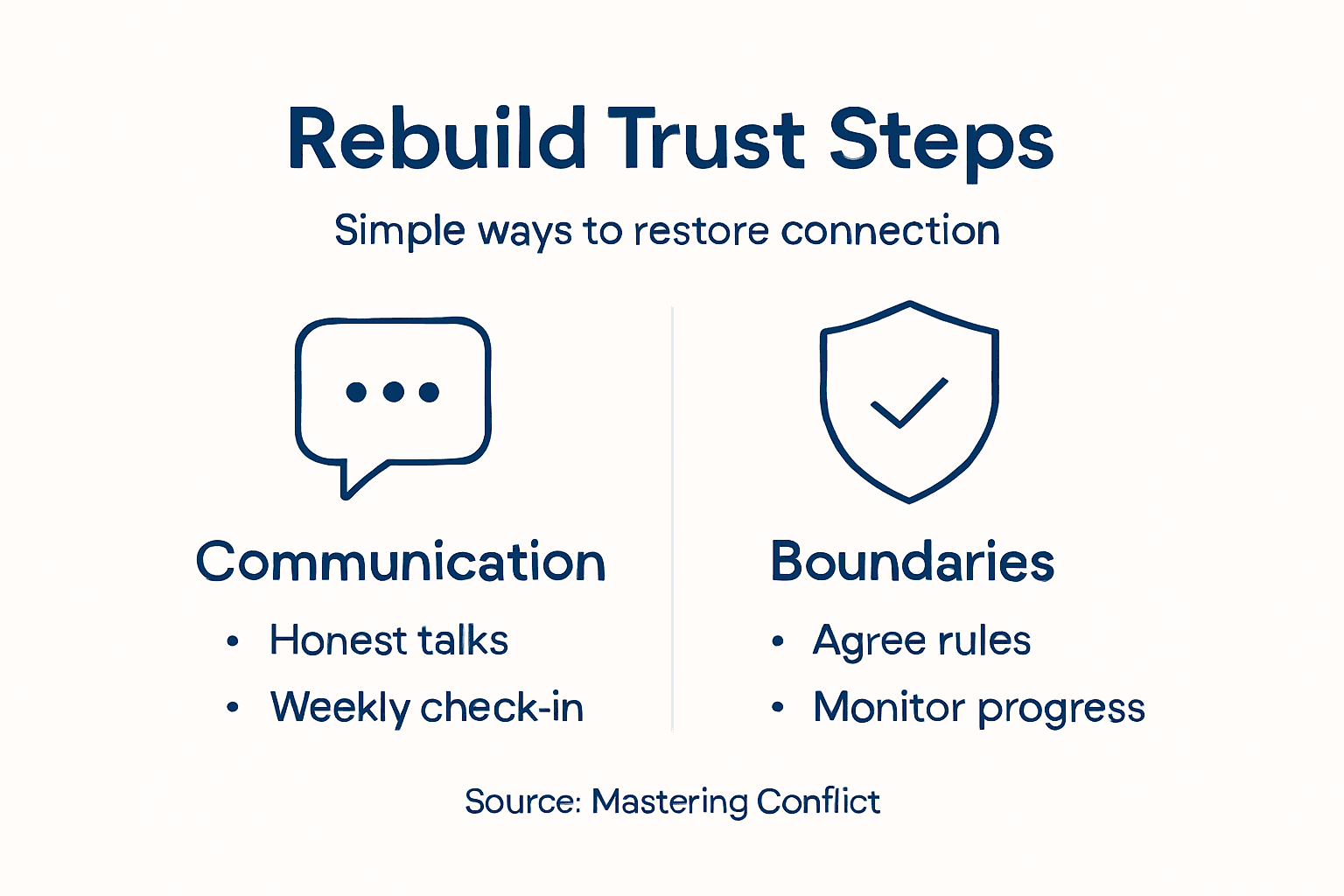
- Regular check-in schedules to discuss progress and feelings
Successful boundary setting requires the unfaithful partner’s complete commitment to change. This means being willing to answer questions, provide reassurance, and demonstrate consistent, trustworthy behavior. The betrayed partner must also communicate boundaries respectfully and clearly, avoiding manipulation or excessive control.
True boundaries are about mutual respect, not punishment or revenge.
Remember that boundaries are not permanent restrictions but temporary support structures designed to help you rebuild intimacy and trust. As healing progresses, these boundaries can evolve and become more flexible.
Pro tip: Write down your agreed boundaries and review them together monthly, adjusting as needed to reflect your relationship’s healing progress.
Step 4: Practice Forgiveness and Empathy
Healing after infidelity demands more than just understanding what happened. You must develop the emotional capacity to move through pain, cultivate compassion, and rebuild your connection with intentional empathy and forgiveness.
Practicing empathy means developing deep emotional understanding of your partner’s inner world. This process requires creating space for vulnerability, listening without judgment, and acknowledging the complex emotions driving both partners’ actions. Consider these strategies for cultivating genuine empathy:
- Suspend immediate emotional reactions
- Listen to understand, not to defend
- Ask open-ended questions about feelings
- Validate emotional experiences without agreeing with actions
- Practice emotional perspective-taking
Forgiveness is not about forgetting or condoning the betrayal, but releasing the emotional burden that keeps you stuck in pain. It’s a personal journey of healing that benefits you more than your partner. The unfaithful partner must demonstrate consistent, trustworthy behavior to earn this opportunity.
Forgiveness is a gift you give yourself, not a pass for the person who hurt you.
Understand that forgiveness is a process, not a single moment. Some days will feel easier than others, and that’s completely normal. Healing is not linear, and compassion for yourself is just as important as compassion for your partner.
Pro tip: Consider working with a couples therapist who can guide you through structured forgiveness exercises and help you navigate complex emotional terrain.
Step 5: Strengthen Communication Daily
Rebuilding your relationship after infidelity requires intentional, consistent communication that goes beyond surface-level interactions. Your goal is to create a safe, transparent dialogue that allows both partners to heal and reconnect authentically.
Restoring intimacy involves open, honest dialogue addressing the emotional challenges caused by betrayal. Daily communication practices are crucial for rebuilding trust and connection. Consider implementing these strategic communication techniques:
- Schedule dedicated talk times
- Practice active, non-defensive listening
- Use “I” statements to express feelings
- Create a judgment-free communication zone
- Acknowledge each other’s emotional experiences
Communication after infidelity is not about rehashing painful details but creating a pathway to mutual understanding. The betrayed partner needs space to express hurt, while the unfaithful partner must demonstrate genuine accountability and empathy. This requires patience, vulnerability, and a commitment to rebuilding emotional safety.
Meaningful communication is less about perfect words and more about authentic presence.
Remember that effective communication is a skill that improves with practice. Some conversations will be difficult, but each honest dialogue brings you closer to healing and potential reconciliation.
Pro tip: Set a weekly “relationship check-in” where both partners can share feelings without interruption, using a timer to ensure balanced, respectful dialogue.
Step 6: Monitor Progress and Adjust Plans
Repairing a relationship after infidelity is not a linear journey but a dynamic process requiring continuous reflection, honest assessment, and flexible adaptation. Your goal is to create a responsive healing strategy that evolves as you both grow and heal.
Regularly evaluating your relationship’s progress means establishing clear, measurable indicators of healing and connection. While no universal roadmap exists, developing a structured approach to monitoring your relationship’s transformation can provide crucial insights. Consider tracking these key dimensions:
- Emotional trust restoration
- Communication quality and frequency
- Individual and collective healing
- Intimacy and connection levels
- Conflict resolution effectiveness
Pay attention to both subtle and significant changes. Some progress might feel imperceptible day-to-day, but periodic reflection will reveal meaningful transformation. Be patient with yourselves and recognize that setbacks are not failures but opportunities for deeper understanding and growth.
Monitor these key relationship dimensions to track healing progress effectively:
| Progress Indicator | Example Measurement | Sign of Improvement |
|---|---|---|
| Emotional trust restoration | Willingness to be vulnerable | More open conversations |
| Communication quality | Frequency of sharing feelings | Fewer misunderstandings |
| Intimacy and connection | Comfort with closeness | Increased affection |
| Conflict resolution skills | Handling disagreements | Faster resolution, less anger |
Healing is not about perfection, but consistent, compassionate effort.
Remember that monitoring progress is not about creating additional pressure but fostering mutual accountability and shared commitment to rebuilding your relationship. Approach this process with curiosity, openness, and genuine care for each other’s emotional well-being.
Pro tip: Create a quarterly relationship review where you both share honest observations, celebrate progress, and collaboratively adjust your healing strategy.
Rebuild Trust With Expert Support From Mastering Conflict
Repairing a relationship after infidelity can feel overwhelming. The challenges of emotional validation, establishing boundaries, and practicing forgiveness are difficult to face alone. If you are seeking guidance to navigate these complex steps and want to create lasting change, professional support can make all the difference. Our specialized services at Mastering Conflict focus on helping couples develop effective communication and rebuild emotional safety through proven counseling techniques.

Take the next step toward healing by exploring our couples therapy and conflict resolution coaching programs designed specifically for those recovering from betrayal. Visit Mastering Conflict now to book a consultation and begin a compassionate, structured approach to restoring trust. You do not need to face this journey alone — expert help is available to guide both partners toward renewal and strength.
Frequently Asked Questions
What are the first steps to take for repairing trust after infidelity?
To begin repairing trust, start with preparing for honest conversations. Set clear ground rules for communication, such as choosing a neutral location and committing to respectful dialogue, to create a safe environment for both partners.
How can I validate my partner’s emotions during the healing process?
You can validate your partner’s emotions by actively listening and acknowledging their feelings, even if you may not agree. Establish a judgment-free zone where both partners feel safe to express their emotions without fear of backlash.
What boundaries should we establish to rebuild our relationship after infidelity?
Establishing clear boundaries is crucial for rebuilding your relationship. Discuss expectations regarding communication and social interactions, and agree on accountability measures to foster trust and reinforce commitment to healing.
How can we practice forgiveness both individually and as a couple?
Practice forgiveness by engaging in open, honest discussions that allow for vulnerability. Focus on releasing emotional burdens and understanding that forgiveness is a process that can take time; consider checking in with each other regularly about emotions and progress.
How often should we communicate about our relationship progress after infidelity?
Aim to have dedicated conversations about your relationship progress regularly, ideally weekly or bi-weekly. Scheduling consistent check-ins creates a space for both partners to share feelings and assess healing, ensuring that progress is actively monitored.
What signs should we look for to gauge our healing progress?
Monitor indicators such as emotional trust restoration, communication quality, and intimacy levels. For example, improvement may be seen when both partners are more willing to be vulnerable and when there are fewer misunderstandings in daily interactions.