
Mental Health Counseling Explained: Impactful Solutions

Frustration and tension can build quickly when everyday challenges feel overwhelming, especially for Black individuals and families in North Carolina and South Carolina facing unique stressors. Addressing anger and conflict is about more than controlling outbursts—it is about seeking support through mental health counseling that values personal experience and cultural context. This guide dispels harmful myths and explains how professional online counseling can help you gain practical skills for emotional balance, stronger relationships, and lasting peace of mind.
Table of Contents
- Defining Mental Health Counseling and Misconceptions
- Types and Approaches in Counseling Services
- How Counseling Works: The Therapeutic Process
- Legal, Ethical, and Professional Requirements
- Risks, Costs, and Choosing the Right Counselor
- Real-World Impact: Anger Management and Conflict Resolution
Key Takeaways
| Point | Details |
|---|---|
| Mental Health Counseling Empowers Individuals | It focuses on developing healthier coping mechanisms rather than just fixing problems. |
| Addressing Misconceptions Is Crucial | Understanding that counseling is for everyone, not just those with severe issues, helps reduce stigma. |
| Therapeutic Approaches Vary | Different methods, such as CBT and DBT, cater to individual needs and emotional challenges. |
| Choosing the Right Counselor Matters | Professional credentials, compatibility, and therapeutic approach are key factors in finding suitable mental health support. |
Defining Mental Health Counseling and Misconceptions
Mental health counseling represents a professional therapeutic approach designed to support individuals experiencing psychological challenges, emotional difficulties, and interpersonal conflicts. Unlike common misconceptions, mental health counseling is not about “fixing” someone, but rather empowering individuals to develop healthier coping mechanisms, enhance self-understanding, and navigate life’s complex emotional landscapes.
Research highlights significant problems with mental health definitions that complicate public understanding. These definitional challenges contribute to widespread misconceptions about mental health services. Key misunderstandings include:
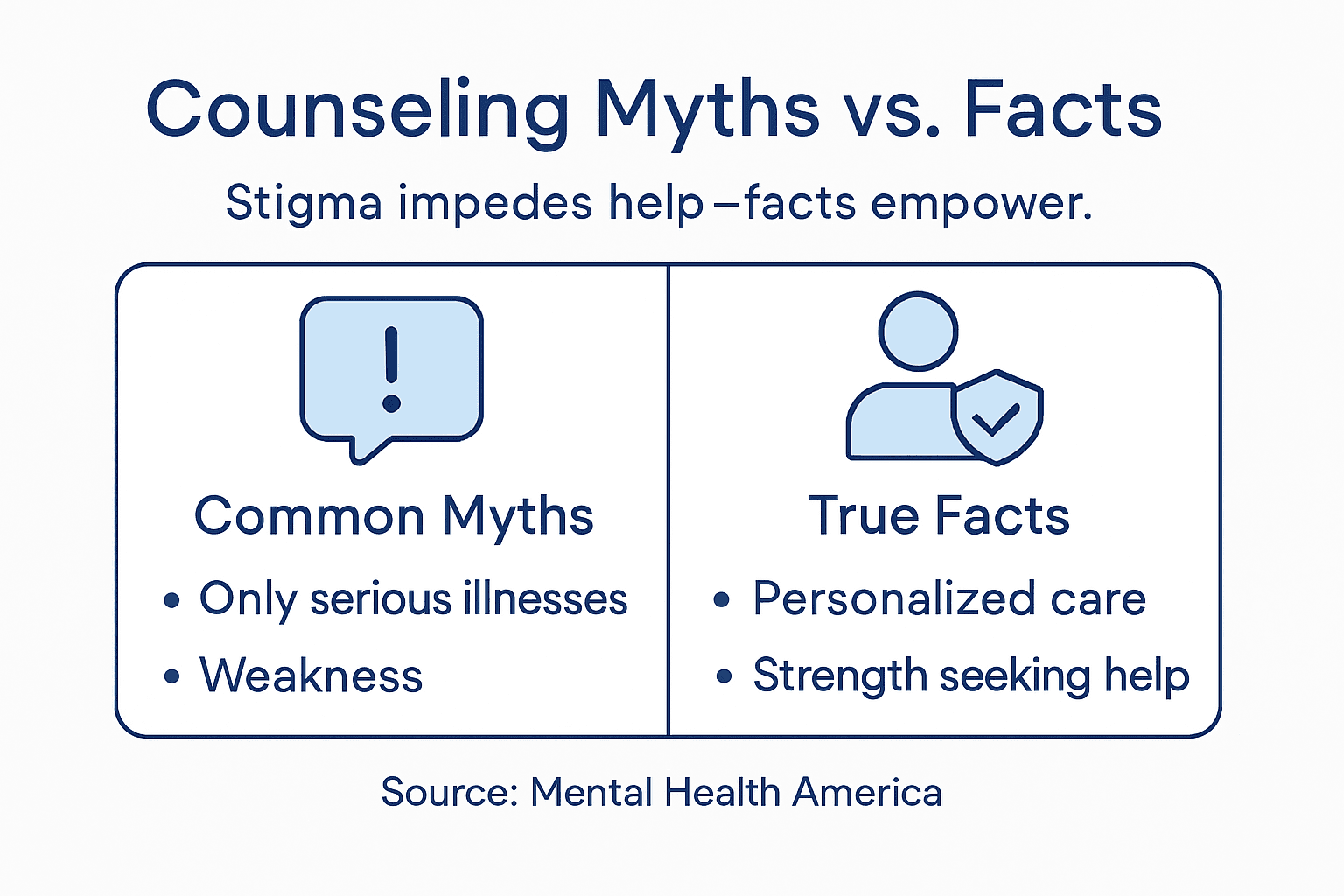
- Mental health counseling is only for people with severe psychological disorders
- Seeking counseling means you are “weak” or “crazy”
- Therapy is a quick fix for complex emotional problems
- Mental health professionals simply provide generic advice
Contrary to these myths, mental health counseling involves a nuanced, personalized approach tailored to individual needs. Therapeutic interventions are collaborative processes where counselors work alongside clients to identify root causes of emotional distress, develop adaptive strategies, and promote psychological resilience.
The stigma surrounding mental health often prevents individuals from seeking necessary support. Misconceptions about mental illness persist and create barriers that discourage people from accessing vital mental health resources. Understanding that counseling is a proactive, strengths-based approach can help normalize conversations about psychological well-being and reduce harmful stereotypes.
Pro tip: Challenge your preconceived notions about mental health counseling by scheduling an initial consultation to learn more about the supportive, confidential nature of therapeutic services.
Types and Approaches in Counseling Services
Mental health counseling encompasses a diverse range of therapeutic approaches designed to address individual psychological needs. Different therapy approaches offer unique strategies for supporting clients through various emotional and mental challenges, recognizing that no single method works universally for every person.
Key counseling approaches include:
- Cognitive Behavioral Therapy (CBT): Focuses on identifying and changing negative thought patterns and behaviors
- Psychoanalytic Therapy: Explores unconscious motivations and past experiences
- Humanistic Therapy: Emphasizes personal growth and self-actualization
- Dialectical Behavior Therapy (DBT): Helps individuals manage intense emotions and improve relationships
- Acceptance and Commitment Therapy (ACT): Supports psychological flexibility and value-driven living
Therapeutic interventions are not one-size-fits-all solutions. Five different therapeutic approaches demonstrate the complexity of mental health treatment. Each method provides unique tools for addressing specific psychological challenges, allowing counselors to tailor their approach to individual client needs.
Understanding these diverse approaches helps clients make informed decisions about their mental health journey. Some therapies work better for specific conditions, while others offer more generalized support. The goal is to find a therapeutic approach that resonates with the individual’s personal experiences, emotional landscape, and specific mental health objectives.
Here’s a quick comparison of common therapy approaches and their primary benefits:
| Therapy Approach | Main Focus | Typical Benefit |
|---|---|---|
| CBT | Changing thought patterns | Reduces anxiety and negative thoughts |
| Psychoanalytic | Exploring unconscious motives | Deepens self-awareness |
| Humanistic | Personal growth and self-actualization | Promotes self-esteem and growth |
| DBT | Managing intense emotions | Improves emotional regulation |
| ACT | Psychological flexibility | Enhances acceptance and value-driven actions |
Pro tip: During your initial consultation, ask potential counselors about their therapeutic approach and how it might specifically address your unique emotional challenges.
How Counseling Works: The Therapeutic Process
Mental health counseling is a collaborative journey of self-discovery and healing, where clients and counselors work together to navigate complex emotional landscapes. The therapeutic process involves intricate interaction between professional and client, designed to foster personal growth, understanding, and meaningful change.
The counseling process typically unfolds through several critical stages:
- Initial Assessment: Understanding client’s background, challenges, and therapeutic goals
- Relationship Building: Establishing trust and creating a safe, non-judgmental environment
- Exploration: Identifying underlying patterns, emotions, and behavioral triggers
- Intervention: Implementing targeted strategies for personal development
- Evaluation and Adjustment: Continuously monitoring progress and refining therapeutic approach
Therapeutic alliance is the cornerstone of effective counseling. Research emphasizes the critical relationship between counselor and client, highlighting that the quality of their connection significantly influences therapeutic outcomes. This dynamic involves active listening, empathy, and a collaborative approach to addressing psychological challenges.

Successful counseling requires ongoing adaptation and personalization. Each session builds upon previous insights, creating a nuanced approach that respects the individual’s unique emotional landscape. Counselors employ various techniques, from talk therapy to specialized interventions, always prioritizing the client’s specific needs and therapeutic objectives.
Pro tip: Approach your first counseling session with openness and honesty, understanding that building trust is a gradual process that requires patience and active participation.
Legal, Ethical, and Professional Requirements
Mental health counseling operates within a complex framework of legal and ethical standards designed to protect both clients and practitioners. Understanding ethics in counseling is fundamental to maintaining professional integrity and ensuring the highest quality of care for individuals seeking psychological support.
Key ethical and legal considerations for mental health professionals include:
- Confidentiality: Protecting client information and maintaining strict privacy standards
- Informed Consent: Clearly explaining therapeutic processes, potential risks, and client rights
- Professional Boundaries: Maintaining appropriate professional relationships
- Mandatory Reporting: Legal obligations to report potential harm to self or others
- Continuing Education: Staying current with professional standards and emerging therapeutic practices
Professional licensing requires counselors to adhere to rigorous standards set by state and national regulatory bodies. These standards encompass educational requirements, ongoing professional development, and adherence to a strict code of ethical conduct. Counselors must demonstrate not just clinical competence, but also a deep commitment to client welfare, personal integrity, and professional responsibility.
Ethical practice extends beyond legal compliance. It involves a profound commitment to respecting client autonomy, promoting mental health, and creating a safe, supportive therapeutic environment. Mental health professionals must continuously navigate complex ethical dilemmas, balancing client needs with professional responsibilities while maintaining the highest standards of care and personal conduct.
Pro tip: Before beginning therapy, ask potential counselors about their ethical guidelines, confidentiality practices, and professional credentials to ensure you’re working with a fully qualified and responsible professional.
Risks, Costs, and Choosing the Right Counselor
Mental health counseling involves a complex decision-making process that requires careful consideration of multiple factors. Choosing the right therapist can significantly impact your psychological healing journey, making it crucial to understand potential risks, financial implications, and professional qualifications.
Key considerations when selecting a counselor include:
- Professional Credentials: Verify licenses, educational background, and specialized training
- Therapeutic Approach: Ensure alignment with your personal mental health goals
- Cost Structure: Understand session pricing, insurance coverage, and payment options
- Personal Compatibility: Assess comfort level and communication style
- Specialization: Confirm expertise in addressing your specific psychological challenges
Financial considerations play a significant role in accessing mental health services. Costs can vary widely depending on location, therapist experience, session duration, and treatment modality. Some counselors offer sliding scale fees, insurance billing, or package rates to make therapy more accessible. Client rights in counseling emphasize transparency in billing and the importance of understanding potential financial commitments before beginning treatment.
Potential risks in counseling extend beyond financial considerations. Emotional vulnerability, potential treatment ineffectiveness, and the delicate nature of therapeutic relationships require careful navigation. Clients should feel empowered to ask questions, discuss concerns, and maintain open communication with their counselor to mitigate potential risks and ensure a productive therapeutic experience.
To help you select the most suitable counselor, review these key selection factors:
| Factor | Why It Matters | Example Consideration |
|---|---|---|
| Credentials | Ensures proper training | Verify state licenses |
| Cost Structure | Impacts affordability | Ask about sliding scale fees |
| Compatibility | Builds trust and rapport | Assess communication style |
| Specialization | Matches expertise to your needs | Seek expertise in anxiety or trauma |
Pro tip: Schedule initial consultations with multiple counselors to compare approaches, assess personal comfort, and make an informed decision about your mental health support.
Real-World Impact: Anger Management and Conflict Resolution
Anger management represents a critical approach to improving interpersonal relationships and personal emotional regulation. Solving Problems Together intervention demonstrates how targeted counseling strategies can transform destructive emotional patterns into constructive communication skills.
Key strategies for effective anger management and conflict resolution include:
- Emotional Recognition: Identifying triggers and understanding underlying emotional responses
- Communication Skills: Developing active listening and assertive communication techniques
- Stress Management: Learning healthy coping mechanisms and relaxation strategies
- Impulse Control: Practicing techniques to pause and respond thoughtfully instead of reacting
- Perspective Taking: Developing empathy and understanding alternative viewpoints
Conflict mediation techniques play a crucial role in transforming potentially volatile situations. Emotional regulation strategies have demonstrated significant potential in creating more productive and harmonious environments, whether in workplace, educational, or personal settings. These approaches emphasize understanding emotional landscapes and developing nuanced communication skills.
The real-world impact of effective anger management extends far beyond individual interactions. By learning to navigate emotional challenges constructively, individuals can improve relationships, reduce workplace tensions, enhance personal resilience, and create more supportive, understanding environments in both professional and personal contexts.
Pro tip: Practice mindful breathing and create a personal ‘pause protocol’ to interrupt reactive emotional patterns before they escalate into unproductive conflicts.
Discover Empowering Mental Health Counseling Tailored to Your Needs
Struggling with emotional challenges or seeking to build stronger coping skills is common. This article sheds light on critical aspects of mental health counseling including personalized therapeutic approaches, overcoming misconceptions, and understanding the healing process. If you find yourself wanting to move beyond stigma and myths toward real transformation, Mastering Conflict offers practical, evidence-based solutions focused on empowering individuals like you.
Explore specialized services such as anger management, couples therapy, and individual counseling designed for diverse populations including women, men, teens, and Black/African American communities. Take the first step to break down emotional barriers by scheduling a confidential consultation with Dr. Carlos Todd, a licensed clinical mental health counselor dedicated to your growth. Visit Mastering Conflict today to learn how our clinical interventions, coaching programs, and online therapy options can guide you toward lasting mental wellness.
Frequently Asked Questions
What is mental health counseling?
Mental health counseling is a professional therapeutic approach that supports individuals facing psychological challenges and emotional difficulties. It focuses on empowering clients to develop healthier coping mechanisms and understand their emotions better.
What are some common misconceptions about mental health counseling?
Common misconceptions include the belief that counseling is only for severe psychological disorders, that seeking help indicates weakness, and that therapy offers quick fixes for deep emotional issues. Mental health counseling is a nuanced, personalized process intended to promote psychological resilience.
What are the different types of counseling approaches available?
Common counseling approaches include Cognitive Behavioral Therapy (CBT), Psychoanalytic Therapy, Humanistic Therapy, Dialectical Behavior Therapy (DBT), and Acceptance and Commitment Therapy (ACT). Each method offers unique strategies tailored to individual needs and challenges.
How can I choose the right counselor for my needs?
To choose the right counselor, consider their professional credentials, preferred therapeutic approaches, cost structure, compatibility with your communication style, and specialization related to your specific mental health concerns.
Recommended
- Counseling for Women’s Issues: Empowerment and Change – Mastering Conflict
- Counseling for Women: Empowerment and Well-Being – Mastering Conflict
- Family Counseling Benefits: Support, Healing, and Connection 2025 – Mastering Conflict
- Marriage Counseling: Transforming Couples’ Communication – Mastering Conflict
- Success Stories – Smart Admissions