
How to Handle Rejection for Personal Growth Success

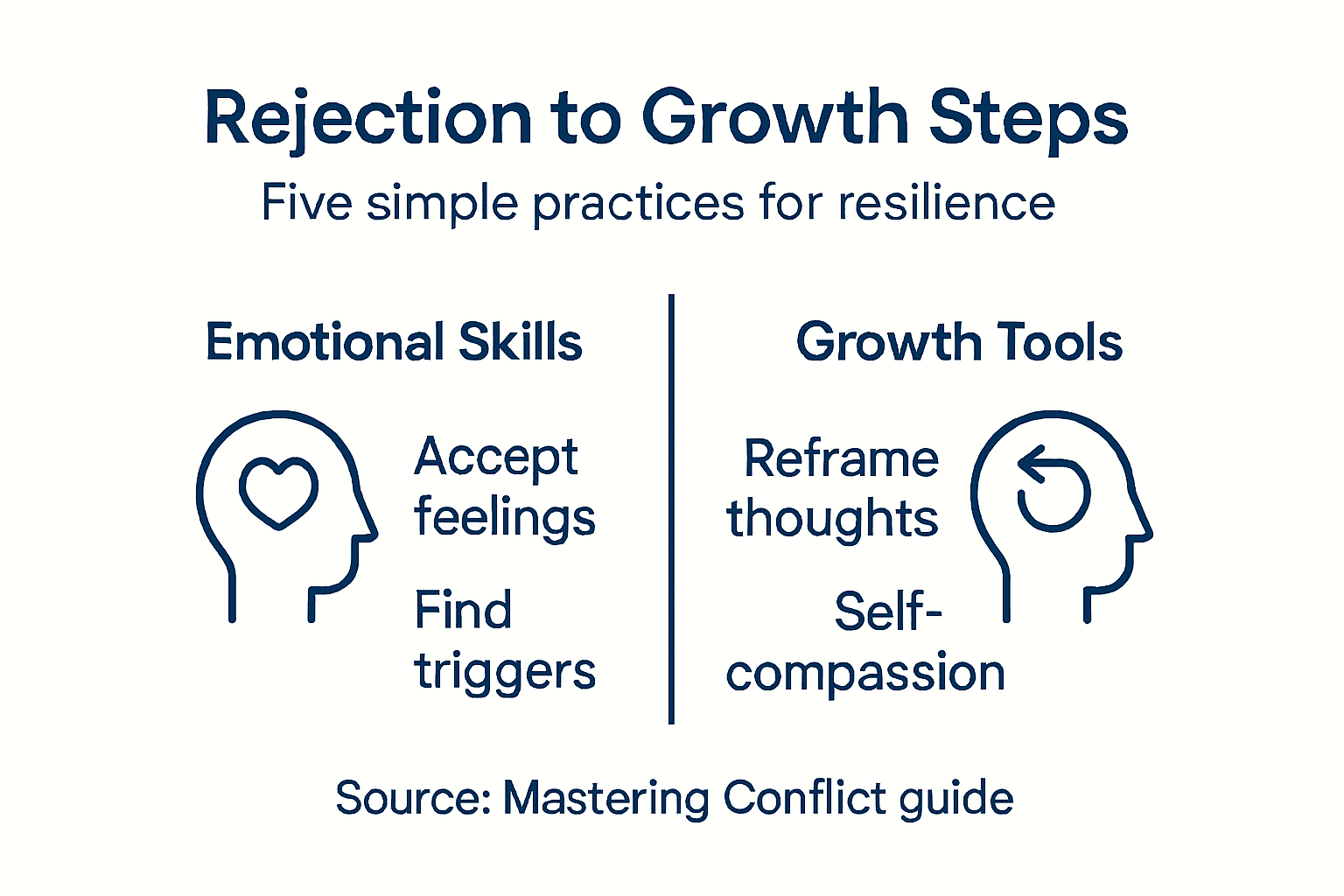
Facing interpersonal rejection can stir up intense emotions like hurt, shame, and loneliness that feel impossible to ignore. For many Black and African American adults in North and South Carolina, these feelings are more than passing discomfort—they signal a threat to belonging and self-worth. Grounded in fresh strategies, this guide offers practical steps to help you process emotional pain, identify triggers, and embrace a healthier mindset for personal development and mental health. By learning to recognize and accept your emotional response, you set the foundation for lasting resilience.
Table of Contents
- Step 1: Recognize And Accept Your Emotional Response
- Step 2: Identify Personal Triggers To Rejection
- Step 3: Reframe Negative Thoughts Constructively
- Step 4: Practice Self-Compassion And Resilience
- Step 5: Apply Learned Strategies To Future Situations
Quick Summary
| Key Insight | Explanation |
|---|---|
| 1. Recognize your emotions | Acknowledge feelings like hurt or shame without judgment to promote self-awareness. |
| 2. Identify personal triggers | Mapping out unique triggers enhances emotional resilience and helps devise better responses. |
| 3. Reframe negative thoughts | Use cognitive reframing to shift perspectives from failure to growth opportunities. |
| 4. Practice self-compassion | Treat yourself kindly and understand that rejection is a universal human experience. |
| 5. Apply strategies intentionally | Transfer coping mechanisms across different contexts to foster continuous personal growth. |
Step 1: Recognize and accept your emotional response
Handling rejection begins with understanding and validating your emotional experience. When faced with interpersonal rejection, your initial reactions are natural and deeply rooted in human survival mechanisms. Emotional responses to rejection typically include complex feelings like hurt, shame, anxiety, and loneliness.
To effectively navigate these emotions, start by acknowledging them without judgment. Your feelings are valid signals that something significant has occurred. Consider these strategies for recognizing and accepting your emotional response:
- Pause and breathe before reacting impulsively
- Name the specific emotions you’re experiencing
- Understand that emotional pain is a universal human experience
- Recognize these feelings do not define your entire worth
Rejection triggers deep-seated psychological responses designed to protect our social connections. By consciously observing these emotions, you transform them from overwhelming experiences into opportunities for personal growth and self-understanding.
Your emotional response is not a weakness, but a sophisticated communication system alerting you to important interpersonal dynamics.
Validate your feelings by speaking them aloud or writing them down. This process helps create emotional distance and perspective. Avoid suppressing or minimizing your reactions, as this can lead to more prolonged psychological distress.
Pro tip: Create a personal emotional tracking journal to document your reactions and identify recurring patterns in how you respond to rejection.
Step 2: Identify personal triggers to rejection
Understanding your unique rejection triggers is crucial for developing emotional resilience. Personal rejection triggers are deeply personal and often rooted in past experiences, self-perception, and psychological vulnerabilities. By mapping out these triggers, you can develop more strategic and compassionate self-responses.
To effectively identify your personal rejection triggers, consider exploring these key areas:
- Reflect on past rejection experiences
- Examine your emotional patterns and immediate reactions
- Recognize underlying fears and insecurities
- Assess how rejection impacts your self-worth
- Identify specific contexts that heighten vulnerability
The Multimotive Model of reactions reveals that individuals respond to rejection through prosocial, asocial, or antisocial pathways. Your specific response depends on how you perceive the rejection and its social context.
Here’s a comparison of common responses to rejection and their long-term effects:
| Response Type | Typical Behavior | Short-Term Impact | Long-Term Outcome |
|---|---|---|---|
| Prosocial | Seeking support, openness | Eases distress, builds trust | Fosters resilience, closeness |
| Asocial | Withdrawal, silence | Reduces immediate conflict | May increase loneliness |
| Antisocial | Anger, blame, retaliation | Temporary empowerment | Damages relationships |
Understanding your triggers is not about blame, but about developing self-awareness and emotional intelligence.
Analyze your emotional landscape by keeping a detailed journal of rejection experiences. Note the situation, your immediate emotional response, and how these feelings evolved over time. Look for recurring patterns that reveal your core psychological triggers.

Pro tip: Create a personal rejection response map that tracks your emotional triggers, typical reactions, and potential growth strategies.
Step 3: Reframe negative thoughts constructively
Cognitive reframing transforms how you interpret rejection by shifting your perspective from defeat to opportunity. Cognitive reframing techniques involve replacing negative thoughts with more balanced and hopeful alternatives, helping you view challenges as growth experiences rather than personal failures.
To effectively reframe your negative thoughts, implement these strategic approaches:
- Challenge absolute statements like “I always fail”
- Replace self-critical language with compassionate self-talk
- Seek objective evidence contradicting negative beliefs
- Distinguish between temporary setbacks and permanent limitations
- Practice separating facts from interpretations
Psychological reframing strategies rooted in cognitive behavioral therapy provide powerful tools for restructuring thought patterns. By consciously analyzing and modifying your internal narrative, you can develop more resilient and constructive responses to rejection.
Reframing is not about denying negative emotions, but about processing them with wisdom and self-compassion.
Develop a balanced perspective by asking yourself reflective questions. What can you learn from this experience? How might this rejection redirect you toward more aligned opportunities? Recognize that rejection is an event, not a definition of your worth.
Pro tip: Create a “reframe journal” where you document negative thoughts and immediately write alternative, more empowering interpretations.
Step 4: Practice self-compassion and resilience
Self-compassion is a powerful tool for transforming your relationship with rejection. Self-compassion research demonstrates that treating yourself with kindness during challenging moments can significantly enhance emotional resilience and personal growth.
Implement these strategies to cultivate self-compassion and build emotional strength:
- Speak to yourself as you would to a caring friend
- Acknowledge that imperfection and struggle are universal human experiences
- Validate your emotions without judgment
- Practice mindful awareness of your inner dialogue
- Recognize rejection as a temporary experience, not a permanent identity
Resilience-building techniques emphasize maintaining emotional equilibrium during adversity. By developing a compassionate mindset, you create an internal support system that helps you navigate challenges with grace and self-understanding.
Self-compassion is not self-pity, but a courageous approach to personal growth and healing.
Transform negative self-talk by creating a compassionate internal narrative. When rejection occurs, pause and ask yourself: What would I say to a friend experiencing this same situation? This perspective shift can help you develop a more supportive and understanding relationship with yourself.
Pro tip: Create a personal compassion mantra that you can repeat during moments of self-doubt to reinforce your inherent worth and resilience.
Step 5: Apply learned strategies to future situations
Transforming rejection-related experiences requires intentional strategy transfer. Learning transfer techniques enable you to adapt coping mechanisms across different personal and professional contexts, turning each rejection into a valuable learning opportunity.
To effectively apply your newfound strategies, consider these implementation approaches:
- Review previous rejection experiences systematically
- Identify common emotional and behavioral patterns
- Extract specific insights from past interactions
- Develop personalized response templates
- Practice flexible adaptation of learned techniques
Adaptive learning strategies emphasize the importance of creating mental frameworks that can be modified and applied across various challenging scenarios. By developing a growth-oriented mindset, you can transform rejection from a roadblock into a strategic development opportunity.
Effective strategy transfer is not about perfection, but about continuous learning and incremental improvement.
Create a personal resilience toolkit by documenting your most successful coping mechanisms. Regularly reflect on and update these strategies, ensuring they remain relevant and effective as you encounter new rejection experiences.
This table summarizes psychological tools for handling rejection at each step:
| Step | Core Tool | Mental Shift |
|---|---|---|
| Recognize emotional response | Self-observation | Feelings as information |
| Identify rejection triggers | Reflective journaling | Patterns and self-awareness |
| Reframe negative thoughts | Cognitive restructuring | Event seen as opportunity |
| Practice self-compassion | Kind inner dialogue | Self-worth independent of events |
| Apply learned strategies | Strategy adaptation | Continuous personal development |
Pro tip: Conduct quarterly self-reviews to assess how your rejection-handling strategies have evolved and identify areas for further personal growth.
Transform Rejection Into Growth With Expert Support
Rejection can feel overwhelming and isolating, especially when emotions like shame or anxiety take over. This article highlights essential steps such as recognizing your emotional responses, identifying personal triggers, and practicing self-compassion to build resilience. If you find yourself struggling to navigate these complex feelings or want to strengthen your emotional toolkit for future challenges, professional guidance can make all the difference.
Discover personalized mental health support and transformative conflict resolution techniques at Mastering Conflict. Whether you are seeking individual therapy to reframe negative thoughts or coaching programs focused on personal development, our evidence-based services led by Dr. Carlos Todd provide compassionate care tailored to your unique experience. Take the first step toward emotional healing and lasting growth by visiting our main site today and explore how our targeted programs for anger management, couples therapy, and resilience building can empower you to face rejection with confidence and strength.
Frequently Asked Questions
How can I effectively recognize and accept my emotional response to rejection?
To effectively recognize and accept your emotional response to rejection, start by pausing and breathing before reacting. Acknowledge specific emotions without judgment, and consider keeping an emotional tracking journal to document your feelings and patterns over time.
What steps can I take to identify my personal triggers related to rejection?
To identify your personal triggers related to rejection, reflect on past experiences and your immediate emotional reactions. Analyze these situations to find common patterns and assess how rejection impacts your self-worth, aiming to understand your fears and insecurities.
How do I reframe my negative thoughts when I face rejection?
To reframe negative thoughts, challenge absolute statements and replace self-critical language with compassionate self-talk. Implement cognitive reframing techniques by documenting negative thoughts and writing empowering alternatives in a dedicated
Recommended
- 7 Practical Steps to Building Resilience in Everyday Life – Mastering Conflict
- 7 Personal Development Steps to Build Emotional Resilience – Mastering Conflict
- 14 Ways to Deal with Anger After a Breakup
- 14 Ways to Deal with Anger After a Breakup
- 10 Self-Development Ideas for Business Owners – Summit Scale