
Dealing with Toxic Relationships: A Practical Step-by-Step Guide

Over 40 percent of American adults have experienced a toxic relationship at some point in their lives. The impact can seep into every part of daily life, leaving many people confused and uncertain about what healthy connections should feel like. Learning to identify the signs is more than just self care, it is a critical step toward protecting your own happiness and building the supportive relationships every American deserves.
Table of Contents
- Step 1: Recognize Signs of Toxic Relationships
- Step 2: Assess Personal Boundaries and Needs
- Step 3: Communicate Assertively and Set Limits
- Step 4: Implement Strategies for Safety and Support
- Step 5: Evaluate Progress and Seek Professional Help
Quick Summary
| Key Insight | Explanation |
|---|---|
| 1. Recognize toxic relationship signs | Identify behaviors that diminish your self-worth and independence to protect your emotional health. |
| 2. Establish personal boundaries | Reflect on your comfort levels and communicate your limits clearly to ensure emotional safety. |
| 3. Communicate assertively | Use I statements to express feelings and set boundaries without aggression to foster mutual respect. |
| 4. Build a support network | Create a circle of trustworthy individuals for emotional safety and guidance in challenging times. |
| 5. Evaluate progress and seek help | Document your emotional growth and seek professional support if you struggle with boundary maintenance. |
Step 1: Recognize Signs of Toxic Relationships
Recognizing toxic relationships is crucial for protecting your emotional well being. This step will help you identify clear warning signs that might indicate an unhealthy relationship dynamic.
Toxic relationships often begin with subtle patterns that gradually erode your sense of self and personal boundaries. Persistent criticism and extreme emotional fluctuations can signal a potentially damaging connection. Look for consistent behaviors that make you feel diminished, controlled, or constantly walking on eggshells. These might include frequent put downs, manipulation tactics, and an overwhelming sense of guilt when asserting your own needs.
One critical warning sign is losing your sense of independence. Toxic partners frequently attempt to isolate you from friends and family, creating a dependency that makes leaving the relationship increasingly difficult. Emotional abuse can manifest through gaslighting, where your feelings and perceptions are consistently undermined, making you question your own reality. Trust your instincts if something feels fundamentally wrong. Your emotional safety and personal boundaries matter more than maintaining a relationship that consistently drains your energy and self respect.
As you move forward, remember that recognizing these signs is the first powerful step toward reclaiming your emotional autonomy and creating healthier relationship patterns.
Step 2: Assess Personal Boundaries and Needs
Understanding and establishing personal boundaries is a critical step in creating healthier relationships. In this phase, youll explore your emotional limits and learn how to articulate your needs effectively.
Personal boundaries represent the invisible lines that define your emotional and physical comfort zones. They act as protective mechanisms that help you maintain self respect and emotional safety. Begin by reflecting on situations where you feel uncomfortable or overwhelmed. Consider moments when your personal space or emotional well being has been compromised. These experiences provide valuable insights into the boundaries you need to establish and reinforce.

To effectively assess your boundaries, practice honest self reflection. Ask yourself key questions about your comfort levels in different relational scenarios. What behaviors are acceptable to you? Where do you draw the line with communication, physical interaction, and emotional support? Healthy boundaries require clear communication and consistent enforcement. This means being prepared to communicate your limits clearly and respectfully while also being willing to enforce them even when it feels challenging. Remember that setting boundaries is not about building walls but creating healthy spaces that allow genuine connection while protecting your emotional well being.
As you move forward, recognize that boundary setting is a skill that develops with practice and self awareness. Your next step will involve learning how to communicate these boundaries effectively in your relationships.
Step 3: Communicate Assertively and Set Limits
Asserting yourself effectively is crucial in transforming toxic relationship dynamics and protecting your emotional well being. This step will empower you to communicate your needs clearly and confidently.
Assertive communication involves expressing your thoughts and feelings directly and respectfully, without aggression or passive submission. Start by using clear I statements that focus on your personal experience. Instead of saying You always criticize me, try I feel hurt when constant criticism makes me doubt myself. This approach shifts the conversation from blame to understanding. Be specific about behaviors that impact you and articulate the emotional consequences those actions create.
Responding effectively to aggressive or manipulative behaviors requires understanding and implementing strategic communication techniques. Practice maintaining a calm tone and steady body language while setting clear boundaries. Remember that assertiveness is not about winning an argument but creating mutual respect. When someone crosses your established limits, respond consistently and without apologetic hesitation. This might mean saying No directly or walking away from interactions that compromise your emotional safety. Your boundaries are valid and do not require extensive justification.
As you continue your journey, recognize that assertive communication is a skill that develops with practice. Your next step will involve understanding how to maintain these boundaries in various relationship contexts.
Step 4: Implement Strategies for Safety and Support
Building a strong support network and creating safety strategies are critical steps in protecting yourself from toxic relationship dynamics. This section will guide you through practical approaches to ensuring your emotional and physical well being.
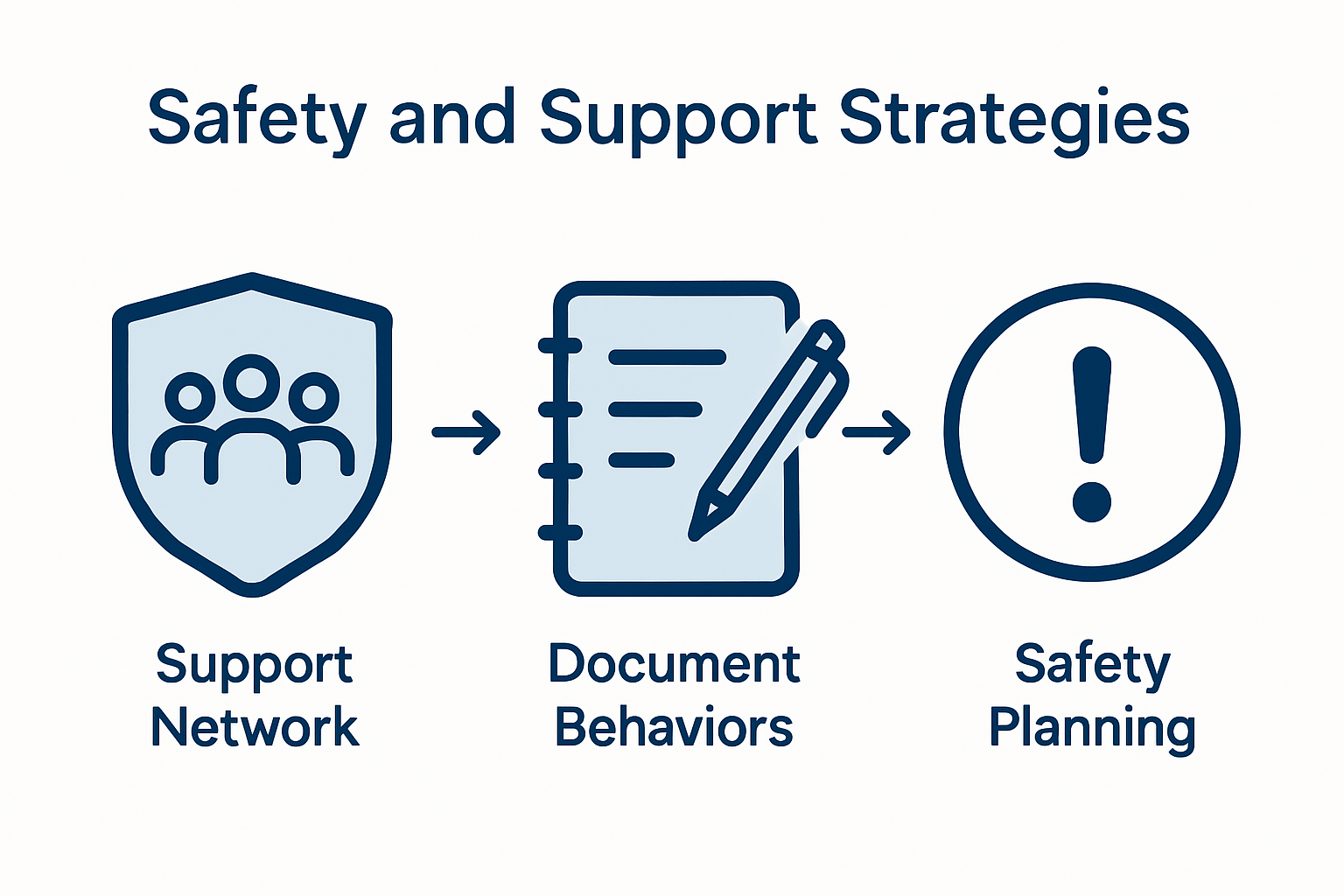
Identifying trusted individuals who can provide genuine support is crucial for maintaining personal safety. Begin by creating a confidential support circle that includes friends, family members, or professionals who understand your situation and can offer non judgmental assistance. Choose people who demonstrate consistent reliability and emotional intelligence. Consider reaching out to a therapist or counselor who specializes in relationship dynamics and can provide professional guidance through your healing process.
Recognizing and breaking unhealthy relationship patterns requires strategic planning and proactive safety measures. Document incidents of toxic behavior as objective evidence and develop a clear exit strategy if the relationship becomes increasingly dangerous. This might include securing financial independence, having a safe place to stay, and maintaining communication channels with support networks. Create digital and physical safety plans that outline specific steps to protect yourself emotionally and physically. Remember that your safety is paramount and seeking help is a sign of strength not weakness.
As you move forward, understand that implementing safety strategies is an ongoing process of self protection and empowerment. Your next step will involve developing long term resilience and healing strategies.
Step 5: Evaluate Progress and Seek Professional Help
Recognizing your healing journey requires consistent self reflection and honest assessment of your emotional growth. This step focuses on understanding your progress and determining when professional intervention might be necessary.
Evaluating the complexities of toxic relationship dynamics demands a comprehensive and objective approach. Start by creating a personal progress journal that tracks your emotional responses, boundary maintenance, and relationship interactions. Note significant changes in your communication patterns, emotional resilience, and ability to recognize and respond to manipulative behaviors. Pay attention to both subtle and dramatic shifts in your comfort levels and self confidence.
Understanding when and how to seek therapeutic support is crucial for breaking long term toxic relationship patterns. Consider professional help if you consistently feel emotionally overwhelmed, struggle to maintain established boundaries, or notice recurring relationship challenges that mirror previous toxic dynamics. A mental health professional can provide specialized strategies tailored to your unique situation, helping you develop deeper insights and more effective coping mechanisms. Remember that seeking help is a sign of strength and self awareness, not weakness.
As you continue your healing journey, recognize that progress is not linear. Your commitment to personal growth and self understanding will be your most powerful tool in creating healthier relationship patterns.
Take Control of Your Emotional Well Being with Expert Support
Dealing with toxic relationships requires more than just recognition and boundary setting. The emotional toll can be overwhelming, leaving you feeling isolated and uncertain about your next steps. If you are ready to move beyond identifying toxic patterns, Mastering Conflict offers comprehensive mental health services tailored to your unique journey. Whether you need personalized counseling, assertiveness coaching, or safety planning, our programs can help you regain confidence and establish healthier connections.
Start your healing today by exploring professional options such as individual therapy, couples therapy, or specialized conflict resolution strategies available at Mastering Conflict. Don’t wait until emotional exhaustion takes over take decisive action now and build a foundation for lasting peace and personal growth.
Frequently Asked Questions
How can I recognize signs of a toxic relationship?
Recognizing signs of a toxic relationship includes being aware of persistent criticism, emotional fluctuations, and behaviors that make you feel controlled or guilty. Start reflecting on your emotional responses and interactions, aiming to identify at least three clear warning signs that impact your self-esteem.
What steps can I take to establish personal boundaries in my relationships?
To establish personal boundaries, begin by reflecting on moments when you felt uncomfortable. Write down specific behaviors that you find acceptable or unacceptable, and communicate these boundaries clearly to those around you. Aim to articulate your personal limits within the next week.
How do I communicate assertively when discussing my needs?
Effective assertive communication involves using “I” statements and expressing your feelings without blame. Practice reframing your sentences to focus on your experiences, such as saying, “I feel hurt when I am criticized,” rather than placing blame. Try to incorporate assertive communication techniques in your conversations this week.
What should I include in my safety strategies for dealing with toxic relationships?
When developing safety strategies, identify trusted individuals for support, and document any toxic behaviors to create a clear exit plan if necessary. Make sure to maintain a safe space and communication plan, aiming to have a well-thought-out strategy in place within 30 days.
How can I evaluate my progress in overcoming a toxic relationship?
To evaluate your progress, maintain a personal journal to track your emotional responses and interactions. Review your entries weekly, focusing on changes in your communication patterns and comfort levels, to gain better insights into your healing journey. Aim for at least one meaningful reflection each week.
When should I consider seeking professional help for toxic relationship issues?
Consider seeking professional help if you frequently feel overwhelmed, struggle to maintain your boundaries, or find recurring relationship issues that resemble past toxic dynamics. Reach out to a mental health professional to explore tailored strategies within the next month if you notice these patterns.