
What Is Gaslighting? Complete Guide for 2025

More than one in five american adults have reported experiencing emotional manipulation, yet gaslighting remains widely misunderstood. This psychological tactic quietly unravels confidence and self-trust, often leaving people confused about what is actually real. Misconceptions about gaslighting can make it harder to recognize and address, which is why clear knowledge about its signs, types, and effects plays a crucial role. By understanding the true nature of gaslighting, you can spot the warning signs early and protect your emotional health.
Table of Contents
- Defining Gaslighting and Common Misconceptions
- Types of Gaslighting and Key Variations
- Recognizing Signs and Core Tactics Used
- Effects of Gaslighting on Mental Health
- Recovery Steps and Support Resources
Key Takeaways
| Point | Details |
|---|---|
| Understanding Gaslighting | Gaslighting is a psychological manipulation tactic that undermines a person’s sense of reality and confidence through systematic invalidation of their experiences. |
| Types of Gaslighting | There are various forms, including Glamour Gaslighting, Good-Guy Gaslighting, and Intimidator Gaslighting, each with unique manipulation strategies. |
| Recognizing Signs | Key tactics include persistent denial, emotional invalidation, isolation, and blame shifting, which erode the victim’s self-trust. |
| Recovery Steps | Recovery involves acknowledging the abuse, seeking professional support, rebuilding trust through networks, and practicing self-compassion. |
Defining Gaslighting and Common Misconceptions
Gaslighting represents a complex psychological manipulation tactic designed to destabilize an individual’s sense of reality and undermine their confidence. Originating from the 1944 film Gaslight, this insidious form of emotional abuse involves systematic attempts to make someone doubt their own perceptions, memories, and judgment.
At its core, gaslighting is a strategic pattern of psychological control where the perpetrator consistently challenges and invalidates the victim’s experiences. Psychologist Robin Stern’s work in The Gaslight Effect reveals how these subtle tactics can gradually erode an individual’s self-trust, creating an environment of constant uncertainty and emotional manipulation.
Several common misconceptions about gaslighting can prevent people from recognizing and addressing this harmful behavior:
- Misconception 1: Gaslighting only occurs in romantic relationships
- Misconception 2: Gaslighters are always aware of their manipulation
- Misconception 3: Victims can easily recognize and stop gaslighting
Understanding these nuanced dynamics requires recognizing that gaslighting is not just a disagreement or communication breakdown, but a deliberate attempt to psychologically control and undermine another person’s sense of reality. Identifying the signs early can help individuals protect their emotional well-being and seek appropriate support.
Types of Gaslighting and Key Variations
Gaslighting manifests through diverse psychological manipulation strategies that can occur across multiple relationship contexts. Research reveals three primary types of gaslighting that demonstrate the complexity of this emotional abuse technique.
Dr. Robin Stern’s groundbreaking work identifies distinct gaslighting variations:
- Glamour Gaslighting: Uses excessive charm and flattery to manipulate and control the victim
- Good-Guy Gaslighting: Appears supportive while subtly undermining the individual’s confidence
- Intimidator Gaslighting: Employs direct criticism and hostile behaviors to destabilize the victim’s sense of self
Beyond these core types, gaslighting can emerge in various interpersonal settings, including workplace dynamics, romantic relationships, friendships, and family interactions. Each context presents unique manipulation tactics designed to erode the victim’s trust in their own perceptions and judgment.
Understanding these variations is crucial for recognizing and addressing psychological manipulation. The strategies may differ in presentation, but they share a fundamental goal: to create doubt, confusion, and emotional dependency. By identifying these patterns, individuals can develop stronger emotional boundaries and protect themselves from sustained psychological harm.
Recognizing Signs and Core Tactics Used
Gaslighting involves sophisticated psychological manipulation techniques designed to systematically undermine an individual’s perception of reality. Common tactics include persistent denial of facts, with the perpetrator strategically attacking the victim’s credibility and emotional stability through calculated behaviors.
Key signs of gaslighting emerge through several distinct manipulation strategies:
- Persistent Denial: Completely rejecting or contradicting previously stated events
- Emotional Invalidation: Trivializing the victim’s feelings and experiences
- Isolation Tactics: Gradually separating the victim from supportive social networks
- Blame Shifting: Consistently making the victim feel responsible for the perpetrator’s actions
Manipulative techniques often involve creating scenarios where the victim appears overly sensitive or emotionally unstable. The perpetrator systematically undermines the victim’s confidence by introducing doubt, rewriting narrative experiences, and challenging their perception of reality.

Understanding these tactics is critical for personal protection. When exploring aggressive behavior response techniques, individuals can develop strategic awareness and emotional resilience against psychological manipulation. Recognizing these patterns early allows victims to establish firm boundaries and seek appropriate support before sustained emotional damage occurs.
Effects of Gaslighting on Mental Health
Psychological manipulation through gaslighting can inflict profound and long-lasting damage on an individual’s mental health, creating complex emotional wounds that extend far beyond immediate interactions. Severe mental health consequences can include depression, anxiety, panic disorders, and post-traumatic stress disorder, as victims progressively lose confidence in their perception of reality.
The mental health impacts of gaslighting manifest through multiple interconnected psychological mechanisms:
- Chronic Self-Doubt: Persistent questioning of personal judgment and experiences
- Emotional Erosion: Gradual destruction of self-esteem and personal boundaries
- Anxiety Amplification: Increased hypervigilance and constant emotional uncertainty
- Trust Destruction: Fundamental breakdown of interpersonal relationship capabilities
Victims often experience a cascading effect of psychological distress, where initial manipulation leads to deeper emotional fragmentation. When exploring aggressive behavior response techniques, individuals can develop strategic coping mechanisms to interrupt these destructive psychological patterns.
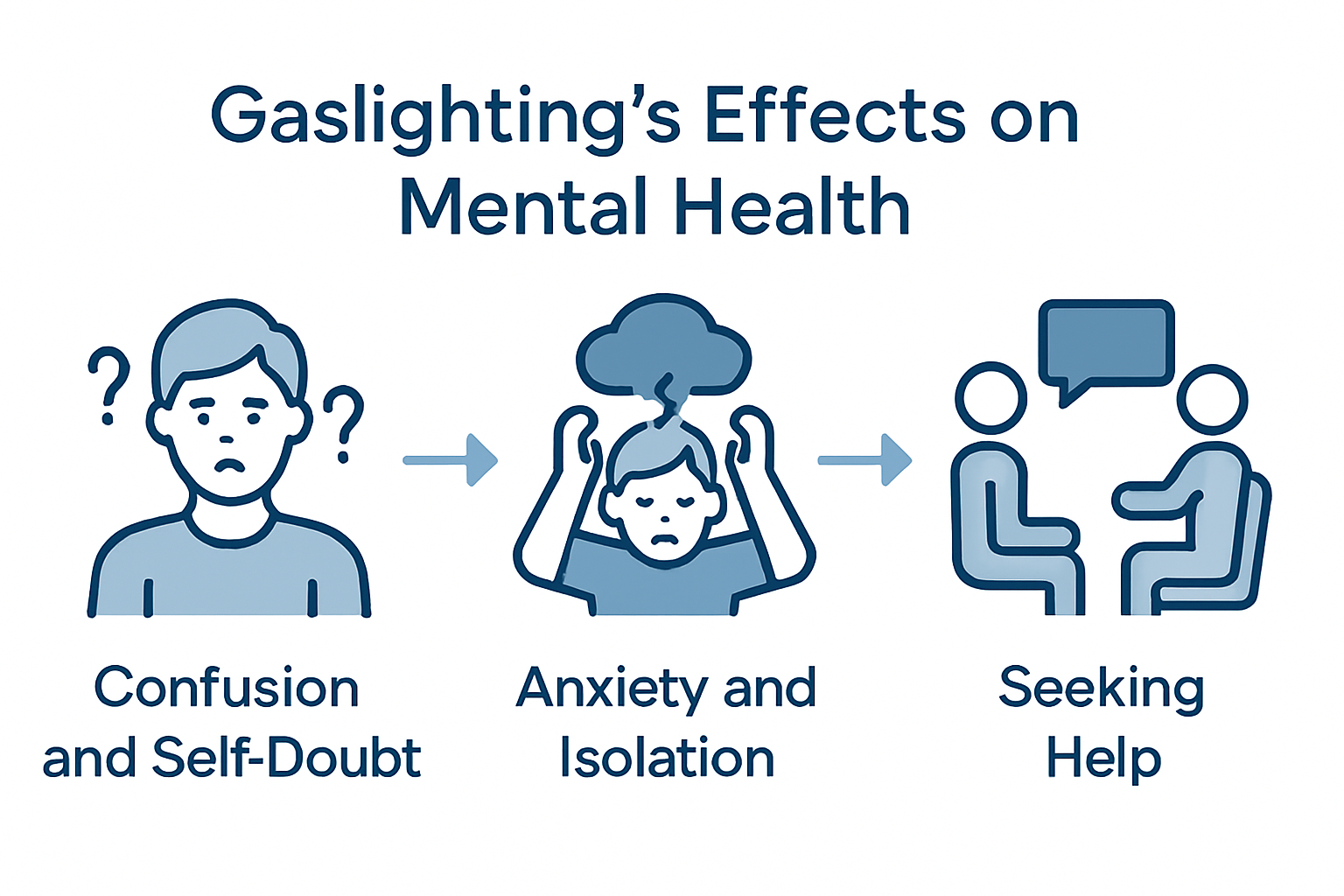
Recognizing and addressing gaslighting’s mental health impacts requires comprehensive support systems. Professional therapeutic intervention, combined with rebuilding personal agency and self-trust, becomes crucial in healing from these profound psychological wounds. The journey toward recovery involves understanding manipulation dynamics, reconstructing personal narrative, and reestablishing healthy emotional boundaries.
Recovery Steps and Support Resources
Recovering from gaslighting requires a comprehensive, compassionate approach that addresses both psychological and emotional healing. Robin Stern’s research provides critical strategies for recognizing manipulation and rebuilding personal autonomy, emphasizing the importance of reclaiming one’s sense of self and establishing firm emotional boundaries.
Key recovery steps include:
- Acknowledge the Abuse: Validate personal experiences and recognize manipulation patterns
- Seek Professional Support: Engage with therapists specializing in psychological trauma
- Build Support Networks: Reconnect with trusted friends and family members
- Practice Self-Compassion: Develop healing techniques that restore personal confidence
Recovery involves systematically rebuilding trust in one’s own perceptions and experiences, which requires patience and intentional emotional work. When exploring strategies for rebuilding trust after betrayal, individuals can develop powerful tools for emotional recovery.
Professional therapeutic intervention becomes crucial in navigating the complex emotional landscape of healing. Trauma-informed counseling can help victims understand manipulation dynamics, process emotional wounds, and develop resilient coping mechanisms. The recovery journey is deeply personal, requiring individualized approaches that prioritize emotional safety, self-validation, and gradual restoration of personal agency.
Take Control of Your Reality and Heal from Gaslighting
Gaslighting can leave you feeling confused, doubting your own memories, and trapped in a cycle of emotional pain. If persistent denial, emotional invalidation, or blame shifting have undermined your self-confidence, you are not alone. These psychological manipulations can cause deep mental health struggles like anxiety and chronic self-doubt. But recovery is possible with guidance and support that rebuilds trust in yourself and your perceptions.

Explore personalized therapy options and coaching programs at Mastering Conflict designed to help you recognize manipulation, set firm emotional boundaries, and regain control over your life. Whether you need individual therapy or specialized anger management classes, our expert team offers compassionate, evidence-based support tailored to your needs. Don’t wait to start healing. Visit Mastering Conflict today to begin your journey toward emotional freedom and restored confidence.
Frequently Asked Questions
What is gaslighting?
Gaslighting is a psychological manipulation tactic that aims to destabilize an individual’s sense of reality, causing them to doubt their perceptions and judgment.
What are the common signs of gaslighting?
Common signs of gaslighting include persistent denial of facts, emotional invalidation, isolation tactics, and blame shifting, all designed to undermine the victim’s confidence.
What are the effects of gaslighting on mental health?
Gaslighting can lead to severe mental health issues such as depression, anxiety, chronic self-doubt, and a breakdown of trust in interpersonal relationships.
How can someone recover from gaslighting?
Recovery from gaslighting involves acknowledging the abuse, seeking professional support, reconnecting with trusted individuals, and practicing self-compassion to rebuild confidence and personal autonomy.
Recommended
- 8 Unconscious Beliefs that Hide Behind the Aggression that manifest itself as Domestic Violence – Mastering Conflict
- Recognizing Toxic Relationships: Complete Guide – Mastering Conflict
- 8 Unconscious Beliefs that Hide Behind the Aggression that manifest itself as Domestic Violence – Mastering Conflict
- Anger Management Tips That Actually Work (2025)