
Complete Guide to the Importance of Boundaries

Nearly half of american adults say they struggle to set boundaries in their daily lives. For many, blurred lines between personal needs and others’ expectations spark unnecessary stress and misunderstandings. Knowing how to define and protect your boundaries can mean the difference between feeling empowered or overwhelmed. This guide unpacks the core importance of boundaries and shows practical ways to maintain your well-being and healthy relationships.
Table of Contents
- Defining Boundaries And Their Core Importance
- Types Of Boundaries In Everyday Life
- Benefits Of Setting Healthy Boundaries
- Recognizing And Addressing Boundary Violations
- Common Mistakes And How To Avoid Them
Key Takeaways
| Point | Details |
|---|---|
| Understanding Boundaries | Boundaries define personal limits in emotional, mental, and physical domains, promoting self-protection and personal empowerment. |
| Types of Boundaries | Different boundary types include emotional, physical, intellectual, material, time, and sexual, each serving distinct purposes in relationships. |
| Benefits of Healthy Boundaries | Establishing clear boundaries enhances emotional well-being, reduces stress, and fosters healthy relationship dynamics. |
| Avoiding Common Mistakes | Individuals should practice assertive communication to uphold boundaries, avoiding oversharing and guilt-driven decisions. |
Defining Boundaries and Their Core Importance
Boundaries represent the invisible lines that define where you end and another person begins – emotionally, mentally, and physically. These personal guidelines serve as protective frameworks that communicate your individual needs, values, and acceptable behaviors in relationships. Unlike rigid walls, boundaries are flexible membranes that allow healthy interactions while preserving personal autonomy and self-respect.
Understanding boundaries requires recognizing that they are fundamentally about self-protection and personal empowerment. When individuals establish clear boundaries, they create a sense of safety and predictability in their interactions. The University of Edinburgh’s Student Counselling Service highlights that well-defined boundaries help protect individuals by providing clarity about what constitutes acceptable conduct. This means communicating your limits openly and consistently, ensuring others understand and respect your personal space and emotional requirements.
Personal boundaries evolved as a critical life skill popularized in the mid-1980s, focusing on individual agency and self-management. These boundaries represent a proactive approach to interpersonal dynamics, where individuals change their responses to situations rather than waiting for others to modify their behavior. By establishing and enforcing personal values, you create a sustainable framework for maintaining emotional well-being and healthy relationships. Key aspects of effective boundary setting include:
- Clearly articulating your comfort levels
- Recognizing your emotional and physical limits
- Practicing consistent communication
- Understanding that boundaries can shift based on context and personal growth
Effective boundary creation is not about building impenetrable walls but constructing flexible, transparent guidelines that honor both your needs and the dignity of others. When implemented thoughtfully, boundaries become powerful tools for self-preservation, mutual respect, and authentic connection.
Types of Boundaries in Everyday Life
Boundaries are not one-size-fits-all constructs but nuanced personal guidelines that manifest in various dimensions of human interaction. Understanding different types of boundaries allows individuals to create comprehensive strategies for maintaining healthy relationships and protecting their emotional well-being. These diverse boundary categories help people navigate complex social landscapes with greater self-awareness and intentionality.
According to experts, six primary boundary types define our interpersonal experiences: emotional, physical, intellectual, material, time, and sexual. Each category serves a distinct purpose in establishing personal comfort and respect. Emotional boundaries involve managing how you share feelings and protect your inner emotional landscape. Physical boundaries relate to personal space, touch, and bodily autonomy. Intellectual boundaries respect individual thought processes, allowing people to express ideas without judgment while maintaining cognitive independence.
Time and material boundaries represent critical aspects of self-preservation in modern relationships. Time boundaries protect your schedule, energy, and commitments, preventing overextension and burnout. Material boundaries involve setting clear expectations around personal possessions, financial interactions, and resource sharing. Sexual boundaries ensure consent, comfort, and mutual respect in intimate contexts, addressing both physical and emotional dimensions of personal intimacy.
Effective boundary setting requires ongoing reflection and adjustment. Not all boundaries remain static – they evolve as personal growth occurs, relationships change, and life circumstances shift. Key strategies for maintaining healthy boundaries include:
- Communicating limits clearly and consistently
- Recognizing when boundaries feel violated
- Practicing self-compassion during boundary-setting
- Understanding that boundaries protect, not isolate
By embracing these varied boundary types, individuals create robust personal frameworks that foster respect, authenticity, and meaningful connections in all life domains.
Benefits of Setting Healthy Boundaries
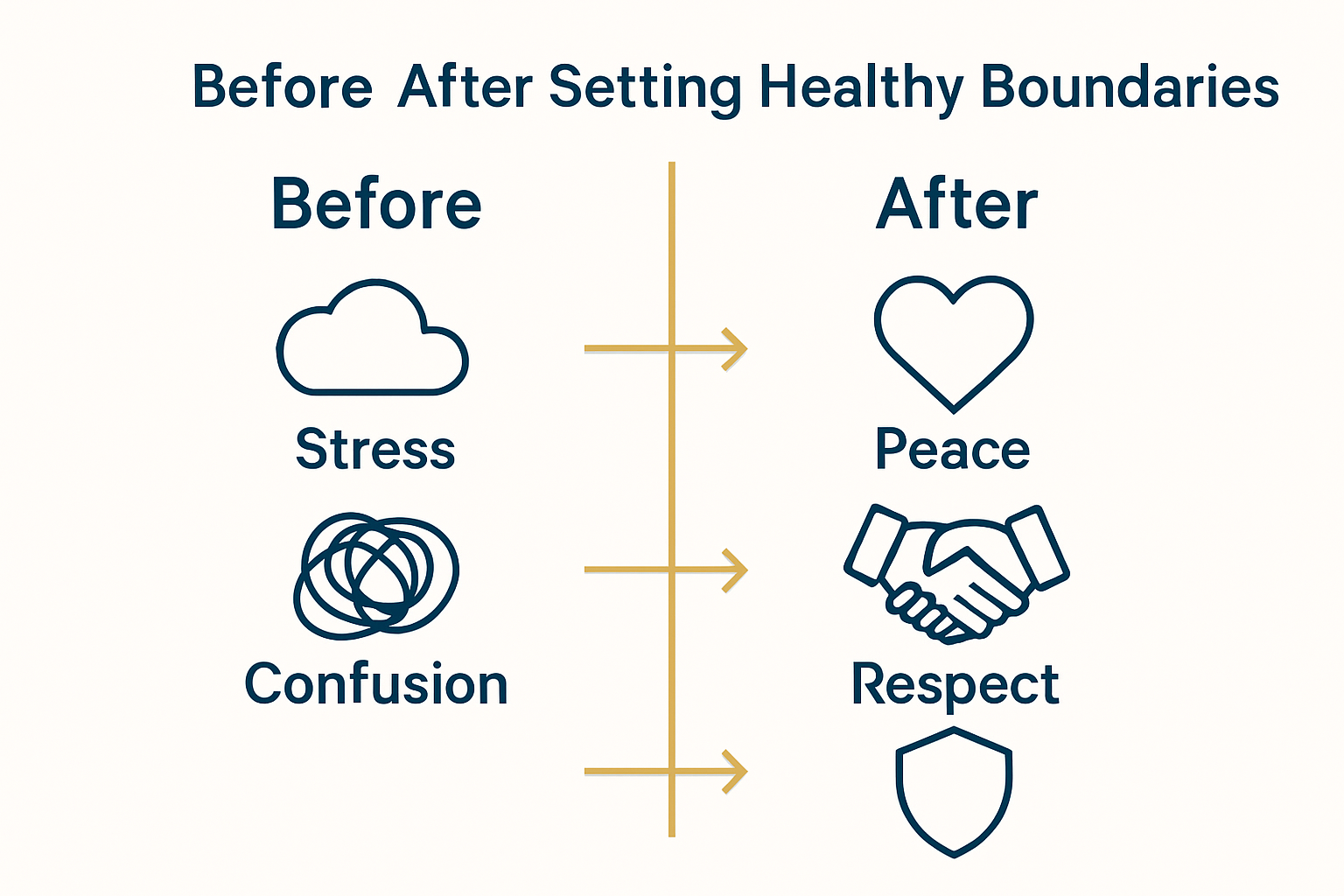
Healthy boundaries are transformative personal tools that dramatically improve overall life quality and interpersonal relationships. Setting clear personal limits can significantly decrease stress and enhance psychological well-being, creating a foundation for more authentic and balanced interactions. By establishing consistent boundaries, individuals protect their emotional energy, mental health, and personal integrity.

The psychological benefits of maintaining robust boundaries are profound and far-reaching. Individuals who effectively communicate their limits experience increased self-esteem and more comfortable social interactions. These boundaries act as protective mechanisms, helping people recognize and communicate their needs without guilt or anxiety. When you establish clear expectations, you create a predictable environment that reduces misunderstandings and potential conflicts in both personal and professional relationships.
Boundary-setting offers multiple transformative advantages across different life domains. In professional settings, clear boundaries prevent workplace burnout and maintain healthy work-life separation. In personal relationships, they foster mutual respect and prevent emotional manipulation. Individuals who practice boundary-setting typically experience:
- Reduced emotional exhaustion
- Enhanced personal autonomy
- Improved communication skills
- Greater emotional resilience
- Healthier relationship dynamics
Moreover, boundaries provide a critical framework for understanding personal responsibilities and ensuring others respect individual limits. They are not walls that isolate but flexible guidelines that allow meaningful connections while preserving personal well-being. By consistently practicing boundary-setting, you create a life characterized by intentionality, respect, and genuine human connection.
Recognizing and Addressing Boundary Violations
Boundary violations represent complex interpersonal challenges that can erode personal dignity and emotional safety. Recognizing these intrusions requires developing keen awareness of subtle and overt behaviors that compromise individual autonomy, whether through physical invasions, emotional manipulation, or disrespectful communication patterns. Understanding the nuanced landscape of boundary transgressions is the first critical step in protecting one’s personal space and psychological well-being.
Boundary violations manifest through various behaviors that dismiss, belittle, or intentionally disregard an individual’s expressed limits. These can range from seemingly minor infractions like unexpected visits or unsolicited advice to more serious transgressions such as persistent emotional manipulation or repeated disrespect of personal preferences. Common indicators of boundary violations include:
- Consistently ignoring verbal or nonverbal communication signals
- Dismissing or minimizing personal feelings and experiences
- Invading physical or emotional personal space without consent
- Making decisions on behalf of others without permission
- Pressuring individuals to comply with unreasonable demands
Addressing boundary violations demands a strategic and compassionate approach. Effective responses involve clear, direct communication that articulates specific concerns without escalating conflict. Practical strategies include using firm but neutral language, maintaining emotional composure, and being prepared to enforce consequences if boundaries continue to be disrespected. The goal is not punishment, but creating a sustainable framework of mutual respect and understanding. Sometimes this might mean physically removing oneself from situations that consistently undermine personal boundaries, demonstrating that self-protection is a fundamental aspect of healthy interpersonal dynamics.
Common Mistakes and How to Avoid Them
Boundary setting is an intricate skill that requires practice and self-awareness. Many individuals inadvertently compromise their boundaries through common mistakes that can undermine their emotional well-being and personal relationships. These errors often stem from a desire to please others, fear of conflict, or lack of understanding about healthy interpersonal dynamics.
Oversharing personal information represents one of the most significant boundary mistakes people make. This tendency to reveal too much too soon can create emotional vulnerability and invite inappropriate levels of intimacy or manipulation. Common boundary-related mistakes include:
- Apologizing when establishing legitimate limits
- Allowing guilt to override personal comfort
- Tolerating repeated boundary violations
- Inconsistent enforcement of personal boundaries
- Absorbing others’ emotional burdens inappropriately
- Failing to recognize and communicate personal needs
Avoiding these pitfalls requires developing strong self-awareness and practicing assertive communication. Effective boundary management means learning to say no without guilt, recognizing that your emotional well-being takes precedence, and understanding that healthy relationships thrive on mutual respect. This process involves cultivating the confidence to communicate your limits clearly, consistently enforcing those boundaries, and being willing to create distance from relationships that consistently disregard your personal space and emotional needs. The key is maintaining a balanced approach that allows genuine connection while preserving individual autonomy.
Take Control by Setting Healthy Boundaries Today
Navigating personal boundaries is crucial to protecting your emotional well-being and fostering healthy relationships. If you are struggling with communicating your limits or dealing with boundary violations, you are not alone. The challenge of defining and enforcing boundaries can feel overwhelming but is essential for self-respect and lasting peace of mind. Our services at Mastering Conflict offer expert guidance and clinical support tailored to your unique needs.

Start your journey toward stronger boundaries and healthier connections now. Whether you need individual therapy, couples counseling, or coaching on conflict resolution, our professional team led by Dr. Carlos Todd can help you reclaim your personal space with confidence. Visit Mastering Conflict today to explore how our anger management classes, burnout recovery, and specialized counseling can empower you to communicate your boundaries clearly and live with greater emotional resilience.
Frequently Asked Questions
What are personal boundaries and why are they important?
Personal boundaries are invisible lines that define where you end and another person begins, serving as protective frameworks that communicate your needs and values in relationships. They are important for maintaining emotional, mental, and physical safety, fostering mutual respect, and enabling healthy interactions.
What types of boundaries exist in everyday life?
There are six primary types of boundaries: emotional, physical, intellectual, material, time, and sexual. Each type serves to establish comfort and respect in relationships, addressing areas such as personal space, emotional sharing, and handling time commitments.
How can I recognize a boundary violation?
Boundary violations can manifest through multiple behaviors, such as ignoring verbal or nonverbal cues, minimizing personal feelings, invading personal space, or pressuring someone to comply with unreasonable demands. Recognizing these signs is crucial for maintaining personal dignity and emotional safety.
What are common mistakes people make when setting boundaries?
Common mistakes in boundary-setting include oversharing personal information, apologizing when stating limits, allowing guilt to influence decisions, and failing to consistently enforce boundaries. To avoid these pitfalls, practice self-awareness and assertive communication.
Recommended
- Boundaries in Relationships: Complete Expert Guide – Mastering Conflict
- Healthy Boundaries in Relationships Explained Fully – Mastering Conflict
- Key Differences Between Healthy Anger vs Unhealthy Anger
- 7 Key Signs of a Healthy Relationship Everyone Should Know – Mastering Conflict
- The Essential Guide to Boundaries for Moms – Mom on Quack
- 3 Types of Boundaries – Dr. Stephen Oreski & Associates