
Why conflict occurs: manage anger in relationships

Research reveals that more than 50% of anger episodes involve loved ones or close acquaintances, making interpersonal relationships the primary arena for conflict. Understanding why these conflicts arise and how to manage anger constructively can transform relationship dynamics. This article examines the psychological roots of anger, dispels common myths, and offers evidence-based strategies to help you navigate conflict more effectively.
Table of Contents
- Understanding Why Conflict Occurs
- Common Misconceptions About Conflict And Anger
- Frameworks To Understand Conflict Dynamics
- Evidence-Based Approaches To Managing Anger And Conflict
- Practical Conflict Resolution Strategies
- Explore Professional Support And Courses At Mastering Conflict
- Frequently Asked Questions About Why Conflict Occurs
Key takeaways
| Point | Details |
|---|---|
| Anger targets loved ones | Over half of anger episodes occur with people closest to us, making relationships vulnerable to conflict. |
| Cognitive patterns drive conflict | Hostile thoughts and emotional dysregulation intensify conflicts that could otherwise be managed. |
| CBT reduces anger effectively | Cognitive behavioral therapy shows strong evidence in decreasing anger intensity and frequency. |
| Practical skills matter | Emotional regulation, assertive communication, and trigger awareness prevent escalation. |
| Professional support helps | Therapy and structured programs provide personalized guidance for lasting relationship improvements. |
Understanding why conflict occurs
Anger is far more complex than a simple emotional outburst. Anger involves physiological, cognitive, emotional, and behavioral components that interact to create the experience we recognize as fury or frustration. When you feel angry, your heart rate increases, stress hormones flood your system, and your body prepares for action.
These physical changes happen alongside cognitive appraisals where your mind evaluates whether a situation threatens your needs, values, or identity. Your behavioral response follows, ranging from constructive assertion to destructive aggression. The intensity of conflict depends heavily on how you interpret events and express your feelings.
What makes interpersonal anger particularly challenging is its target. Studies confirm that more than 50% of anger episodes involve loved ones or acquaintances rather than strangers. This pattern makes sense because we invest more emotional energy in close relationships, creating higher stakes when conflicts arise. The people we care about most can trigger our deepest vulnerabilities.
Anger serves protective and motivational functions by signaling threats and injustices that require attention. In healthy doses, it motivates boundary-setting and problem-solving. However, maladaptive expressions transform protective anger into destructive conflict that damages relationships rather than strengthening them.
Common triggers for interpersonal anger include:
- Perceived disrespect or criticism from partners or family members
- Unmet expectations in relationships or daily interactions
- Feeling controlled or having autonomy threatened
- Stress from external sources spilling into home life
- Misunderstandings or poor communication patterns
Understanding that anger combines physical arousal, mental interpretation, and behavioral choice gives you multiple intervention points to prevent conflict escalation before it damages your relationships.
Common misconceptions about conflict and anger
Many people grow up believing anger is inherently bad or dangerous, leading them to suppress feelings that need healthy expression. This misconception causes significant harm because unexpressed anger doesn’t disappear. Instead, it festers through rumination, builds resentment, and eventually erupts in ways that surprise both you and those around you.
Suppressing anger actually worsens conflict outcomes. When you bottle up frustration, stress hormones remain elevated, cognitive distortions intensify, and you lose opportunities for constructive problem-solving. The hidden emotional burden strains relationships even when you think you’re protecting them by staying silent.

Another damaging myth suggests that venting anger aggressively provides cathartic relief and resolves conflicts. Research consistently shows the opposite. Aggressive expressions typically escalate conflicts, damage trust, and create cycles of retaliation. Assertive communication, where you express needs clearly without attacking others, proves far more effective.
Here are key misconceptions to abandon:
- Myth: Anger always indicates irrational thinking or emotional immaturity.
Reality: Many anger experiences involve legitimate concerns that deserve attention and thoughtful response. - Myth: Couples who never fight have the healthiest relationships.
Reality: Conflict-free relationships often indicate suppression or avoidance rather than genuine harmony. - Myth: Only people with severe anger problems benefit from therapy.
Reality: Therapeutic approaches help anyone experiencing relationship conflicts or wanting better emotional regulation. - Myth: You can’t control anger because it’s an automatic response.
Reality: While initial arousal happens quickly, you can learn skills to manage thoughts and behaviors effectively.
Pro Tip: Notice the difference between feeling angry (which you can’t always control) and acting on anger (which you can). This distinction opens space for choosing constructive responses even when emotions run high.
Frameworks to understand conflict dynamics
Psychological research identifies specific patterns that explain why some conflicts escalate while others resolve productively. Maladaptive thought patterns and emotional dysregulation form the core mechanisms that intensify relationship conflicts. When you interpret a partner’s behavior through hostile lenses or catastrophize minor disagreements, conflict spirals unnecessarily.
Cognitive Behavioral Therapy provides a robust framework for understanding these dynamics. CBT targets the hostile appraisals and rigid thinking that fuel anger, helping you recognize when your mind jumps to worst-case interpretations. By restructuring thoughts, you reduce the emotional intensity that drives destructive conflict.
Effective communication skills disrupt conflict cycles before they escalate. When you listen actively, validate feelings, and express needs clearly, you create opportunities for mutual understanding. Poor communication, conversely, perpetuates misunderstandings and defensive reactions that block resolution.
Key framework elements include:
- Recognizing automatic thoughts that trigger anger responses
- Identifying cognitive distortions like mind-reading or overgeneralization
- Building emotional awareness to catch anger early
- Practicing interpersonal skills that promote collaboration over competition
| Framework Component | How It Reduces Conflict |
|---|---|
| Cognitive restructuring | Challenges hostile interpretations that escalate tensions |
| Emotional regulation | Manages physiological arousal before it drives aggressive behavior |
| Behavioral skills | Provides alternatives to destructive anger expressions |
| Communication training | Improves understanding and reduces misinterpretations |
These frameworks emphasize that conflict management requires addressing multiple levels simultaneously. Thoughts influence emotions, emotions drive behaviors, and behaviors shape relationship outcomes. Intervening at any point can improve the entire cycle, which is why evidence-based anger management strategies focus on integrated approaches.
Pro Tip: Track your anger episodes for one week, noting what triggered each one and what thoughts ran through your mind. Patterns will emerge that reveal your personal conflict dynamics and intervention opportunities.
Evidence-based approaches to managing anger and conflict
Research demonstrates that psychological treatments effectively reduce problematic anger and improve conflict resolution. A comprehensive meta-analysis found that psychological treatments including CBT reduce maladaptive anger with a standardized mean effect size of 0.76, indicating strong therapeutic benefits.
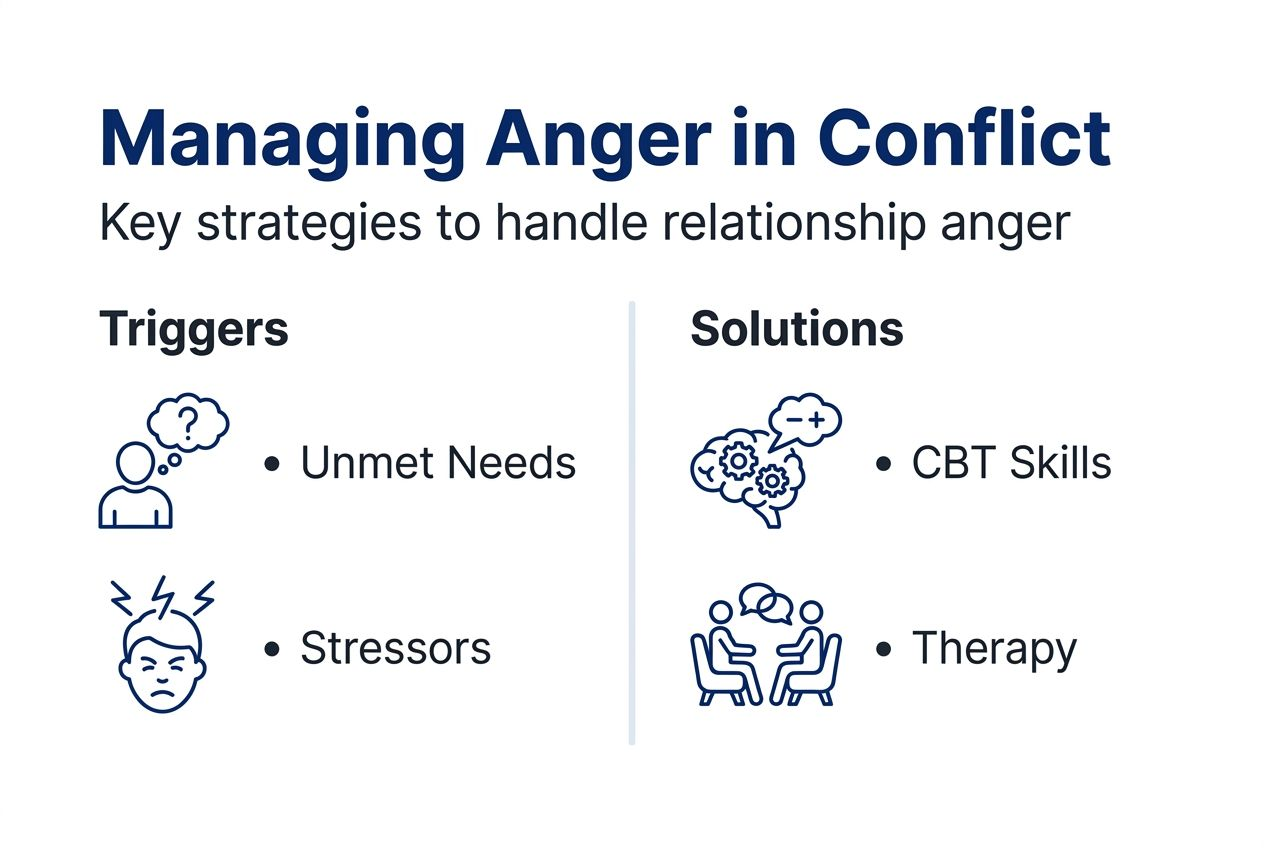
Cognitive Behavioral Therapy and multimodal treatments represent the gold standard for anger management. These approaches combine several core components that address anger’s multiple dimensions. Cognitive restructuring helps you identify and challenge irrational beliefs that fuel excessive anger. Relaxation training reduces physiological arousal. Behavioral interventions teach constructive communication and problem-solving skills.
Tailoring interventions to individual and cultural factors significantly enhances outcomes. What works for one person may need adjustment for another based on personality, relationship context, and cultural background. Therapists who customize treatment plans see better engagement and more sustainable improvements.
| Treatment Approach | Key Components | Best For |
|---|---|---|
| Cognitive Behavioral Therapy | Thought restructuring, behavioral practice, skills training | Individuals and couples with anger-related conflicts |
| Stress Inoculation Training | Progressive exposure, coping skills, rehearsal | People facing predictable anger triggers |
| Psychoeducation | Understanding anger mechanics, normalizing experiences | Early intervention and prevention |
| Mindfulness-Based Approaches | Present-moment awareness, acceptance, regulation | Those struggling with emotional reactivity |
Other evidence-based approaches complement primary treatments. Psychoeducation helps you understand anger’s purpose and patterns, reducing shame and increasing motivation for change. Relaxation techniques like deep breathing or progressive muscle relaxation provide immediate tools for managing physiological arousal. Mindfulness practices build awareness of emotions as they arise, creating space between impulse and action.
Both individual therapy and couples counseling benefit from these approaches. Anger management in relationships requires attention to interaction patterns, while individual therapy for anger reduction focuses on personal emotional regulation and cognitive patterns. Many people benefit from both modalities at different points in their journey.
The effectiveness of these treatments stems from their systematic approach to changing thoughts, emotions, and behaviors. Rather than simply suppressing anger or venting it destructively, you learn to process anger in ways that honor your needs while respecting relationships.
Practical conflict resolution strategies
Applying therapy-informed techniques in daily life transforms how you navigate relationship challenges. These strategies require practice but become increasingly natural as you build new habits.
- Identify your personal anger triggers. Notice patterns in what situations, words, or behaviors consistently provoke your anger. Early awareness allows intervention before emotions overwhelm your judgment. Keep a simple log noting when anger arises and what preceded it.
- Challenge hostile thoughts immediately. When you catch yourself thinking “They always ignore me” or “This is unacceptable,” pause to question these interpretations. Ask yourself what evidence supports and contradicts your thoughts. Often you’ll discover alternative explanations that reduce anger intensity.
- Practice emotional regulation techniques. Build a toolkit of calming strategies you can deploy when anger starts building. Deep breathing, brief walks, counting backwards, or mindfulness exercises interrupt the physiological escalation that fuels conflict.
- Communicate assertively, not aggressively. Express your needs and feelings using “I” statements that take ownership of your experience. Instead of “You never listen to me,” try “I feel unheard when I’m interrupted, and I need us to take turns speaking.” This approach invites collaboration rather than defensiveness.
- Seek professional support when needed. Therapy and coaching provide structured guidance for complex situations or persistent challenges. Professional support helps you develop personalized strategies that fit your specific relationship dynamics.
Additional practical strategies include:
- Taking timeouts when conversations heat up, with clear agreements to resume discussion later
- Practicing active listening to understand your partner’s perspective before responding
- Setting boundaries clearly and respectfully around behaviors you won’t tolerate
- Celebrating progress in conflict management, not just focusing on remaining problems
Developing conflict resolution skills and assertive communication skills takes time and repeated practice. Start with situations that carry lower emotional stakes to build confidence. As skills strengthen, you’ll find yourself managing even difficult conflicts more effectively.
Pro Tip: Practice anger management exercises during calm moments so they become automatic responses when real conflicts arise. Waiting until you’re furious to try new techniques rarely works.
Explore professional support and courses at Mastering Conflict
While self-help strategies provide valuable tools, professional guidance accelerates progress and addresses complex relationship dynamics that books alone can’t resolve. Mastering Conflict offers comprehensive anger management classes and couples counseling with experienced therapists serving North Carolina, South Carolina, and Florida.
These programs incorporate the evidence-based techniques discussed throughout this article, including cognitive restructuring, emotional regulation, and communication skills training. Whether you’re working on individual anger management or seeking to improve relationship dynamics as a couple, structured anger management courses provide the systematic support that creates lasting change. Professional therapists tailor interventions to your specific situation, cultural background, and relationship goals, ensuring you receive personalized guidance rather than generic advice.
Frequently asked questions about why conflict occurs
What triggers conflict most often in relationships?
Common triggers include perceived threats to needs, values, or identity, along with stress, misunderstandings, and repeated irritations that accumulate over time. Many triggers combine internal emotional states or cognitive appraisals with external events, making conflict a complex interaction between your interpretation and actual circumstances.
How can I express anger constructively without escalating conflict?
Use “I” statements to express feelings and needs clearly while respecting the other person’s dignity. Focus on specific behaviors rather than character attacks, and practice calming techniques before speaking so your tone remains firm but not hostile. Assertive communication skills help you stand up for yourself without creating unnecessary defensiveness.
Is therapy effective for everyday conflict and anger issues?
Therapy proves effective for a broad range of anger difficulties, not just extreme cases that involve violence or rage. Research shows psychological treatments achieve significant effect sizes of 0.76 in reducing anger, demonstrating strong evidence supporting therapeutic interventions. Even minor improvements in anger management within relationships create substantial quality of life benefits over time.
What are quick techniques to calm anger before it escalates?
Practice deep breathing by inhaling slowly for four counts and exhaling for six, which activates your parasympathetic nervous system and reduces arousal. Mindfulness techniques like focusing on physical sensations or brief distraction activities interrupt the escalation cycle. Recognizing early signs of anger, such as muscle tension or racing thoughts, helps you initiate anger management exercises before conflict spirals out of control.
Recommended
- How to Control Anger Issues in a Relationship Easily – Mastering Conflict
- 21 Ways to Control Anger in a Relationship
- Anger Management in Relationships – Lasting Change – Mastering Conflict
- How Anger Affects Relationships: A 2025 Guide to Healthy Change – Mastering Conflict
- Conflict Resolution for Auditors – IP