Creating Treatment Plans for Effective Conflict Resolution

Managing anger and resolving conflict in a clinical setting often starts with one reality: every client brings a unique story shaped by their relationships, emotions, and personal history. For mental health professionals in North Carolina and South Carolina, mastering this process is vital for meaningful change. By prioritizing a thorough client information gathering process, you lay the groundwork for targeted treatment plans that truly address the roots of anger and interpersonal struggles.
Table of Contents
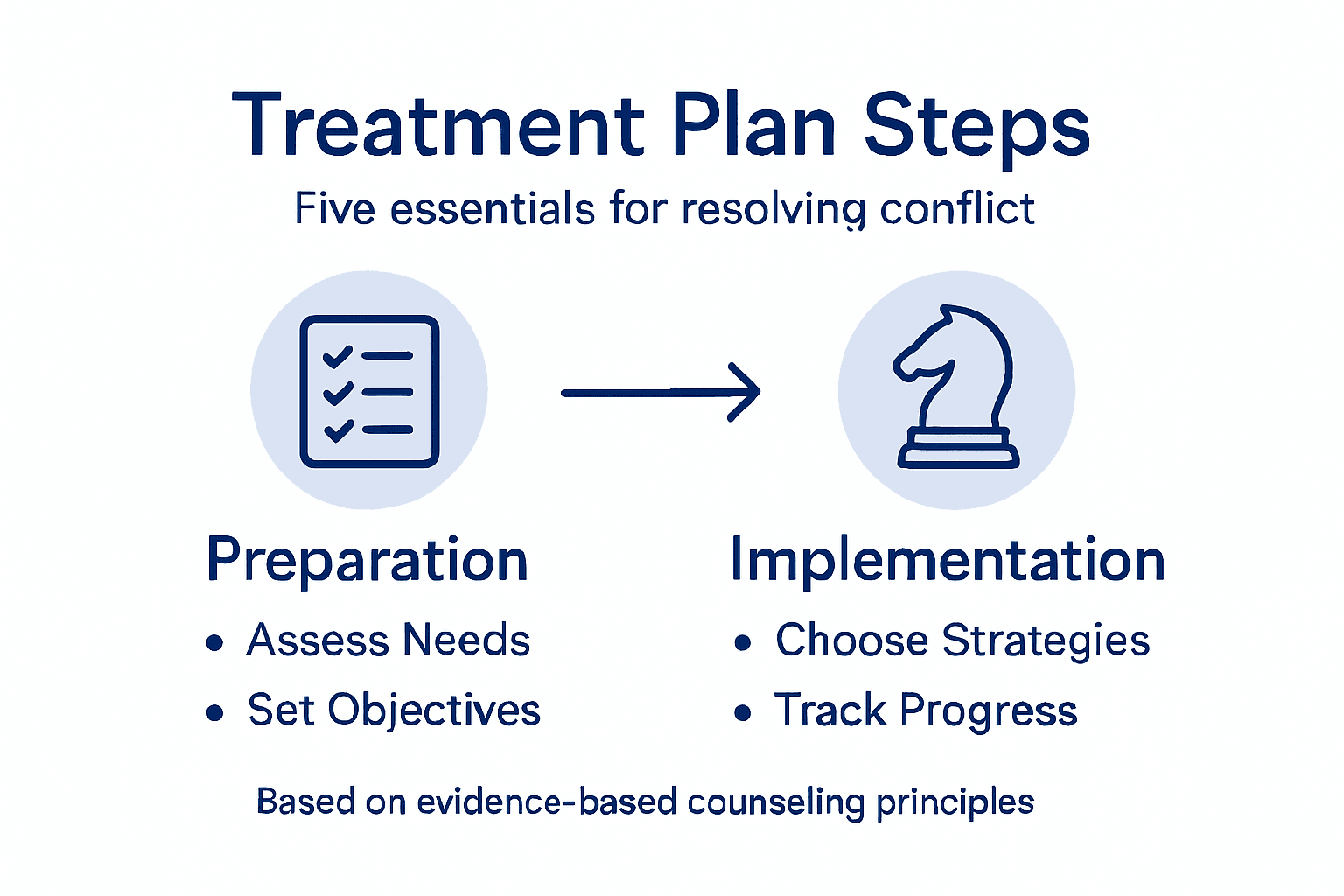
- Step 1: Gather Essential Client Information
- Step 2: Identify Key Treatment Objectives
- Step 3: Select Appropriate Intervention Strategies
- Step 4: Integrate Evidence-Based Tools and Resources
- Step 5: Review and Refine the Treatment Plan
Quick Summary
| Key Point | Explanation |
|---|---|
| 1. Establish Rapport Early | Building trust is crucial to encourage clients to share sensitive information during the initial assessment. |
| 2. Set SMART Treatment Objectives | Create specific, measurable, attainable, relevant, and time-bound goals for effective conflict resolution. |
| 3. Select Targeted Intervention Strategies | Match intervention methods to the client’s unique needs and the specific nature of their conflict. |
| 4. Integrate Evidence-Based Tools | Utilize scientifically validated resources to enhance treatment methods and track client progress objectively. |
| 5. Regularly Review and Adjust Plans | Consistently evaluate the effectiveness of the treatment plan and make adjustments based on client feedback and progress. |
Step 1: Gather essential client information
Gathering comprehensive client information serves as the critical foundation for developing an effective conflict resolution treatment plan. Your initial assessment will determine the roadmap for addressing interpersonal challenges and emotional dynamics.
To collect essential client information effectively, begin by creating a structured yet compassionate interview process. Analyzing conflict dynamics requires a strategic approach that balances professional inquiry with empathetic listening. Consider implementing these key strategies:
- Establish rapport before diving into sensitive questions
- Use open-ended questions that encourage detailed responses
- Create a safe, non-judgmental environment for client disclosure
- Document both verbal and non-verbal communication cues
Your initial client interview should cover several critical domains:
- Personal background and relationship history
- Current conflict triggers and emotional responses
- Previous conflict resolution attempts
- Psychological and emotional context of the conflict
- Client goals and desired outcomes
Successful information gathering requires a delicate balance between professional investigation and genuine human connection.
Document your findings systematically, noting not just the facts but the underlying emotional landscape. Pay attention to patterns of communication, emotional reactivity, and unspoken dynamics that might reveal deeper conflict roots.

Pro tip: Develop a standardized intake form that guides your information gathering while allowing flexibility for unique client narratives.
Step 2: Identify key treatment objectives
Identifying precise treatment objectives transforms your initial client assessment into a strategic roadmap for conflict resolution. Your goal is to develop clear, measurable targets that address the core psychological and interpersonal challenges revealed during your initial information gathering.
Developing treatment objectives requires a collaborative approach that integrates client input with professional expertise. Consider these critical strategies for establishing meaningful treatment goals:
- Prioritize client-centered objectives
- Create specific and measurable outcomes
- Align goals with underlying conflict dynamics
- Establish realistic and achievable targets
Your treatment objectives should address multiple dimensions of conflict resolution:
- Emotional regulation skills
- Communication improvement strategies
- Interpersonal relationship patterns
- Personal boundary establishment
- Conflict trigger identification and management
Effective treatment objectives serve as a compass, guiding clients toward sustainable personal growth and healthier interactions.
Document each objective with clear metrics that allow you to track progress. Quantify behavioral changes and establish benchmark indicators that demonstrate meaningful transformation. This approach ensures accountability and provides tangible evidence of therapeutic advancement.
Pro tip: Design objectives that are specific, measurable, achievable, relevant, and time-bound (SMART) to maximize treatment effectiveness.
Step 3: Select appropriate intervention strategies
Selecting the right intervention strategies transforms your treatment objectives from theoretical concepts into practical, actionable approaches for resolving client conflicts. Your goal is to match specific therapeutic techniques with the unique psychological and interpersonal dynamics uncovered during your initial assessment.
Conflict resolution strategies require a nuanced approach that considers multiple intervention techniques. Consider these key strategies for designing targeted interventions:
- Assess client communication patterns
- Match interventions to specific conflict types
- Consider client emotional capacity and readiness
- Integrate multiple therapeutic approaches
Your intervention strategy toolkit should include multiple approaches:
- Communication skills training
- Cognitive behavioral techniques
- Emotional regulation exercises
- Negotiation and mediation skills
- Relationship building workshops
Effective intervention strategies are like precision tools, each carefully selected to address specific relational challenges.
Prioritize evidence-based intervention methods that demonstrate proven effectiveness in addressing similar conflict scenarios. Customize your approach by combining techniques that address both immediate symptoms and underlying psychological mechanisms.
Pro tip: Remain flexible and willing to adjust intervention strategies as you observe client progress and emerging dynamics.
This table compares various intervention strategy types for conflict resolution:
| Strategy Type | Best Used For | Typical Outcome |
|---|---|---|
| Communication Training | Resolving misunderstandings | Improved clarity and teamwork |
| Cognitive Behavioral Techniques | Managing thought patterns | Reduced emotional reactivity |
| Negotiation/Mediation Skills | Settling high-stakes conflicts | Reaching fair mutual solutions |
| Relationship Workshops | Building lasting connections | Enhanced trust and cooperation |
Step 4: Integrate evidence-based tools and resources
Integrating evidence-based tools and resources transforms your treatment strategy from theoretical concepts into practical, measurable interventions. Your goal is to leverage scientifically validated approaches that enhance client outcomes and provide structured pathways for conflict resolution.
Evidence-based dispute resolution tools require careful selection and strategic implementation. Consider these critical approaches for integrating robust, research-supported resources:
- Evaluate scientific validity of tools
- Match resources to specific client needs
- Use standardized assessment instruments
- Track intervention effectiveness systematically
Your evidence-based toolkit should include multiple validated resources:
- Standardized conflict assessment questionnaires
- Validated emotional regulation scales
- Psychological assessment instruments
- Communication skills evaluation tools
- Behavior tracking measurement systems
Scientific rigor transforms therapeutic interventions from guesswork into precise, targeted strategies.
Prioritize empirically validated assessment methods that provide quantifiable insights into client progress. Integrate tools that not only measure outcomes but also guide adaptive treatment approaches based on objective data.
Pro tip: Regularly update your resource toolkit by staying current with the latest peer-reviewed research in conflict resolution methodologies.
Step 5: Review and refine the treatment plan
Reviewing and refining your treatment plan ensures that your conflict resolution strategy remains dynamic, responsive, and aligned with your client’s evolving needs. This critical process transforms your initial plan from a static document into a living, adaptive roadmap for personal growth and conflict management.
Treatment plan review processes require systematic and collaborative approaches. Consider these essential strategies for meaningful plan refinement:
- Document client progress objectively
- Schedule regular review intervals
- Invite client feedback and perspective
- Assess intervention effectiveness
- Adjust strategies based on empirical observations
Your treatment plan review should encompass multiple dimensions:
- Evaluate goal achievement levels
- Analyze intervention effectiveness
- Reassess client emotional capacity
- Identify emerging conflict patterns
- Update objectives and strategies
A truly effective treatment plan is a collaborative journey, not a predetermined destination.
Prioritize transparent communication during review sessions. Engage clients as active partners, highlighting measurable progress and areas for continued development. This approach maintains motivation and reinforces the therapeutic alliance.
Pro tip: Maintain a flexible mindset and view treatment plan refinement as an opportunity for creative problem solving, not as a critique of previous strategies.
Here’s a summary of how each treatment plan step supports conflict resolution effectiveness:
| Step Name | Main Purpose | Key Benefit for Clients | Professional Impact |
|---|---|---|---|
| Gather Client Information | Build foundational understanding | Increases trust and accuracy | Guides case assessment properly |
| Identify Treatment Objectives | Set measurable goals | Clarifies desired outcomes | Enables tracking and adjustment |
| Select Intervention Strategies | Choose targeted methods | Matches therapy to client needs | Improves practical case outcomes |
| Integrate Evidence-Based Tools | Use validated measurement instruments | Supports progress evaluation | Ensures scientific rigor |
| Review and Refine Plan | Continuously optimize approach | Maintains motivation and growth | Supports ongoing professional growth |
Take Charge of Conflict Resolution with a Proven Treatment Plan
Creating an effective conflict resolution treatment plan means identifying core emotional challenges, setting measurable goals, and applying targeted interventions. If you are struggling to manage anger, improve communication, or restore healthy relationships, you are not alone. The article highlights the importance of gathering client information, defining SMART objectives, and using evidence-based tools to transform conflict into growth. These steps address key pain points such as emotional reactivity, unclear goals, and ineffective strategies.
At Mastering Conflict we specialize in personalized mental health and conflict resolution solutions designed to meet your unique needs. Whether through anger management classes, couples therapy, or individual counseling, our approach integrates clinical expertise with compassionate support. We also offer coaching and training for mental health professionals seeking to enhance their skills. Let us help you move beyond frustration to lasting transformation through a carefully tailored treatment plan.
Discover how to turn conflict into an opportunity for healing and progress today.
Start your journey with personalized conflict resolution services
Explore our anger management and counseling programs
Learn from expert clinical training and mentorship
Take the next step to create a clear, measurable plan for resolving conflict that fits your life. Visit Mastering Conflict now to book a consultation or learn more about our comprehensive offerings.
Frequently Asked Questions
What is the first step in creating treatment plans for effective conflict resolution?
Gathering essential client information is the first step. Conduct a structured interview to understand personal backgrounds, current conflict triggers, and previous conflict resolution attempts. This initial assessment establishes a solid foundation for developing a tailored treatment plan.
How do I identify treatment objectives in conflict resolution?
Identifying treatment objectives involves setting clear, measurable goals based on the client’s specific needs and desires. Collaborate with the client to prioritize objectives like emotional regulation skills and communication improvement strategies. Aim to establish objectives within the first few sessions to guide the therapeutic process effectively.
What types of intervention strategies should I consider?
Select intervention strategies that match the unique needs of the client and the nature of the conflict. Consider including communication skills training, cognitive behavioral techniques, and emotional regulation exercises in your toolkit. Be prepared to customize these strategies to maximize their effectiveness for your specific situation.
How can I ensure the tools I use in treatment are evidence-based?
To ensure that your tools are evidence-based, evaluate the scientific validity of the resources before integrating them into your treatment plan. Use standardized assessments and validated scales that have been proven to work in conflict resolution settings, tracking their effectiveness frequently to adjust as needed.
How often should I review and refine the treatment plan?
Review and refine the treatment plan regularly, ideally at set intervals such as every 4 to 6 weeks. This ongoing evaluation helps document progress, assess the effectiveness of interventions, and adjust strategies based on client feedback and new developments in their situation. Keep the plan dynamic to support the client’s growth effectively.
Recommended
- How to Deal With Parenting Conflicts
- Effective Conflict Resolution Steps for Couples, Families, and Professionals 2025 – Mastering Conflict
- Conflict Management Method: Enhancing Therapy Outcomes – Mastering Conflict
- Conflict Management Skills: Enhancing Therapy Outcomes – Mastering Conflict
- 7 Effective Types of Therapy for Adults to Improve Well-Being – ReviveHealthTherapy