
Counseling for Women: Empowerment and Well-Being

Feeling misunderstood or overwhelmed by changing roles is common for women balancing work, family, and their own needs, especially in North Carolina and South Carolina. Counseling tailored for women is rooted in understanding how social expectations and cultural backgrounds shape your experiences. By emphasizing egalitarianism and a collaborative relationship, women’s counseling empowers you to address anger, life transitions, and lingering self-doubt with new clarity and support from someone who sees the whole picture—not just the symptoms.
Table of Contents
- Defining Counseling for Women and Core Principles
- Unique Challenges Faced by Women in Therapy
- Types of Counseling and Evidence-Based Approaches
- How the Counseling Process Supports Women
- Confidentiality, Ethical Standards, and Legal Rights
- Common Barriers and Solutions in Women’s Counseling
Key Takeaways
| Point | Details |
|---|---|
| Women-Centered Counseling | This approach recognizes the unique challenges women face, integrating personal experiences with social dynamics for effective therapy. |
| Core Principles | Key principles include egalitarian relationships, a social justice orientation, and an intersectional perspective, ensuring women’s diverse identities are honored in therapy. |
| Addressing Barriers | Women encounter significant obstacles such as stigma and access issues, but solutions like telehealth and sliding scale fees can improve accessibility. |
| Counseling Techniques | Various evidence-based approaches, including Feminist Counseling and CBT, cater to different needs, emphasizing the importance of finding a counselor attuned to women’s experiences. |
Defining Counseling for Women and Core Principles
Counseling for women represents a specialized, values-driven approach to mental health care that goes far beyond basic talk therapy. It’s a practice rooted in understanding the unique pressures, identities, and life experiences that shape women’s mental health and well-being. Unlike generic counseling, this therapeutic model recognizes that women often face distinct challenges related to gender roles, societal expectations, career obstacles, relationship dynamics, and life transitions. When you work with a counselor trained in women-centered approaches, you’re not just getting someone to listen—you’re getting a partner who understands the intersection of your personal struggles with the broader social context that influences them.
The core principles of counseling for women rest on several foundational concepts. Egalitarianism stands at the center of this work, meaning the counselor doesn’t position themselves as the expert with all the answers. Instead, a collaborative relationship develops where your voice, experiences, and insights shape the therapeutic process. This is particularly important for women who’ve been trained to defer to authority figures or minimize their own perspectives. Social justice orientation is another critical principle, acknowledging that many challenges women face aren’t purely personal—they’re often connected to systemic inequalities, discrimination, or cultural expectations. Feminist counseling approaches emphasize examining how “the personal is political,” meaning individual struggles are understood within their social and cultural contexts. Additionally, counseling for women incorporates intersectionality and multiculturalism, recognizing that being a woman doesn’t mean the same thing across different racial, ethnic, socioeconomic, and cultural backgrounds. A counselor working with women in North and South Carolina understands that a woman’s identity involves layers—her race, class, sexual orientation, ability status, and cultural background all shape her experience.
Another defining feature involves a biopsychosocial perspective that examines your challenges from multiple angles. This means looking not just at your thoughts and emotions, but also your physical health, relationships, work environment, and life circumstances. Whether you’re managing anger related to boundary violations, navigating a major life transition, or processing past trauma, this comprehensive approach ensures nothing gets overlooked. The handbook of counseling women emphasizes that quality counseling addresses the full spectrum of women’s mental and physical well-being, covering everything from intimate relationship dynamics to career advancement barriers to poverty-related stress.
Pro tip: When selecting a counselor, ask specifically about their training in women-centered or feminist counseling approaches and how they address systemic factors alongside personal growth—this ensures you get someone genuinely equipped to support your full picture, not just symptoms.
Unique Challenges Faced by Women in Therapy
Women entering therapy often carry invisible baggage that extends far beyond personal struggles. The challenges you face in therapy aren’t isolated to individual psychology—they’re deeply intertwined with societal expectations, systemic barriers, and power dynamics that have shaped your life since childhood. When you walk into a counselor’s office, you’re not just dealing with depression, anxiety, or relationship issues. You’re navigating the cumulative weight of messages about what you should be, how you should behave, and what you’re allowed to want. Many women report that therapy feels ineffective at first because traditional approaches don’t account for these larger forces. Gendered experiences and societal influences significantly shape mental health, meaning your therapist needs to understand not just your internal world but also the external pressures that have molded it.
One major challenge involves what researchers call internalized oppression. Women are often socialized to prioritize everyone else’s needs before their own—partners, children, parents, colleagues. When you enter therapy wanting help with anger management or life transitions, you may struggle with the idea of focusing on yourself because that feels selfish or wrong. This programming runs deep. Additionally, many women experience vulnerability around power dynamics in therapeutic relationships. If you’ve been in situations where authority figures used power over you, trusting a counselor—even one with genuine expertise—can trigger old wounds. Some women also face barriers accessing care entirely, including financial constraints, childcare responsibilities, geographic isolation in rural areas of the Carolinas, or concerns about what talking to a therapist might mean for your reputation in tight-knit communities. For those who do access counseling, digital platforms can overcome geographic and stigma barriers, though technology access itself creates new inequities.
Women also frequently encounter misdiagnosis or missed diagnosis because symptoms present differently across genders. Anger in men gets validated; anger in women gets pathologized. Grief in women gets labeled depression. Legitimate career ambition gets framed as anxiety. When recognizing anger issues in women, many therapists fail to see that righteous anger about injustice is not a disorder to medicate away—it’s a signal that boundaries have been violated. There’s also the challenge of intersectionality—your experience as a Black woman, Latina woman, immigrant woman, LGBTQ woman, or woman living with disability creates distinct pressures that generic therapy doesn’t address. A one-size-fits-all approach misses the specific, layered reality of your life.
Pro tip: Before your first session, write down any patterns you’ve noticed in past relationships with authority figures, then share this with your counselor so they can actively work with you to build trust and address power imbalances intentionally from day one.
Types of Counseling and Evidence-Based Approaches
Counseling for women isn’t one-size-fits-all. Different approaches work better for different issues, personalities, and life stages. Understanding what’s available helps you make informed choices about what might actually work for your situation. Feminist counseling stands apart because it explicitly incorporates social justice and power dynamics into the therapeutic process. Rather than treating your struggles as purely individual problems, this approach recognizes how systemic inequalities, cultural expectations, and gendered experiences shape your mental health. Feminist counseling uses egalitarian relationships and biopsychosocial assessment to help you understand the intersection of personal and political factors affecting your wellbeing. If you’re working through anger related to boundary violations or questioning societal expectations about your role, feminist counseling actively addresses these connections.
Other established approaches have been adapted specifically for women’s needs. Cognitive-behavioral therapy (CBT) focuses on how your thoughts, feelings, and behaviors connect and influence each other. For women dealing with anger management or anxiety around life transitions, CBT teaches practical tools for changing unhelpful thought patterns and building new coping strategies. Dialectical behavior therapy (DBT), which evolved from CBT, emphasizes emotional regulation and acceptance alongside change. This approach works particularly well if you struggle with intense emotions or feel torn between accepting yourself and wanting to improve. Cognitive-behavioral and dialectical behavior approaches have strong research support for addressing women’s mental health through skill-building in emotional regulation and relapse prevention. Psychodynamic therapy explores how your past relationships and unconscious patterns influence current struggles. This method suits women who want to understand the deeper roots of their behavior rather than just manage symptoms. Humanistic approaches emphasize your innate capacity for growth and self-healing, working from the belief that you already possess the wisdom needed—a therapist simply creates space for it to emerge.
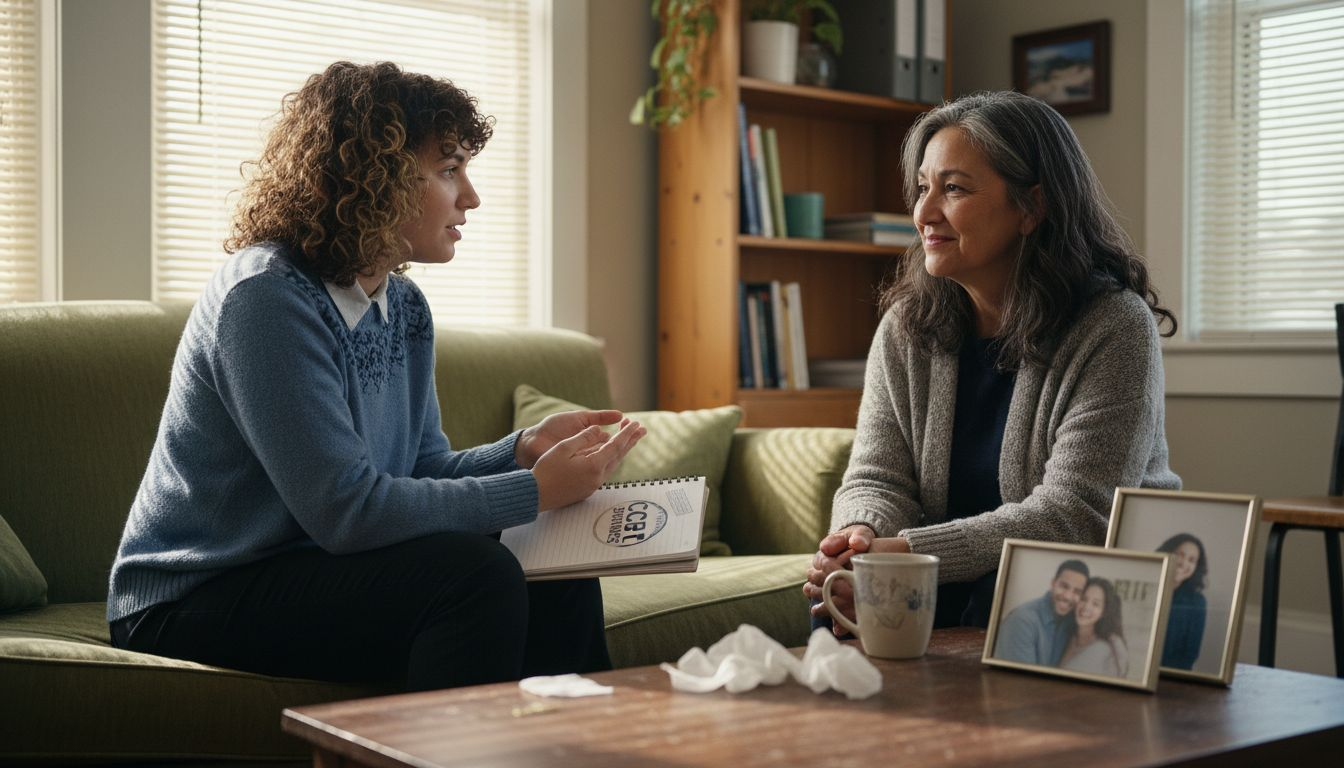
Family systems therapy recognizes that individual issues exist within relational contexts. If your anger or anxiety is deeply connected to family dynamics or relationship patterns, this approach examines how you and others influence each other. Many therapists today use integrative approaches, combining techniques from multiple modalities tailored to your specific needs. What matters most is finding someone trained to work with women’s unique experiences and willing to consider how social context shapes your struggles, not just individual psychology. The best approach depends on your presenting issue, personality, and what resonates with you.
Here is a comparison of common counseling approaches used with women:
| Counseling Approach | Focus Area | Distinctive Strength | Typical Client Need |
|---|---|---|---|
| Feminist Counseling | Social context and empowerment | Addresses power dynamics and justice | Systemic gender- or culture-related issues |
| Cognitive-Behavioral (CBT) | Thoughts, feelings, behaviors | Practical skill-building for change | Anxiety, anger, or specific symptoms |
| Dialectical (DBT) | Emotional regulation and acceptance | Combines acceptance with change | Intense emotions or self-image struggles |
| Psychodynamic | Unconscious patterns, relationships | Explores deeper roots and history | Unresolved past conflicts or repeated patterns |
| Humanistic | Client’s innate capacity to grow | Emphasizes strengths and self-direction | Desire for personal growth, identity |
| Family Systems | Relational context | Examines influence of family dynamics | Family conflict or relationship stress |
Pro tip: Ask potential therapists explicitly which evidence-based approaches they use with women and how they incorporate awareness of systemic and relational factors, not just individual symptoms, into their treatment plan.
How the Counseling Process Supports Women
Counseling creates a structured space where your experiences get validated and your voice actually matters. This isn’t about someone telling you what to do or fixing you like a broken appliance. Instead, the process works by helping you understand yourself more clearly, recognize patterns you might have missed, and build skills for navigating life’s challenges with greater confidence. When you sit down with a counselor trained to work with women, several interconnected things start happening. You get to articulate struggles that might feel too complicated or shameful to share with anyone else. A skilled counselor listens without judgment, helping you untangle the threads between your personal experiences and the larger social context that shaped them. This process of being truly heard often feels revolutionary for women who’ve been conditioned to minimize their needs or interpret their problems as personal failures rather than reasonable responses to difficult circumstances.
Counseling actively supports your well-being by addressing multiple dimensions of your life simultaneously. Counseling improves health outcomes, increases social participation, and promotes better decision-making by reducing the isolation and shame many women carry. As you work through issues like anger management or life transitions, you’re not just learning coping strategies. You’re also gaining awareness of how gender roles and power dynamics have shaped your choices, relationships, and self-perception. This awareness becomes power. When you understand that your anger about unfair treatment is legitimate rather than a character flaw, when you recognize that your struggle to balance everyone’s needs with your own reflects systemic pressure rather than personal weakness, something shifts. Feminist counseling psychology fosters awareness and promotes social justice principles alongside psychological healing, helping you reclaim agency in your life.
The counseling process also reduces practical barriers that keep many women from accessing support. Whether you’re managing childcare responsibilities, working full-time, or living in a rural area of North or South Carolina where finding a therapist feels impossible, multiple formats can meet you where you are. Some counselors offer evening or weekend sessions. Digital counseling options expand access significantly. The consistency of regular sessions creates accountability and momentum. You show up, you work, you build new patterns. Over time, that regular investment in yourself compounds. You notice you’re handling conflict differently. You speak up for yourself instead of swallowing your words. You set boundaries without guilt. You make decisions from your own values rather than others’ expectations. These shifts don’t happen overnight, but they do happen when you commit to the process.
Pro tip: Schedule your first counseling appointment for a time when you’re not rushed, and prepare by writing down three specific situations where you’d like to see change—this focus helps your counselor understand your priorities from session one.
Confidentiality, Ethical Standards, and Legal Rights
One of the most important reasons women can open up in counseling is the legal and ethical guarantee of confidentiality. What you share in a therapist’s office stays there. This isn’t just a nice idea or a professional courtesy. It’s a legal obligation backed by state law in North Carolina and South Carolina. When you’re considering therapy, especially for sensitive topics like anger management, relationship trauma, or personal struggles you’ve never told anyone, knowing that your privacy is protected makes all the difference. Confidentiality and informed consent are foundational ethical principles that create the safe space necessary for authentic healing. Your therapist has professional ethical codes they follow, typically from organizations like the American Counseling Association or the National Association of Social Workers, and these codes explicitly require protecting client privacy.
However, confidentiality isn’t absolute. Understanding these limits matters so you’re not caught off guard. Your counselor must break confidentiality in specific situations mandated by law. These include cases where there’s imminent risk of harm to yourself or others, suspected child abuse or neglect, abuse of elderly or disabled persons, or when a court legally orders your records. Confidentiality is mandated by professional codes and laws, though exceptions exist for safety concerns. Additionally, your therapist may consult with supervisors or other professionals in certain complex cases, though they still maintain your anonymity. When you start counseling, your therapist should explicitly discuss these limits during your first session. This is informed consent in action. They’ll explain what they can and cannot keep private, what happens if they need to report something, and how your records are stored and protected. This conversation isn’t meant to scare you away from therapy. It’s meant to ensure you enter the relationship with clear expectations and full understanding.
Your legal rights as a client in North and South Carolina include the right to access your own records, the right to know your therapist’s qualifications and credentials, and the right to refuse treatment. You can also file complaints with licensing boards if you believe your therapist has violated ethical standards or breached confidentiality inappropriately. Understanding these rights empowers you. You’re not a passive recipient of counseling. You’re a partner in the process with agency and protections. If something doesn’t feel right about a therapeutic relationship, you have the right to stop and seek a different counselor. If you believe your rights have been violated, you have legal recourse.
Pro tip: Before your first session, ask your counselor in writing about their specific confidentiality policies, what they will or won’t keep private, and how they store your records—get this clarity in writing so you have documentation of these critical agreements.
Common Barriers and Solutions in Women’s Counseling
Getting to counseling sounds simple until you try it. Women in North and South Carolina face real, tangible obstacles that keep them from accessing the mental health support they need. Stigma remains one of the most persistent barriers. Many women worry that seeking counseling means admitting weakness, failure, or instability. They fear judgment from family, faith communities, or employers. This shame keeps women silent about their struggles with anger, anxiety, depression, or relationship conflict. Geographic isolation compounds the problem, especially in rural areas where therapists are scarce and the nearest counselor might be 45 minutes away. Financial constraints create another layer of difficulty. Therapy costs money, even with insurance, and many women prioritize everyone else’s expenses before their own. Time scarcity affects nearly every woman juggling work, family, caregiving, and personal responsibilities. Finding time for weekly therapy sessions feels impossible when you’re already stretched thin.
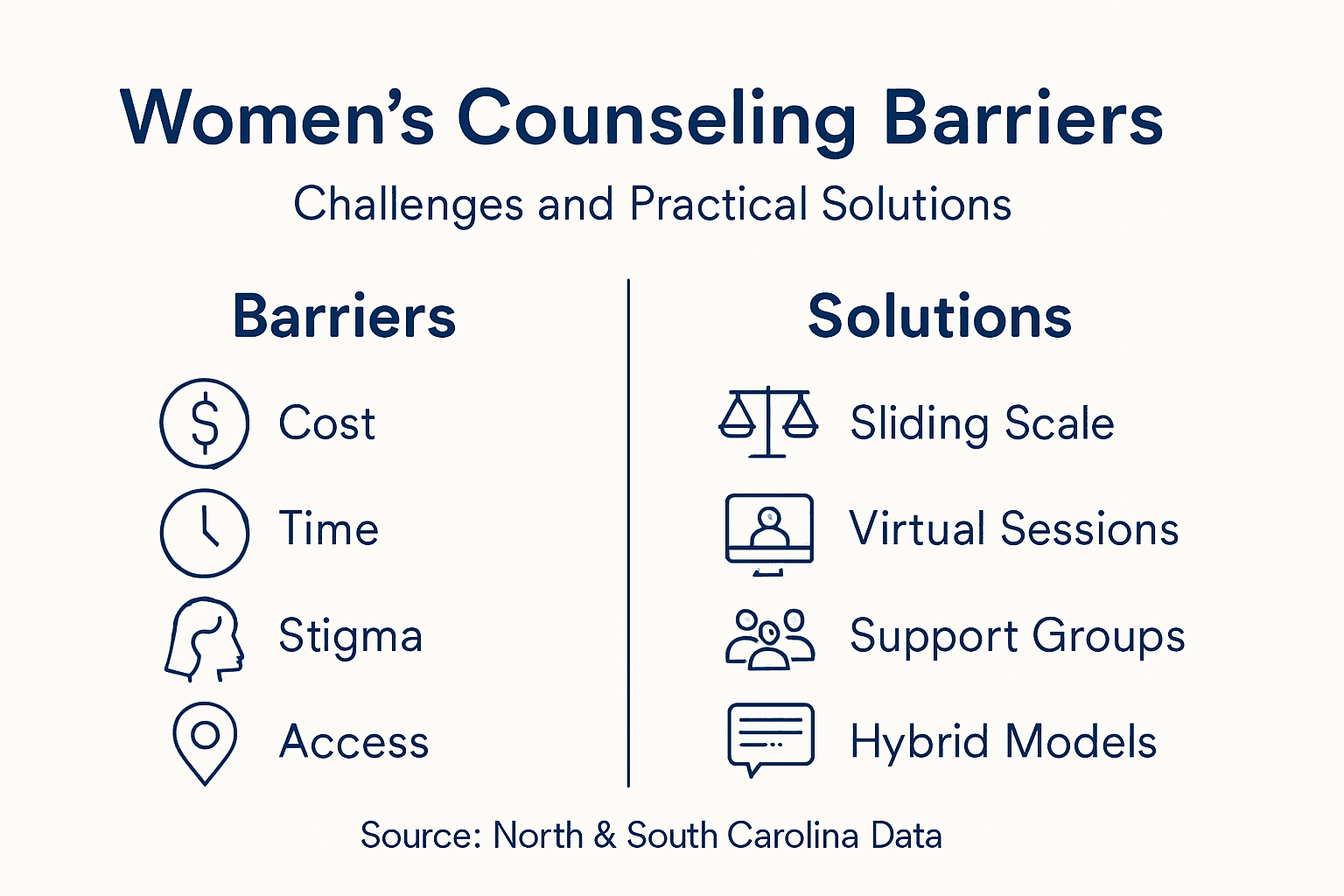
Technology offers solutions to some of these barriers, but creates new ones. Digital platforms reduce stigma and geographic limitations by expanding counseling access, allowing women to attend sessions from home at flexible times. Yet not everyone has reliable internet access or the technology literacy to navigate virtual platforms confidently. Privacy concerns surface when women worry about family members overhearing sessions or discovering they’re in therapy. Lack of culturally competent counselors represents another significant barrier. A woman seeking support needs a therapist who understands her specific context—her race, ethnicity, sexual orientation, disability status, religious background, and socioeconomic position. Generic counseling misses crucial pieces of her reality.
Solutions exist when barriers get acknowledged directly. Hybrid counseling models combine digital and in-person sessions, giving women flexibility to choose what works for their situation. Some weeks you might attend virtual sessions from your car during lunch break. Other weeks you might have an in-person appointment when childcare is arranged. Sliding scale fees and community mental health centers reduce financial barriers. Evening and weekend appointments address time constraints. Telehealth access overcomes geographic limitations. Beyond these practical changes, integrating social work approaches and tailoring services to diverse populations enhances counseling effectiveness. When counselors actively work to understand and address the systemic barriers their clients face, therapy becomes more than individual treatment. It becomes advocacy and empowerment.
The following table summarizes common barriers to counseling for women and practical solutions:
| Barrier | Example | Solution |
|---|---|---|
| Stigma | Fear of being judged | Normalize mental health, promote positive messaging |
| Geographic Isolation | Few providers nearby | Use telehealth or hybrid sessions |
| Financial Constraints | High out-of-pocket costs | Seek sliding scale fees or community centers |
| Time Scarcity | Balancing work and family | Schedule evening or weekend appointments |
| Privacy Concerns | Family overhearing sessions | Attend sessions in private settings or via phone |
| Lack of Cultural Fit | Counselor missing client’s context | Search for providers with relevant expertise |
One often overlooked solution involves asking directly about barriers during your first consultation. Tell your prospective counselor about your constraints. Some counselors offer reduced fees. Others have flexible scheduling. Some specialize in work with particular populations. The right fit exists, but you have to communicate your needs honestly rather than accepting whatever feels available.
Pro tip: If cost is a barrier, ask your counselor about sliding scale fees, community mental health centers, or employee assistance programs through your workplace before assuming therapy is unaffordable—many practices offer reduced rates for clients with limited income.
Discover Empowering Counseling Tailored for Women
If you are struggling with the unique challenges that women face in therapy such as managing anger, navigating life transitions, or overcoming systemic barriers, specialized support is available. Counseling for women centers on your experiences and helps you break through internalized oppression, power dynamics, and societal pressures. At Mastering Conflict, we offer evidence-based counseling services that incorporate feminist approaches and a biopsychosocial perspective to empower you on your mental health journey.
Take control of your well-being now by connecting with counselors trained to understand the full context of your life. Whether you prefer individual therapy or want to explore anger management strategies, our online and in-person sessions across North and South Carolina are designed for real-life flexibility. Visit our homepage to learn more and book a session today. Begin your path to empowerment with compassionate, professional care that respects your voice and honors your story.
Frequently Asked Questions
What is counseling for women?
Counseling for women is a specialized therapeutic approach that addresses the unique challenges and experiences women face, incorporating a social justice orientation and a collaborative relationship between counselor and client.
How does feminist counseling differ from traditional counseling?
Feminist counseling explicitly includes social context, power dynamics, and systemic inequalities in the therapeutic process, helping women understand their struggles within a broader societal framework, rather than viewing them solely as personal issues.
What types of issues can counseling for women help with?
Counseling for women can help with a variety of issues, including anxiety, anger management, relationship dynamics, life transitions, and the impact of internalized oppression and societal expectations on mental health.
How can I find the right counselor for women’s issues?
When looking for a counselor, ask about their training in women-centered or feminist counseling approaches, as well as how they integrate an understanding of systemic factors in their treatment. This ensures you find someone equipped to support your complete experience.
Recommended
- Coaching Program for Women Leaders With Natasha Pemberton
- Women’s Counseling Therapist in Charlotte, NC 28262
- What Is Empathy? Complete Guide to Core Skills – Mastering Conflict
- Empathy in Relationships: Complete Guide to Connection – Mastering Conflict
- What Is Emotional Wellness and Why It Matters – Real Healthy Haven