
Therapy for Teens Explained: Supporting Behavioral Change

Every parent faces that moment when their teenager’s emotions feel overwhelming or their behavior becomes harder to manage. In North Carolina and South Carolina, families often wonder how to find support that truly helps their teens. Teen therapy provides a confidential space designed specifically for adolescents to address emotional challenges, build healthy coping strategies, and prevent long-term difficulties before they escalate. This guide explains how therapy can support your teenager during times of stress or change and what makes it so valuable for families.
Table of Contents
- What Is Teen Therapy And Who Needs It
- Types Of Therapy Available For Teens
- Common Concerns Addressed In Teen Counseling
- How Therapy Sessions For Teens Work
- Parental Roles And Confidentiality In Teen Therapy
Key Takeaways
| Point | Details |
|---|---|
| Teen Therapy Provides Specialized Support | Teen therapy is designed to help adolescents manage emotional, psychological, and behavioral challenges in a confidential environment with trained professionals. |
| Variety of Therapy Approaches Available | Different therapeutic methods like CBT, DBT, and Family Therapy can be tailored to meet a teen’s unique needs and help them achieve personal goals. |
| Common Issues Addressed | Therapy can effectively address issues like academic stress, anxiety, family conflict, and identity questions, promoting overall emotional well-being. |
| Confidentiality and Parental Roles | Confidentiality is crucial in teen therapy, allowing for open exploration while parents can support their teen’s growth without intruding on their privacy. |
What Is Teen Therapy and Who Needs It
Teen therapy is a specialized form of counseling designed to help adolescents navigate the emotional, psychological, and behavioral challenges that emerge during this critical developmental period. Unlike talking to a friend or family member, therapy provides a safe, confidential space where teenagers can explore their feelings with a trained professional who understands adolescent development. A therapist helps teens identify patterns in their thinking and behavior, develop coping strategies, and work toward positive change without judgment.
The reality is that mental health disorders affect approximately 14.3% of adolescents worldwide, with depression, anxiety, and behavioral problems being among the most common concerns. Your teenager might benefit from therapy if they’re experiencing persistent sadness or anxiety, struggling with school performance, having difficulty with friendships, displaying aggressive or defiant behavior, or dealing with traumatic experiences. Therapy isn’t just for teenagers with diagnosed disorders either. Many adolescents seek counseling during major life transitions like moving to a new school, family conflict, or recovering from substance use. Even teenagers who seem to be managing well can benefit from therapy as a preventive measure to build resilience and develop healthy coping skills before problems escalate.
What makes teen therapy different from adult therapy is that it accounts for the adolescent brain’s unique developmental stage. Therapists working with teens recognize that teenagers are developing independence, forming their identity, and learning to manage increasingly complex social relationships. They use age-appropriate techniques and evidence-based approaches to connect with your teen and address their specific challenges. Some teens come to therapy voluntarily because they recognize they need support, while others initially resist the idea. Either way, a skilled therapist can help reluctant teenagers see therapy as a tool for gaining control over their lives rather than punishment.
Pro tip: If your teen is hesitant about therapy, let them know they can choose their therapist and that the first session is often just about getting comfortable with the process, not diving deep into problems right away.
Types of Therapy Available for Teens
Not all therapy approaches work the same way for every teenager. The type of therapy your teen receives depends on their specific challenges, personality, and what they’re trying to accomplish. Think of therapy like choosing the right tool for a job. A hammer works great for nails, but you’d need a screwdriver for screws. Similarly, therapists select evidence-based approaches that match your teen’s needs and goals.
Cognitive Behavioral Therapy (CBT) is one of the most widely used approaches for adolescents. It focuses on the connection between thoughts, feelings, and behaviors. If your teen struggles with anxiety or depression, a CBT therapist helps them identify negative thought patterns and replace them with more balanced thinking. For example, a teen who thinks “Everyone will judge me if I speak up in class” learns to examine that thought and develop a more realistic perspective. Dialectical Behavior Therapy (DBT) takes a different approach, emphasizing emotional regulation and acceptance. It’s particularly helpful for teens with intense emotions, self-harm behaviors, or suicidal thoughts. DBT teaches specific skills for managing distress and improving relationships.
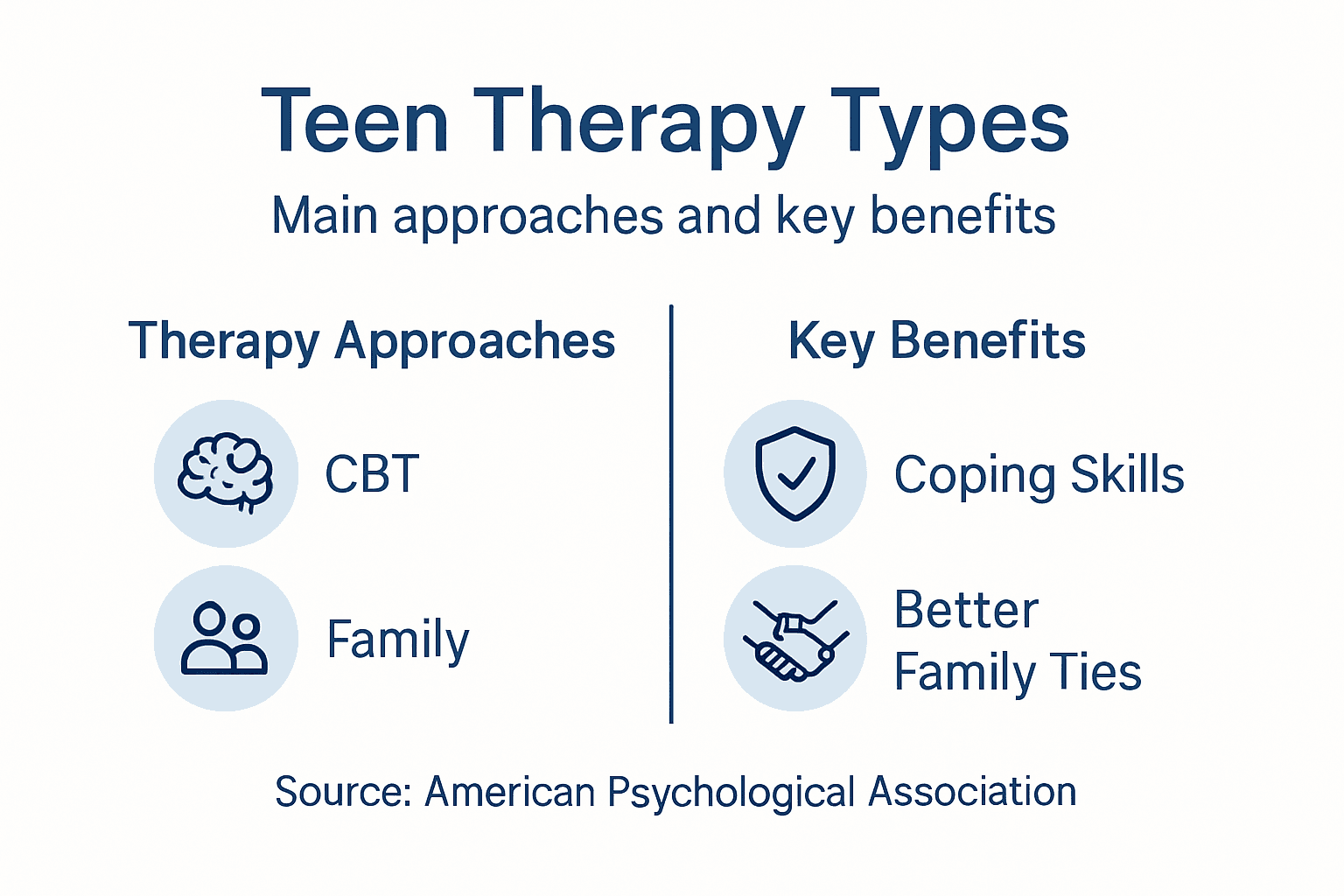
Family Therapy recognizes that your teen doesn’t exist in isolation. These sessions may include you and other family members to improve communication and resolve family conflicts. When conflict resolution skills for teens are developed in a family therapy setting, it strengthens relationships across the entire household. Acceptance and Commitment Therapy (ACT) helps teens accept difficult emotions rather than fight them, while focusing on living according to their values. Interpersonal Therapy (IPT) builds social skills and addresses relationship problems by examining how current relationships affect mood and behavior.
Your therapist may use one primary approach or combine multiple methods based on what’s working. Some teens benefit from starting with CBT for symptom relief, then transitioning to DBT skills for long-term emotional management. Others respond better to family-based interventions that address underlying relational dynamics. The key is that therapy types are tailored to individual teen needs, not a one-size-fits-all solution.
Here’s a comparison of commonly used teen therapy approaches and their best uses:
| Therapy Approach | Main Focus | Ideal Use Cases | Example Benefits |
|---|---|---|---|
| Cognitive Behavioral Therapy (CBT) | Thoughts and behaviors | Anxiety, depression, negative thinking | Reframe beliefs, improve mood |
| Dialectical Behavior Therapy (DBT) | Emotional regulation | Intense emotions, self-harm, suicidal ideation | Manage distress, build coping skills |
| Family Therapy | Relationships and communication | Family conflict, communication issues | Strengthen family bonds, resolve disputes |
| Acceptance and Commitment Therapy (ACT) | Acceptance and values | Difficult emotions, identity issues | Embrace emotions, increase resilience |
| Interpersonal Therapy (IPT) | Social skills and relationships | Peer problems, social isolation | Improve connections, resolve conflicts |
Pro tip: Ask potential therapists which specific approaches they use and why they think that approach would help your teen, rather than just accepting the first recommendation.
Common Concerns Addressed in Teen Counseling
Teenagers walk into therapy rooms carrying a wide range of struggles. Some arrive dealing with academic pressure, others wrestling with anxiety that keeps them awake at night, and still others facing family conflict that feels unbearable. The beauty of teen counseling is that it addresses the full spectrum of adolescent challenges, not just the most obvious ones. Understanding what therapists commonly treat helps you recognize whether your teen might benefit from professional support.

School stress ranks high on the list of reasons teens seek counseling. Between college preparation, social hierarchies, and performance pressure, many adolescents feel overwhelmed by academic demands. Anxiety and depression are equally prevalent concerns. Your teen might struggle with generalized worry, social anxiety that makes peer interactions painful, or depression that drains their motivation and joy. Beyond emotional health, teens often address behavioral issues including substance use, risky decision making, and self-harm. Family dynamics also play a major role in why teens come to therapy. Divorce, sibling conflict, parental expectations, and communication breakdowns create real pain that therapy helps resolve.
Peer relationships present another common focus in counseling. Teens navigate complex friendships, romantic relationships, and social rejection that can feel devastating at their age. Bullying, social isolation, and self-esteem struggles tied to appearance or social acceptance frequently bring teens to therapists’ offices. Trauma from abuse, neglect, accidents, or violence requires specialized therapeutic attention. Many teens also struggle with identity questions around sexual orientation, gender expression, and cultural belonging that therapy provides safe space to explore. Additionally, peer relationship challenges and social skill development often intersect with other concerns, creating complex emotional patterns.
What’s important to recognize is that teens rarely come in with just one isolated problem. A teen struggling with anxiety often avoids social situations, which damages friendships, which lowers self-esteem, which deepens depression. Therapy untangles these interconnected struggles by teaching emotional regulation skills, improving interpersonal communication, setting healthy boundaries, and building resilience. Your teen doesn’t need a crisis or diagnosis to benefit from counseling. Many adolescents thrive when they have professional support navigating the ordinary developmental challenges of growing up.
Here is a summary of typical issues addressed in teen counseling and their impact:
| Concern | Common Impact on Teens | Counseling Benefits |
|---|---|---|
| Academic Stress | Declining grades, lost motivation | Learn time management, build confidence |
| Anxiety | Avoidance, social withdrawal | Reduce worry, develop coping strategies |
| Family Conflict | Tension at home, isolation | Improve communication, resolve problems |
| Peer Relationship Issues | Bullying, low self-esteem | Strengthen social skills, boost confidence |
| Trauma & Identity | Emotional distress, confusion | Process experiences, support identity exploration |
Pro tip: When discussing therapy with your teen, ask them what specific situations stress them out most, then mention that a therapist can help with exactly those kinds of challenges rather than framing it as a fix for being broken.
How Therapy Sessions for Teens Work
Imagine your teen walking into a therapist’s office for the first time. They might feel nervous, skeptical, or uncertain about what to expect. This is completely normal. The first session isn’t about diving deep into problems. Instead, the therapist focuses on building trust and getting to know your teen as a person. Think of it as a conversation with someone who has professional training in listening and asking thoughtful questions. Your teen might not open up completely on day one, and that’s okay. Trust develops over time through consistent, confidential meetings.
Typical therapy sessions last 45 to 60 minutes and usually occur weekly, though frequency can adjust based on your teen’s needs and circumstances. During these sessions, your teen engages in talk therapy or specialized techniques tailored to their specific challenges. A therapist might use age-appropriate approaches that help teens identify emotions and develop practical coping strategies. The conversation feels natural, not like an interrogation. Your teen discusses what’s happening in their life, relationships, school, and emotions. The therapist asks questions designed to help your teen understand patterns in their thinking and behavior, then works collaboratively to develop solutions.
What makes therapy effective is that it’s personalized. One teen might benefit from exploring family dynamics, while another focuses on managing anxiety symptoms or building conflict resolution skills for tough relationships. The therapist adapts their approach based on your teen’s developmental stage, comfort level, and what’s actually working. Your teen isn’t sitting passively listening to advice. Instead, they’re actively engaged in problem-solving, practicing new skills during sessions, and applying what they learn to real-life situations. Many therapists assign homework between sessions, like journaling, practicing specific responses to situations, or noticing thought patterns. This keeps momentum going and helps your teen experience real behavioral change beyond the therapist’s office.
Confidentiality is crucial for therapy to work. Your teen needs to know that what they share stays private, with only specific exceptions like safety concerns. This confidentiality actually strengthens your relationship with your teen because the therapist isn’t reporting everything back to you. Of course, you as a parent play an important supporting role. Some sessions might include family members if family dynamics are a central issue, and your teen’s therapist may occasionally check in with you about progress and how you can support your teen at home.
Pro tip: Before the first appointment, ask your teen what they hope to get out of therapy and let them know the therapist is there to help them work toward their own goals, not to tell them what to do.
Parental Roles and Confidentiality in Teen Therapy
One of the biggest questions parents ask when enrolling their teen in therapy is: Will I know what we’re talking about? The answer is nuanced, and understanding the balance between confidentiality and parental involvement is essential for supporting your teen’s growth. Confidentiality in teen therapy isn’t absolute secrecy. Instead, it’s a professional boundary designed to create a safe space where your teen can explore feelings and challenges without worrying that everything gets reported back home. This boundary actually strengthens your relationship with your teen because they know they have some autonomy and privacy.
Therapists explain confidentiality boundaries clearly to both teens and parents during the intake process. Most details your teen shares in sessions remain private. However, therapists are required to break confidentiality if they believe your teen is in imminent danger, has suicidal thoughts, plans to harm themselves or others, or discloses abuse. These safety exceptions exist because protecting your teen’s wellbeing takes priority over therapeutic confidentiality. When safety concerns arise, the therapist will involve you and discuss next steps. Understanding these boundaries upfront prevents misunderstandings later and helps your teen feel secure in therapy.
Your role as a parent doesn’t disappear once therapy begins. Instead, it transforms. You support your teen by maintaining open communication at home, showing interest in their wellbeing without demanding detailed session information, and creating an environment where they feel safe discussing emotions. You can ask your therapist about general progress and what you might do to support your teen’s therapeutic goals, but the specific content of sessions stays between your teen and their therapist. This approach respects your teen’s growing autonomy while allowing you to advocate for their wellbeing. Some family therapy sessions might include you directly, especially if family dynamics contribute to your teen’s challenges.
Your teen needs to know you respect their therapeutic privacy. This respect builds trust in both therapy and your relationship. Avoid asking detailed questions about what was discussed or pressuring them to share. Instead, notice behavioral changes, acknowledge their effort in therapy, and let them know you’re available if they want to talk. If you have concerns about progress, communicate directly with the therapist rather than interrogating your teen. Understanding confidentiality boundaries helps you support therapy effectively while maintaining appropriate family relationships.
Pro tip: Ask your teen’s therapist during an initial check-in call what the communication process looks like for parents, including how often you’ll receive updates and how to reach out if safety concerns arise at home.
Support Your Teen’s Journey to Positive Change with Expert Guidance
If your teenager is struggling with anxiety, depression, family conflict, or challenges in peer relationships, therapy tailored to their unique developmental stage can make all the difference. This article explains how specialized approaches like cognitive behavioral therapy and family counseling help teens identify thoughts and feelings, develop coping skills, and navigate the complex emotions of adolescence. The process also emphasizes building trust and respect for your teen’s confidentiality while keeping you involved in supporting their growth.

Take action now by exploring professional teen counseling and conflict resolution services designed to support behavioral change at Mastering Conflict. With expert therapists led by Dr. Carlos Todd, you can find customized solutions that address your teen’s needs and empower your family. Visit Mastering Conflict today to learn how therapy can help transform challenges into lasting resilience.
Frequently Asked Questions
What is teen therapy?
Teen therapy is a specialized counseling service that helps adolescents address emotional, psychological, and behavioral issues in a safe and confidential environment.
Why might my teenager need therapy?
Teenagers may benefit from therapy if they experience persistent sadness, anxiety, struggles with school, difficulty with friendships, behavioral problems, or are navigating major life transitions.
How do therapy sessions for teens typically work?
Sessions usually last 45 to 60 minutes and involve talk therapy or specific techniques tailored to the teen’s challenges. Therapists focus on building trust and personalizing the approach based on individual needs.
What types of therapy are commonly used for teens?
Common therapy approaches for teens include Cognitive Behavioral Therapy (CBT), Dialectical Behavior Therapy (DBT), Family Therapy, Acceptance and Commitment Therapy (ACT), and Interpersonal Therapy (IPT), each serving different needs and concerns.
Recommended
- Conflict Resolution for Teens: Building Communication Skills – Mastering Conflict
- Learning Emotional Regulation: Tools for Parenting Teens – Mastering Conflict
- Peer Relationships in Adolescence: Complete Guide – Mastering Conflict
- Conflict Resolution Strategies for Teens: Building Stronger Family Bonds – Mastering Conflict