
Signs of Anger Issues in a Woman – What You Need to Know

Over half of American women report struggling with anger that affects their daily lives and relationships. For women in North Carolina and South Carolina, emotional distress and conflict often reveal deeper patterns of frustration, resentment, or misunderstood boundaries. Gaining clarity about anger issues leads to better connections and lasting emotional health, with guidance from professional counseling, targeted strategies, and real-world solutions designed for your unique experiences.
Table of Contents
- Defining Anger Issues In Women
- Types And Expressions Of Female Anger
- Common Signs And Misconceptions
- How Anger Issues Affect Relationships
- When To Seek Support And Treatment
Key Takeaways
| Point | Details |
|---|---|
| Understanding Anger in Women | Anger issues in women are influenced by biological, psychological, and sociocultural factors, leading to complex emotional responses. |
| Types of Female Anger | Female anger can manifest in various forms, including suppressed, passive-aggressive, explosive, constructive, and internalized anger. |
| Signs of Anger Issues | Common signs include chronic stress, interpersonal conflicts, and unexplained physical symptoms, indicating potential underlying problems. |
| Seeking Professional Support | Women experiencing persistent anger disrupting their lives should consider professional help as a proactive step towards emotional healing. |
Defining Anger Issues in Women
Anger issues represent complex emotional challenges that extend far beyond simple frustration or occasional outbursts. For women specifically, anger is a nuanced experience deeply influenced by biological, psychological, and sociocultural factors. Emerging research on gender-based emotional expression reveals that women’s anger is not just an emotion, but a multifaceted response shaped by individual experiences and societal expectations.
At its core, anger issues manifest as persistent, intense emotional reactions that significantly disrupt personal relationships, professional performance, and overall mental well-being. Unlike healthy anger that serves as a natural protective mechanism, problematic anger in women can emerge through various patterns – from explosive verbal confrontations to prolonged, simmering resentment. Cultural perspectives on gender and emotional regulation suggest that women often internalize anger differently compared to men, frequently experiencing it as a complex mix of frustration, hurt, and unexpressed emotional pain.
Recognizing anger issues requires understanding their nuanced presentation. Women might experience anger through symptoms such as:
- Frequent, disproportionate emotional reactions
- Persistent feelings of irritation or resentment
- Physical manifestations like tension headaches or unexplained body pain
- Difficulty maintaining stable relationships
- Self-destructive behaviors or passive-aggressive communication patterns
Pro Tip for Anger Management: Start a personal emotion tracking journal to identify your unique anger triggers and patterns, helping you develop targeted strategies for emotional regulation.
Understanding these signs empowers women to seek appropriate support and develop healthier emotional coping mechanisms.
The following table highlights the differences between healthy anger and problematic anger in women:
| Aspect | Healthy Anger | Problematic Anger |
|---|---|---|
| Expression | Assertive and controlled | Reactive or suppressed |
| Impact on Well-being | Promotes boundaries | Causes distress |
| Relationship Effect | Builds understanding | Damages trust |
| Social Perception | Seen as justified | Often misunderstood |
Types and Expressions of Female Anger
Female anger is a complex emotional landscape that defies simplistic categorization, presenting itself through diverse and nuanced manifestations. Research exploring the ‘anger gap’ between experienced and expressed anger reveals that women navigate anger with remarkable psychological sophistication, constantly weighing social consequences and personal emotional costs.
Primary types of female anger can be broadly classified into several distinctive patterns:
- Suppressed Anger: Internal emotional turmoil with minimal external expression
- Passive-Aggressive Anger: Indirect communication of frustration through subtle behavioral cues
- Explosive Anger: Sudden, intense emotional outbursts triggered by accumulated stress
- Constructive Anger: Purposeful, strategic emotional responses aimed at addressing systemic issues
- Internalized Anger: Self-directed emotional responses manifesting as anxiety, depression, or physical symptoms
These anger expressions are deeply influenced by societal expectations, personal experiences, and individual psychological mechanisms. Women often modulate their anger based on potential social repercussions, carefully navigating professional and personal environments where emotional displays can be misinterpreted or penalized. The intricate process involves continuous emotional negotiation, balancing personal authenticity with social survival strategies.
Pro Tip for Emotional Intelligence: Practice mindful anger recognition by journaling your emotional triggers and bodily responses, helping you transform reactive patterns into intentional, healthy expressions.
Understanding these multifaceted anger expressions empowers women to develop more authentic, effective emotional communication strategies.
Here is a summary of distinctive types of female anger and how they may influence behavior:
| Anger Type | Typical Behavior | Common Outcome |
|---|---|---|
| Suppressed Anger | Withholding emotion | Increased anxiety |
| Passive-Aggressive | Indirect resistance | Miscommunication |
| Explosive Anger | Sudden outbursts | Damaged relationships |
| Constructive Anger | Channeling anger to change | Positive transformation |
| Internalized Anger | Self-critical thinking | Emotional withdrawal |
Common Signs and Misconceptions
Comprehensive research on women’s anger reveals a complex landscape of emotional experiences frequently misunderstood by society. Anger in women is not a simple emotional outburst, but a nuanced response deeply rooted in personal experiences, systemic challenges, and psychological survival mechanisms.
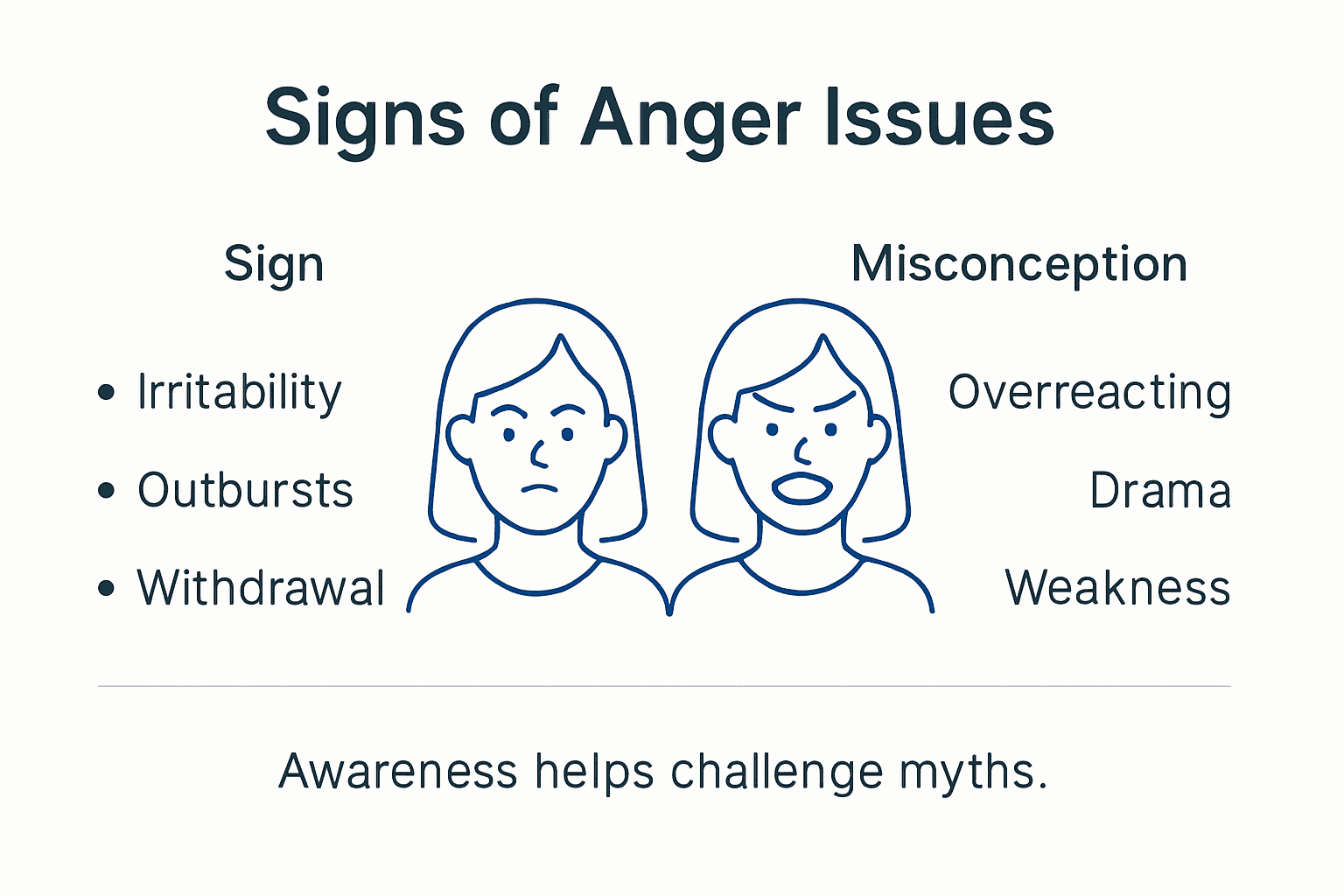
Common signs of underlying anger issues in women include:
- Chronic stress and unexplained physical tension
- Persistent feelings of resentment or emotional numbness
- Frequent interpersonal conflicts
- Difficulty maintaining professional or personal boundaries
- Unexplained physical symptoms like headaches or digestive issues
- Emotional shutdown or extreme avoidance behaviors
Diagnostic challenges in understanding female anger stem from deeply ingrained societal misconceptions that often pathologize women’s emotional experiences. Prevalent myths suggest that women’s anger is inherently irrational, hysterical, or a sign of emotional instability. These stereotypes create significant barriers, preventing women from recognizing and addressing their genuine emotional needs. The reality is far more complex: women’s anger is typically a rational response to systemic inequities, personal violations, or unmet emotional expectations.
Pro Tip for Emotional Awareness: Challenge internalized narratives about your anger by recognizing it as a valid, informative emotion that communicates important personal boundaries and needs.
Recognizing these signs and dismantling misconceptions is crucial for women’s emotional health and personal empowerment.
How Anger Issues Affect Relationships
Research examining interpersonal dynamics of anger reveals the profound impact unmanaged emotional responses can have on personal connections. Anger issues create complex ripple effects that extend far beyond momentary emotional outbursts, fundamentally altering relationship communication, trust, and intimacy.
Specifically, anger issues can devastate relationships through multiple destructive patterns:
- Eroding emotional safety and predictability
- Creating cycles of defensive communication
- Generating persistent relationship tension
- Undermining mutual respect and understanding
- Triggering involuntary withdrawal or counteraggression from partners
- Disrupting healthy emotional vulnerability
Emerging psychological research on emotional regulation demonstrates that unresolved anger significantly impacts relationship satisfaction, particularly when connected to deeper personal insecurities. Women experiencing chronic anger often find themselves trapped in a challenging cycle where emotional unexpression leads to increased relational stress, while explosive expressions generate further interpersonal complications. This dynamic creates a complex emotional landscape where partners struggle to maintain genuine connection and mutual understanding.
Pro Tip for Relationship Healing: Practice emotional transparency by creating structured, safe conversations where both partners can express feelings without fear of judgment or escalation.
Recognizing these patterns is the first critical step toward rebuilding healthier, more compassionate relationship dynamics.
When to Seek Support and Treatment
Evidence-based strategies for anger management highlight critical moments when professional intervention becomes essential. Women experiencing persistent anger that disrupts daily functioning, personal relationships, or emotional well-being should recognize these challenges as valid signals for seeking professional support.
Key indicators suggesting the need for professional intervention include:
- Frequent, intense anger episodes that feel uncontrollable
- Physical manifestations like chronic headaches or digestive issues
- Consistent difficulty maintaining personal or professional relationships
- Experiencing social isolation or withdrawal
- Recurring thoughts of self-harm or destructive behaviors
- Significant work or academic performance decline
- Persistent feelings of emotional overwhelm
Research exploring the transformative potential of women’s emotional experiences emphasizes that seeking support is not a sign of weakness, but a powerful act of self-advocacy. Professional therapists specializing in anger management can provide targeted strategies to understand underlying emotional triggers, develop healthy coping mechanisms, and transform destructive patterns into constructive emotional intelligence.
Pro Tip for Emotional Wellness: Schedule an initial consultation with a mental health professional who specializes in women’s emotional health, viewing it as an investment in your personal growth and well-being.
Recognizing when to seek help is the first courageous step toward emotional healing and personal empowerment.
Take Control of Anger and Rebuild Your Emotional Well-Being
Recognizing the signs of anger issues in women is the vital first step toward healing and healthier relationships. If you find yourself struggling with persistent anger that impacts your mental health, physical symptoms, or connections with loved ones, you are not alone. At Mastering Conflict, we understand how complex and deeply personal anger can be. Our evidence-based anger management programs and specialized counseling services offer compassionate, professional support tailored to women navigating these challenges.
Do not wait for anger to control your life or harm your relationships. Take action now by exploring personalized therapy and coaching options at Mastering Conflict. Empower yourself to transform reactive patterns into purposeful emotional expression and create the positive changes you deserve. Begin your journey today and reclaim your peace with the help of trusted experts who truly get it.
Frequently Asked Questions
What are the signs of anger issues in women?
Signs of anger issues in women include frequent emotional outbursts, persistent feelings of irritation or resentment, physical symptoms like tension headaches, difficulty maintaining stable relationships, and self-destructive behaviors.
How does suppressed anger manifest in women?
Suppressed anger in women often leads to chronic stress, increased anxiety, and physical symptoms, as emotions are internalized rather than expressed outwardly. This can result in emotional numbness or unhealthy behavioral patterns.
What are the effects of anger issues on personal relationships?
Anger issues can erode emotional safety in relationships, create cycles of defensive communication, generate persistent tension, and undermine mutual respect, ultimately impacting relationship satisfaction and intimacy.
When should a woman seek professional support for anger issues?
A woman should seek professional support when experiencing frequent, uncontrollable anger episodes, physical manifestations of anger, significant difficulties in relationships, feelings of social isolation, or recurring thoughts of self-harm.