
Anger Management for Employees: Building Workplace Harmony

More than one in four American employees admit unresolved anger impacts their work relationships every year. For HR leaders across North Carolina and South Carolina, workplace conflict rooted in unmanaged emotions can quickly disrupt team morale and productivity. Understanding how to define and address anger management for employees will help HR professionals pinpoint common triggers, spot early warning signs, and introduce proven techniques that create a more respectful and harmonious work environment.
Table of Contents
- Defining Anger Management for Employees
- Common Triggers and Signs at Work
- Effective Techniques to Reduce Workplace Anger
- HR Responsibilities and Legal Considerations
- Intervention Strategies and Support Resources
Key Takeaways
| Point | Details |
|---|---|
| Understanding Anger Management | It involves recognizing, processing, and managing triggers in the workplace to prevent conflicts and maintain professional relationships. |
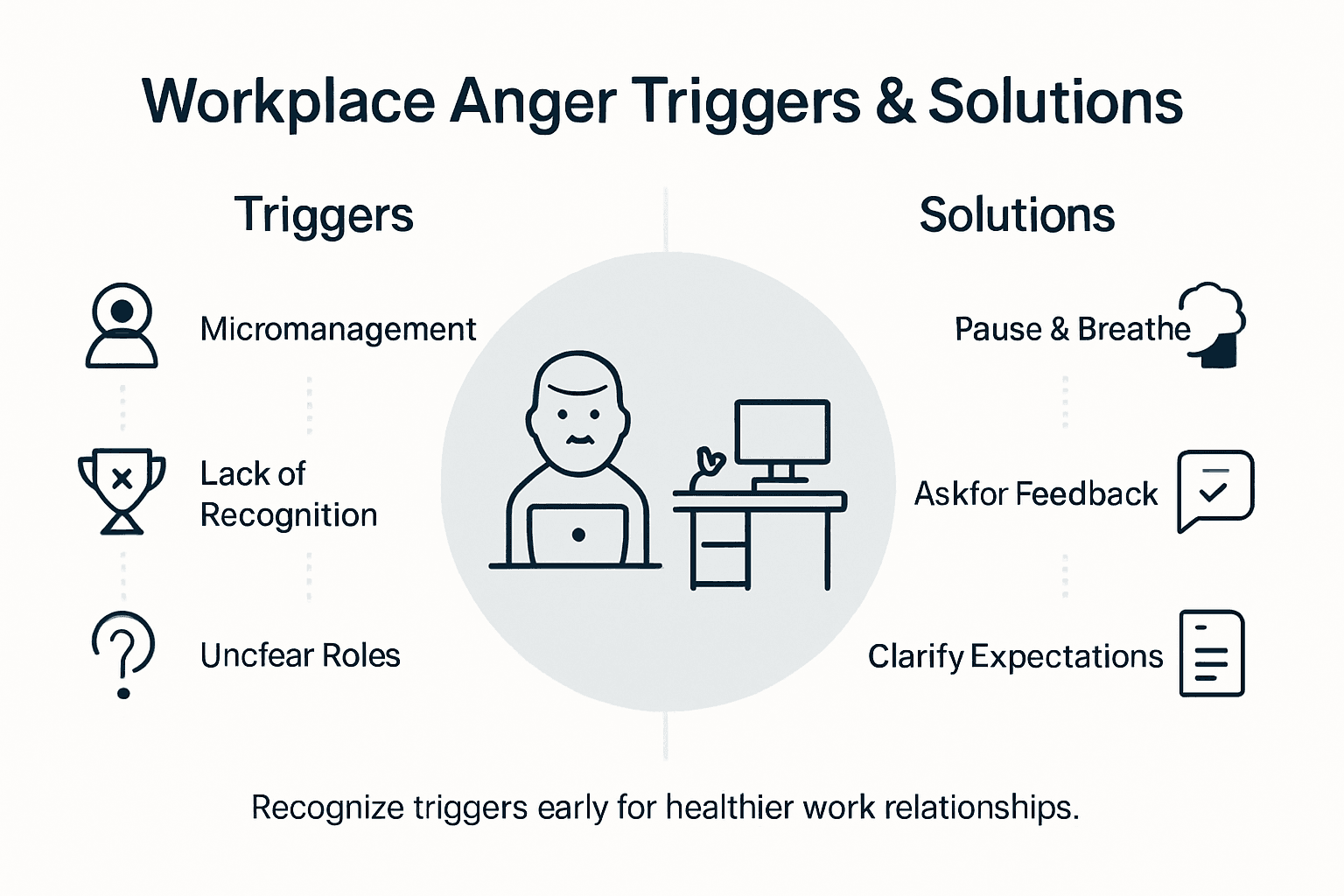
| Common Triggers and Responses | Identifying triggers like micromanagement and lack of recognition allows for proactive communication and stress reduction strategies. |
| HR’s Role in Anger Management | HR must develop clear policies and provide training to ensure a respectful work environment and mitigate legal risks. |
| Intervention Strategies | Comprehensive support systems, including workshops and counseling, can help employees manage emotional triggers constructively. |
Defining Anger Management for Employees
Anger management represents a structured approach to understanding and controlling emotional responses in professional settings. At its core, it involves learning critical skills to recognize, process, and constructively manage anger triggers before they escalate into workplace conflicts. Anger management encompasses understanding the nature of anger, its expression, and strategies for effective control, particularly within organizational environments where interpersonal dynamics are complex.
Employees experiencing persistent anger challenges face significant professional risks. Unmanaged anger can damage professional relationships, undermine team collaboration, reduce productivity, and potentially lead to disciplinary actions or termination. Workplace anger management focuses on developing emotional intelligence, communication skills, and self-regulation techniques that help professionals navigate challenging interactions professionally and respectfully.
The fundamental components of effective anger management for employees include self-awareness, emotional recognition, stress reduction techniques, and constructive communication strategies. Learning coping skills to understand and control anger involves identifying personal triggers and developing strategic responses that prevent destructive emotional reactions. These skills are not about suppressing emotions but channeling them appropriately and maintaining professional composure.
Pro Tip: Emotional Checkpoint: Develop a personal 30-second reset routine when you feel anger rising, such as taking three deep breaths, counting to five silently, or briefly stepping away to regain perspective before responding.
Common Triggers and Signs at Work
Workplace anger is rarely spontaneous. Organizational changes often trigger anger in employees, leading to behaviors such as resistance to change and decreased commitment, creating complex emotional landscapes that challenge professional interactions. These triggers can range from systemic issues like poor communication to individual experiences of perceived unfairness or chronic workplace stress.
Common workplace anger triggers include persistent scenarios that erode employee trust and emotional stability. These might involve unresolved conflicts with colleagues, repeated micromanagement, lack of recognition, unrealistic performance expectations, inconsistent leadership practices, and feelings of professional stagnation. High levels of work-related strain can escalate these tensions, leading to increased anger and potential organizational dysfunction, which ultimately impacts team dynamics and individual performance.

Recognizing signs of escalating workplace anger is crucial for early intervention. Behavioral indicators include frequent verbal aggression, passive-aggressive communication, increased argumentativeness, visible frustration during meetings, sudden emotional outbursts, persistent negativity, reduced collaboration, withdrawal from team activities, and noticeable changes in professional demeanor. Physical manifestations might involve elevated stress levels, changes in body language, increased muscle tension, and reduced overall workplace engagement.
Here is a comparison of common workplace anger triggers alongside effective response techniques:
| Common Trigger | Impact on Workplace | Most Effective Response |
|---|---|---|
| Micromanagement | Reduces trust, increases stress | Assertive communication, set boundaries |
| Lack of recognition | Lowers motivation, builds resentment | Request feedback, seek positive reinforcement |
| Unrealistic expectations | Causes frustration, lowers morale | Open discussion of workloads |
| Unresolved conflicts | Team divides, chronic tension | Facilitate mediation, active listening |
| Inconsistent leadership | Creates confusion, fuels negativity | Request clarity, document instructions |
| Professional stagnation | Decreases engagement, prompts withdrawal | Seek development, set growth goals |
Pro Tip: Anger Detector: Develop a personal emotional tracking system where you objectively log your workplace interactions, noting triggers, emotional responses, and potential resolution strategies to build self-awareness and proactive management skills.
Effective Techniques to Reduce Workplace Anger
Cognitive restructuring and strategic relaxation exercises are powerful techniques for managing workplace anger, enabling professionals to transform destructive emotional patterns into constructive responses. These approaches focus on reframing negative thought processes, developing emotional regulation skills, and creating proactive strategies for handling challenging workplace interactions.
Multiple evidence-based techniques can help employees effectively manage workplace anger. Emotional regulation strategies include deep breathing exercises, mindfulness meditation, progressive muscle relaxation, and cognitive reframing. Utilizing humor can be an effective strategy to defuse tension, fostering a more positive and collaborative workplace environment, allowing employees to navigate challenging situations with greater emotional intelligence and resilience.
Practical anger management techniques involve developing self-awareness, communication skills, and emotional control mechanisms. Key approaches include practicing active listening, using assertive communication techniques, identifying personal anger triggers, implementing stress management routines, seeking professional counseling when needed, and maintaining a consistent self-reflection practice. Employees can also benefit from developing healthy boundary-setting skills, learning to separate personal emotions from professional interactions, and cultivating empathy and understanding in workplace relationships.
Pro Tip: Emotional Reset Button: Create a personalized 60-second grounding technique you can discretely use in stressful work situations, such as a specific breathing pattern, a mental visualization, or a brief mental mantra that helps you quickly regain emotional equilibrium.
HR Responsibilities and Legal Considerations
HR plays a critical role in addressing workplace conflicts through strategic mediation, arbitration, and ensuring compliance with legal standards, maintaining a professional and legally protected work environment. These responsibilities extend beyond simple conflict resolution to proactively creating frameworks that prevent escalation and protect both employee rights and organizational interests.
Workplace legal considerations surrounding anger management involve multiple complex dimensions. HR must navigate potential issues of harassment, discrimination, hostile work environment claims, and potential wrongful termination scenarios. This requires developing comprehensive policies that clearly outline acceptable behavior, provide transparent reporting mechanisms, and establish consistent consequences for repeated anger-related misconduct. Organizations must balance employee protection with maintaining a safe, productive workplace that respects individual emotional regulation challenges.
The legal landscape of workplace anger management demands a multifaceted approach. Key responsibilities include developing clear conduct policies, providing mandatory anger management training, creating confidential reporting systems, implementing fair investigation protocols, and establishing progressive disciplinary procedures. HR professionals must also remain current with evolving employment laws, ensuring that anger management interventions are applied consistently, without bias, and in alignment with federal and state employment regulations.
The following table summarizes the key responsibilities of HR in managing workplace anger:
| HR Responsibility | Description | Business Impact |
|---|---|---|
| Conduct policy development | Define behavioral standards and consequences | Reduces legal risks, clarifies norms |
| Conflict mediation | Facilitate resolution between employees | Improves morale, reduces turnover |
| Reporting/procedure systems | Enable confidential issue reporting | Protects employee rights, increases trust |
| Mandatory training | Deliver anger management and awareness sessions | Promotes safe, respectful workplace |
| Policy compliance monitoring | Regularly review and update procedures | Maintains legal protection |
Pro Tip: Policy Precision: Regularly audit your workplace conduct policies with an employment law specialist to ensure they are current, comprehensive, and legally defensible, protecting both employee rights and organizational interests.
Intervention Strategies and Support Resources
Professional development sessions on anger management can equip employees with critical skills to handle workplace conflicts constructively, creating a proactive approach to emotional intelligence and workplace harmony. These targeted interventions provide structured frameworks for employees to understand, recognize, and effectively manage emotional triggers in professional environments.
Comprehensive intervention strategies encompass multiple support mechanisms designed to address workplace anger holistically. Structured anger management workshops offer practical tools that help employees improve interpersonal relationships and develop emotional regulation techniques, focusing on skill-building rather than punitive approaches. These resources typically include individual assessments, group training sessions, one-on-one coaching, peer support networks, and ongoing professional counseling options tailored to workplace dynamics.
Effective intervention resources require a multi-tiered approach that addresses individual, team, and organizational levels. Key components include confidential counseling services, stress management programs, emotional intelligence training, conflict resolution workshops, mental health resources, and personalized anger management coaching. Organizations should create comprehensive support systems that destigmatize emotional challenges, promote psychological safety, and provide accessible, judgment-free pathways for employees seeking assistance.
Pro Tip: Support Network Mapping: Create an internal directory of mental health resources, counseling services, and anger management support contacts, ensuring employees know exactly where to turn when they need professional guidance.
Take Control of Workplace Anger and Build Lasting Harmony
Managing anger at work can feel overwhelming when triggers like micromanagement, lack of recognition, or unresolved conflicts start affecting your peace and professional relationships. The key steps like emotional regulation, assertive communication, and self-awareness are important but sometimes challenging to implement alone. If you recognize these struggles or want to prevent anger from disrupting your career or team, specialized support can make all the difference.
At Mastering Conflict, we understand the unique challenges employees face with anger management. Our evidence-based anger management classes, personalized coaching, and individual therapy programs are designed to help you develop practical coping strategies, enhance emotional intelligence, and regain control over your reactions before they escalate. Whether you are an employee striving for balance, a manager seeking to improve team dynamics, or a mental health professional looking for clinical training, our solutions provide compassionate, effective pathways forward.
Don’t wait until anger jeopardizes your career or workplace harmony. Visit Mastering Conflict to explore how our targeted services can empower you today. Take the first step toward a healthier emotional balance and professional environment by scheduling a consultation or joining one of our anger management classes now.
Frequently Asked Questions
What is anger management for employees?
Anger management for employees involves techniques and strategies to understand, process, and control anger in the workplace, helping prevent conflicts and improve interpersonal relationships.
What are common triggers of workplace anger?
Common triggers include micromanagement, lack of recognition, unrealistic expectations, unresolved conflicts, inconsistent leadership, and professional stagnation, which can lead to increased tension and reduced collaboration.
What techniques can help reduce workplace anger?
Effective techniques include cognitive restructuring, deep breathing exercises, mindfulness meditation, humor, active listening, assertive communication, and developing self-awareness to manage emotional responses constructively.
What role does HR play in managing workplace anger?
HR is responsible for developing conduct policies, facilitating conflict mediation, implementing mandatory training, and ensuring compliance with legal standards, all aimed at creating a respectful and safe workplace environment.