
Master Stress Reduction Exercises for Instant Calm

Over 60 percent of American adults report feeling stressed every day, making effective stress management more crucial than ever. Constant tension does not just affect your mood but can impact sleep, relationships, and long-term health. Learning how to assess your current stress levels, pinpoint triggers, and adopt simple, science-based techniques puts you back in control and helps restore genuine calm in your daily routine.
Table of Contents
- Step 1: Assess Current Stress Levels and Identify Triggers
- Step 2: Create a Calm Environment for Effective Practice
- Step 3: Engage in Deep Breathing and Mindfulness Techniques
- Step 4: Incorporate Progressive Muscle Relaxation Routines
- Step 5: Evaluate Results and Adjust Exercise Frequency
Quick Summary
| Key Insight | Explanation |
|---|---|
| 1. Track Your Stress Levels | Regularly assess both physiological and psychological responses to understand personal stress patterns effectively. |
| 2. Identify and Rate Stress Triggers | Create a detailed list of stress triggers, categorizing and rating them to prioritize your management strategies. |
| 3. Create a Calm Space | Design a serene environment that supports relaxation by minimizing distractions and incorporating soothing elements. |
| 4. Use Breathing and Mindfulness Techniques | Deep breathing and mindfulness can immediately reduce stress; practice these techniques consistently to enhance emotional regulation. |
| 5. Regularly Evaluate Your Progress | Monitor your stress management results weekly, adjusting techniques based on effectiveness to refine your approach continually. |
Step 1: Assess Current Stress Levels and Identify Triggers
Identifying your current stress levels and understanding what triggers them is crucial for effective stress management. In this step, you will learn how to conduct a comprehensive self assessment that reveals your unique stress patterns.
Start by tracking your physiological and psychological responses. University Health Services at Berkeley recommends observing groupings of indicators including psychological, academic, physical, and safety risk signals. Pay attention to symptoms like increased heart rate, muscle tension, irritability, sleep disruptions, and changes in appetite. Document these experiences in a journal or digital tracker to establish baseline patterns.
Next, systematically analyze your potential stress triggers. Cedars-Sinai suggests evaluating categories like work situations, major life events, and personal circumstances. Create a comprehensive list of scenarios that consistently produce stress responses. This might include deadlines, interpersonal conflicts, financial pressures, or significant life transitions. Rate each trigger on a scale of 1-10 based on its intensity and frequency.
Pro tip: Create a “stress snapshot” by color coding your trigger list red (high stress), yellow (moderate stress), and green (low stress) to visually understand your stress landscape and prioritize management strategies.
Here’s a summary of common stress triggers and recommended journaling approaches to track them:
| Stress Trigger Category | Example Situations | Recommended Journal Entry Format |
|---|---|---|
| Workplace or Academic | Tight deadlines, exams | Describe event, rate stress (1-10) |
| Interpersonal Conflicts | Arguments, misunderstandings | Note persons involved, emotional response |
| Financial Pressures | Bills, unexpected expenses | Record specific concern, track frequency |
| Major Life Events | Moving, bereavement | Log date, intensity, coping strategy |
| Daily Hassles | Traffic, interruptions | Briefly note event and time of day |
Step 2: Create a Calm Environment for Effective Practice
Establishing a serene environment is critical for successful stress reduction exercises. In this step, you will transform your physical space into a peaceful sanctuary that supports mental relaxation and emotional healing.
Florence Nightingale’s Environmental Theory highlights the profound impact of environmental conditions on personal well-being, emphasizing how physical surroundings directly influence our mental state. Begin by selecting a quiet space where you will not be interrupted. Choose a room with natural light if possible, ensuring comfortable temperature and minimal external noise. Remove digital distractions by silencing electronic devices and creating a technology free zone dedicated to your practice.
Carefully curate sensory elements that promote tranquility. Select soft, neutral colors for your practice area such as light blues, greens, or warm earth tones that naturally induce calmness. Incorporate elements like soft throw blankets, comfortable cushions, and ambient lighting that create a welcoming atmosphere. Consider adding natural elements such as small plants, smooth stones, or a small tabletop water feature to enhance the sense of peace and groundedness.
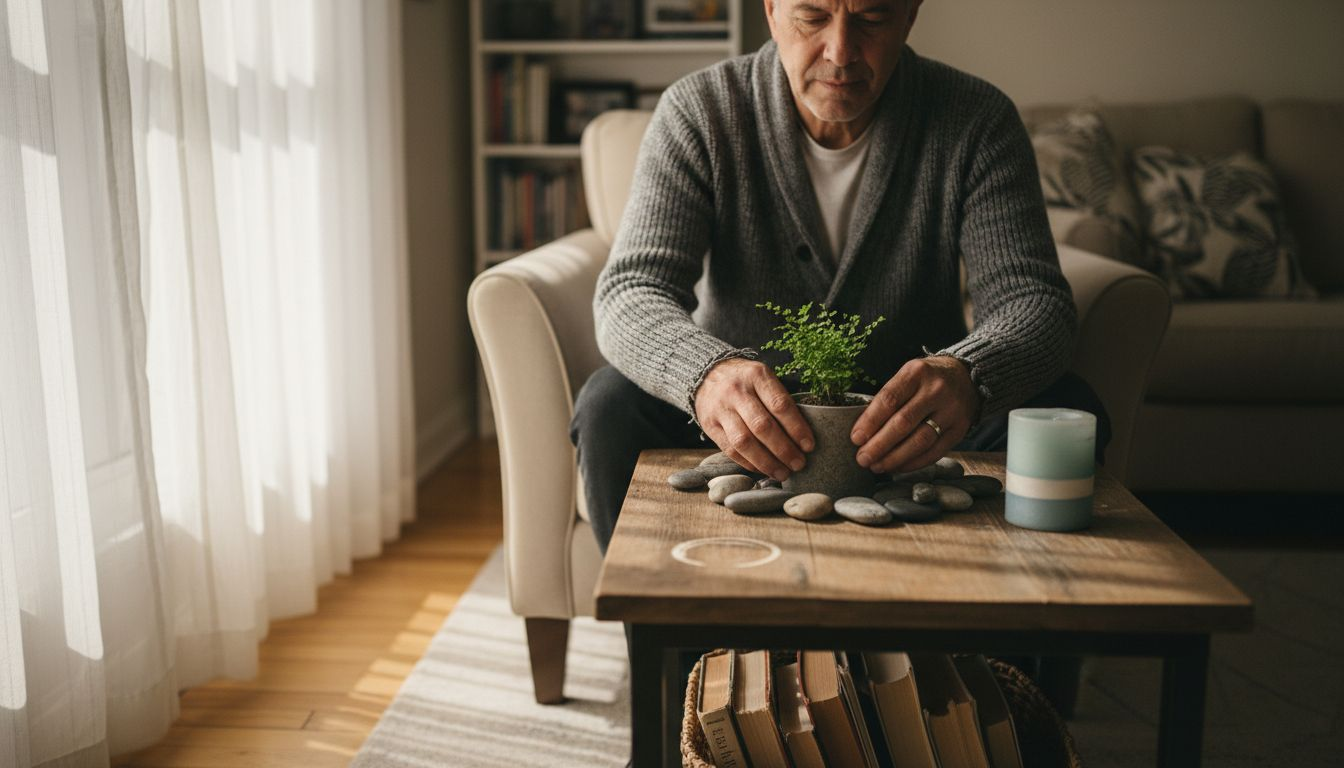
Pro tip: Create a dedicated relaxation corner with a specific set of calming items you use only for stress reduction practices to help your brain quickly recognize and transition into a relaxed state whenever you enter this space.
Step 3: Engage in Deep Breathing and Mindfulness Techniques
In this critical step, you will learn powerful breathing and mindfulness techniques that can instantly interrupt stress responses and promote profound relaxation. Mastering these techniques allows you to regain control over your emotional and physiological state.
Research published in the Journal of Clinical Psychology demonstrates that mindfulness based stress reduction programs can significantly lower stress levels and improve overall mental health. Begin with a fundamental deep breathing technique known as diaphragmatic breathing. Sit comfortably with your back straight, place one hand on your chest and another on your abdomen. Inhale slowly through your nose for four seconds, allowing your stomach to expand while keeping your chest relatively still. Hold the breath for two seconds, then exhale gradually through your mouth for six seconds, feeling your abdomen contract.
Next, incorporate mindfulness by focusing your attention entirely on the present moment. The American Psychological Association recommends meditation practices that enhance emotional regulation and reduce stress. As you continue your breathing exercise, observe your breath without judgment. When thoughts arise, acknowledge them gently and return your focus to your breathing. Start with five minute sessions and gradually increase the duration as you become more comfortable with the practice.
Pro tip: Set a daily reminder on your phone to practice these techniques at the same time each day, creating a consistent habit that trains your nervous system to respond more effectively to stress.
Step 4: Incorporate Progressive Muscle Relaxation Routines
Progressive Muscle Relaxation (PMR) is a powerful technique that helps you systematically release physical tension and interrupt the stress cycle. In this step, you will learn how to perform a comprehensive muscle relaxation routine that promotes deep physical and mental calm.
Clinical research published in the Journal of Clinical Psychology confirms that regular PMR practice can significantly reduce stress and anxiety levels. Begin by finding a comfortable position either sitting or lying down. Start with your dominant hand group muscles by clenching your fist tightly for five seconds, then slowly releasing and allowing complete relaxation. Notice the contrast between tension and relaxation. Systematically progress through muscle groups moving from hands to arms, shoulders, neck, face, chest, abdomen, back, buttocks, thighs, calves, and feet.

The American Psychological Association recommends body based stress reduction techniques like PMR to help alleviate physical tension. As you work through each muscle group, focus on the sensations of tightening and releasing. Inhale during muscle tension and exhale while relaxing. Aim to create a deliberate sequence where you tense each muscle group for five seconds and then release for ten seconds, allowing a wave of relaxation to flow through your body. Practice this routine for 10 to 15 minutes daily, preferably in a quiet space where you will not be disturbed.
Pro tip: Record audio instructions for yourself using a calm voice and soft background music to guide your PMR practice and make the routine more engaging and consistent.
Below is a quick comparison of featured relaxation techniques and their main benefits:
| Technique | Core Benefit | Ideal Duration |
|---|---|---|
| Deep Breathing | Rapid physiological calm | 5–10 minutes daily |
| Mindfulness Meditation | Emotional regulation | 5–20 minutes daily |
| Progressive Muscle Relaxation | Releases physical tension | 10–15 minutes daily |
| Environmental Adjustment | Boosts overall serenity | Ongoing, daily basis |
Step 5: Evaluate Results and Adjust Exercise Frequency
In this final step, you will learn how to systematically assess the effectiveness of your stress reduction techniques and make informed adjustments to optimize your personal relaxation strategy. Self evaluation is crucial in developing a sustainable and personalized approach to stress management.
Research in the Journal of Behavioral Medicine demonstrates that exercise frequency should be tailored to individual needs and responses. Begin by tracking key metrics that indicate stress reduction success. Create a simple weekly journal documenting your mood levels, sleep quality, physical tension, and emotional resilience. Rate these factors on a scale from 1 to 10 before and after implementing your stress reduction techniques. Pay attention to patterns such as improved sleep, decreased muscle tension, more stable emotional states, and enhanced overall well being.
The American Psychological Association emphasizes the importance of continuously monitoring and adjusting exercise strategies to achieve optimal stress management results. If you notice minimal improvement, consider increasing the frequency or duration of your relaxation exercises. Conversely, if you feel overwhelmed, reduce the intensity or introduce more varied techniques. Remember that stress management is a dynamic process requiring ongoing refinement. Be patient with yourself and view each adjustment as an opportunity for personal growth and improved mental wellness.
Pro tip: Set a quarterly personal review where you comprehensively assess your stress management progress and consciously recalibrate your approach based on your documented experiences and emotional insights.
Find Lasting Calm with Expert Guidance at Mastering Conflict
Feeling overwhelmed by stress triggers or struggling to maintain relaxation through breathing and muscle relaxation exercises may stop you from experiencing the true calm you deserve. This article highlights crucial steps like assessing your stress triggers and creating a peaceful environment, yet sometimes personalized support is essential to turn those techniques into lasting change. If you are searching for proven mental health solutions to manage stress, anger, or relationship challenges, Mastering Conflict offers clinical interventions tailored to your needs.
Take control of your well-being now with professional counseling, anger management classes, and coaching programs designed to build emotional resilience and effective conflict resolution skills. Don’t let stress control your life—explore how individual therapy or specialized support for couples and families can complement your mindfulness practice. Visit Mastering Conflict today to book an appointment or learn more about coaching opportunities created to sustain your inner calm and personal growth.
Frequently Asked Questions
How can I assess my current stress levels effectively?
To assess your current stress levels, start by tracking your physiological and psychological responses. Document symptoms such as increased heart rate or sleep disruptions in a journal to establish baseline patterns.
What are some common stress triggers I should track?
Common stress triggers include workplace deadlines, financial pressures, and interpersonal conflicts. Create a list of these triggers and rate them on a scale of 1-10 to better understand their impact on your stress levels.
How do I create a calm environment for stress reduction exercises?
To create a calm environment, select a quiet and comfortable space with natural light. Remove digital distractions and incorporate sensory elements like soft colors, cozy cushions, and calming scents to enhance relaxation.
What techniques can I use for deep breathing and mindfulness?
You can use diaphragmatic breathing and mindfulness meditation to help induce calm. Begin by inhaling slowly through your nose, allowing your stomach to expand, and focus entirely on your breath for about five minutes each day.
How do I incorporate Progressive Muscle Relaxation into my routine?
Incorporate Progressive Muscle Relaxation by systematically tensing and relaxing muscle groups. Spend about 10-15 minutes daily moving through muscle groups, focusing on the sensations of tension and release to promote profound relaxation.
How can I evaluate the effectiveness of my stress reduction exercises?
To evaluate your stress reduction exercises, keep a weekly journal documenting your mood, sleep quality, and physical tension. Rate these factors before and after your practices to track improvements and adjust your frequency or techniques as needed.
Recommended
- Anger Management Exercises And Relaxation Techniques
- 13 Anger Management Activities for Kids, Children and Teens
- Anger Management Tips That Actually Work (2025)
- How to Stay Calm Naturally: Proven Relaxation Steps – Mastering Conflict
- 2026’s Best Home Exercises to Boost Chiropractic Results
- How to Show Confidence in Interviews: Proven Steps for Every Stage – Rezound Career Coaching