
Why Couples Fight – Roots and Relationship Impact

Couples across North Carolina and South Carolina are not alone in their struggles—research shows that over 60 percent of American partners admit to recurring disagreements about money, boundaries, or intimacy. Conflict can quickly drain the warmth from a relationship, yet understanding its true roots is the first step toward healing. This guide offers practical insight into why arguments happen, what triggers these emotional cycles, and expert-backed strategies to turn tension into understanding, especially for couples considering professional therapy solutions.
Table of Contents
- What Drives Conflict In Couples
- Understanding Communication Triggers
- Attachment Styles And Childhood Patterns
- Emotional Needs And Relationship Stress
- Common Mistakes Couples Make
- Therapy And Clinical Solutions For Couples
Key Takeaways
| Point | Details |
|---|---|
| Understanding Conflict Dynamics | Couples experience conflict through their unique backgrounds and communication styles, making it essential to recognize these individual influences to navigate misunderstandings effectively. |
| The Role of Communication | Negative communication patterns, such as criticism and defensiveness, can erode trust and connection, necessitating the adoption of constructive communication strategies. |
| Impact of Attachment Styles | Childhood experiences shape adult relationship behaviors, and recognizing one’s attachment style can help in developing healthier relational patterns. |
| Emotional Needs Management | Meeting emotional needs is crucial for relationship satisfaction, and couples should establish collaborative strategies to manage stress and enhance emotional responsiveness. |
What Drives Conflict In Couples
Couples experience conflict through complex interactions influenced by multiple psychological, social, and personal dynamics. Conflict in long-term relationships emerges from diverse personality traits, deeply rooted communication patterns, and unresolved individual expectations.
Research demonstrates that marital conflicts are not random occurrences but systematic interactions shaped by individual backgrounds. Partners bring unique communication styles, emotional triggers, and unprocessed childhood experiences into their relationship. Some fundamental drivers include differences in financial management, intimacy expectations, family involvement, career priorities, and personal boundaries. These divergent perspectives create natural friction points where misunderstandings can rapidly escalate.
Understanding conflict origins requires examining both internal psychological mechanisms and external relationship dynamics. Personality compatibility plays a crucial role, with certain trait combinations more prone to tension. For instance, an analytical partner might clash with a more emotionally expressive spouse, creating communication breakdowns. External stressors like work pressure, financial strain, or parental responsibilities further complicate relationship dynamics, adding layers of complexity to interpersonal interactions.
Pro tip: Develop a mutual understanding of each other’s conflict resolution styles by having an honest, non-confrontational conversation about how you individually process and communicate during disagreements.
Understanding Communication Triggers
Communication is the lifeblood of relationships, and understanding its intricate dynamics can dramatically transform how couples interact. Marital communication patterns profoundly influence relationship satisfaction, with specific communication styles either nurturing or eroding emotional connection.
Negative communication patterns emerge as critical relationship disruptors. These include recurring behaviors like criticism, defensiveness, contempt, and stonewalling. When partners consistently engage in these destructive communication styles, they create emotional distance and undermine relationship trust. For instance, a partner who frequently dismisses the other’s feelings or responds with sarcasm introduces significant communication barriers that can gradually erode relationship foundations.
Research highlights that communication triggers often stem from deep-seated psychological mechanisms. Emotional reactivity plays a crucial role, where past traumas, unresolved childhood experiences, and individual attachment styles significantly impact how partners communicate during conflicts. Some individuals become defensive when feeling emotionally vulnerable, while others might withdraw completely as a protective mechanism. Understanding these personal communication patterns requires self-awareness and a willingness to explore underlying emotional landscapes.
Pro tip: Practice active listening by focusing on understanding your partner’s perspective without immediately preparing your defensive response, which can transform communication from confrontational to collaborative.
Attachment Styles And Childhood Patterns
Childhood traumatic experiences fundamentally shape how individuals approach romantic relationships, creating deep-rooted patterns of emotional connection and vulnerability that persist into adulthood. These early experiences construct intricate psychological frameworks that significantly influence relationship dynamics, communication styles, and emotional responsiveness.
Attachment styles typically manifest in four primary categories: secure, anxious, avoidant, and disorganized. Secure attachment emerges from consistent, nurturing childhood environments where emotional needs were reliably met. Conversely, anxious attachment develops when caregivers were inconsistent, creating individuals who constantly seek validation and fear abandonment. Avoidant attachment occurs when emotional expression was discouraged, leading to partners who struggle with intimacy and emotional vulnerability. The disorganized attachment style results from traumatic or unpredictable childhood environments, characterized by complex emotional responses and difficulty establishing stable relationship patterns.
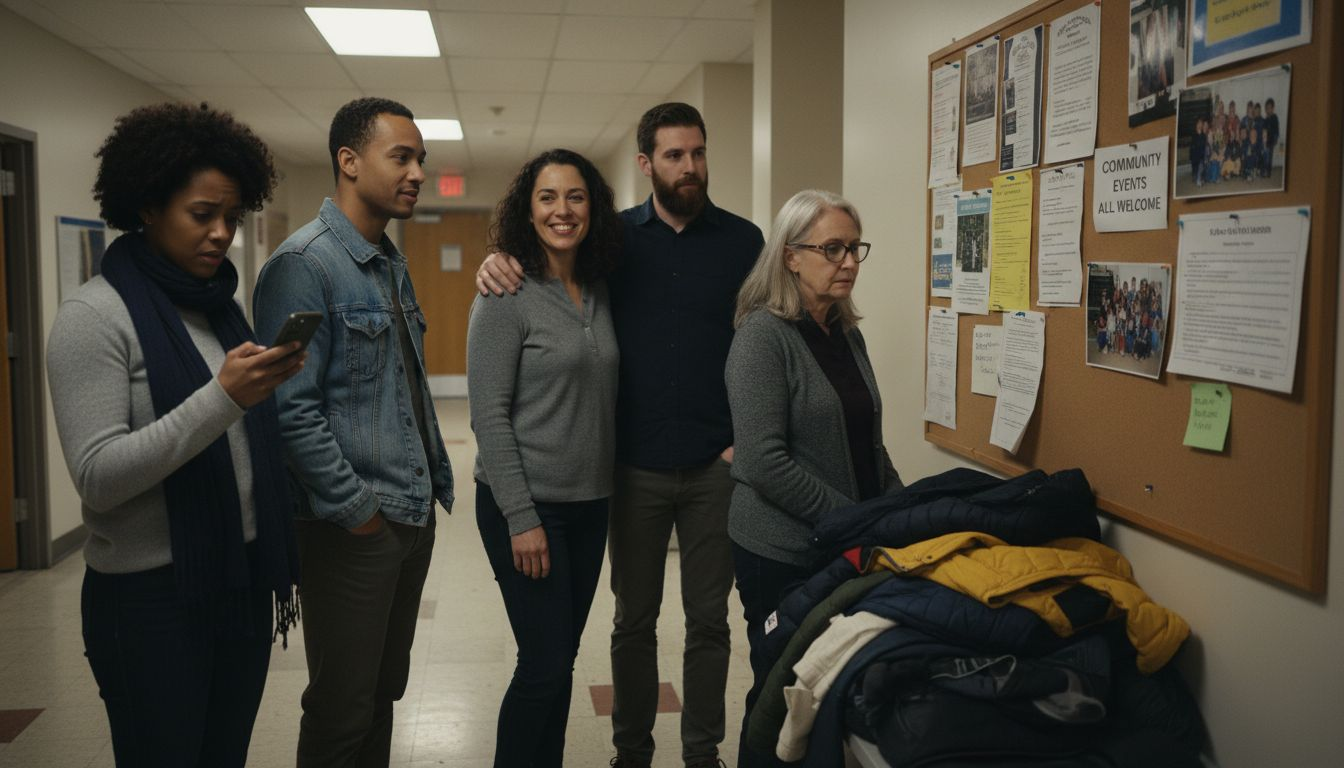
Here’s a comparison of common attachment styles and their impact on adult relationships:
| Attachment Style | Childhood Experience | Adult Relationship Behavior | Typical Challenges |
|---|---|---|---|
| Secure | Consistent support | Trusts and communicates well | Minor conflicts resolved quickly |
| Anxious | Inconsistent care | Seeks reassurance, fears abandonment | Overdependence, jealousy |
| Avoidant | Dismissive caregivers | Values independence, avoids intimacy | Emotional distancing, withdrawal |
| Disorganized | Chaotic or traumatic | Unpredictable, struggles with stability | Difficulty trusting, erratic responses |
Understanding these attachment mechanisms requires deep self-reflection and compassionate exploration. Childhood emotional landscapes profoundly impact adult relationship behaviors, with early relationship models serving as unconscious templates for future interactions. Recognizing these patterns allows individuals to intentionally rewire emotional responses, break generational cycles of dysfunction, and develop healthier relational strategies. Therapeutic interventions can help partners understand their attachment styles, develop emotional intelligence, and create more secure, supportive relationship environments.
Pro tip: Engage in honest self-reflection about your childhood experiences and attachment patterns, considering how these might unconsciously influence your current relationship dynamics and communication strategies.
Emotional Needs And Relationship Stress
Emotion regulation in relationships represents a critical mechanism for managing interpersonal dynamics and maintaining emotional connection. Couples experience complex emotional landscapes where individual stress responses can dramatically impact relationship quality, creating intricate patterns of interaction and potential conflict.
Emotional needs manifest through multiple dimensions, including validation, safety, understanding, and support. When these needs remain unmet, partners experience heightened relationship stress, leading to communication breakdowns and emotional distancing. Chronic stress generates a cascade of psychological responses that can erode relationship foundations, transforming minor disagreements into significant confrontations. Emotional responsiveness becomes the critical buffer against relationship deterioration, requiring intentional efforts to understand and address each partner’s unique emotional requirements.
Understanding stress’s impact necessitates recognizing individual differences in emotional processing. Some partners become more withdrawn under stress, while others seek increased connection and reassurance. External pressures like financial challenges, work demands, and family responsibilities compound these dynamics, creating additional layers of emotional complexity. Successful couples develop adaptive strategies that allow them to navigate stress collaboratively, transforming potential sources of conflict into opportunities for deeper mutual understanding and support.
Pro tip: Create a shared stress management plan that acknowledges both partners’ emotional needs, establishing clear communication protocols for supporting each other during challenging periods.
Common Mistakes Couples Make
Common relationship mistakes reveal intricate patterns of communication breakdown and emotional disconnect that can gradually erode relationship foundations. Couples often unknowingly engage in destructive behaviors that create distance, misunderstanding, and ongoing conflict.
The most prevalent mistakes include persistent negative communication patterns, such as criticism, defensiveness, and stonewalling. Emotional invalidation emerges as a particularly damaging practice, where partners dismiss or minimize each other’s feelings and experiences. This approach creates a toxic environment where one partner feels unheard and unseen, leading to cumulative resentment. Additional critical errors include avoiding difficult conversations, maintaining unrealistic expectations, failing to establish clear boundaries, and neglecting individual and collective emotional needs.
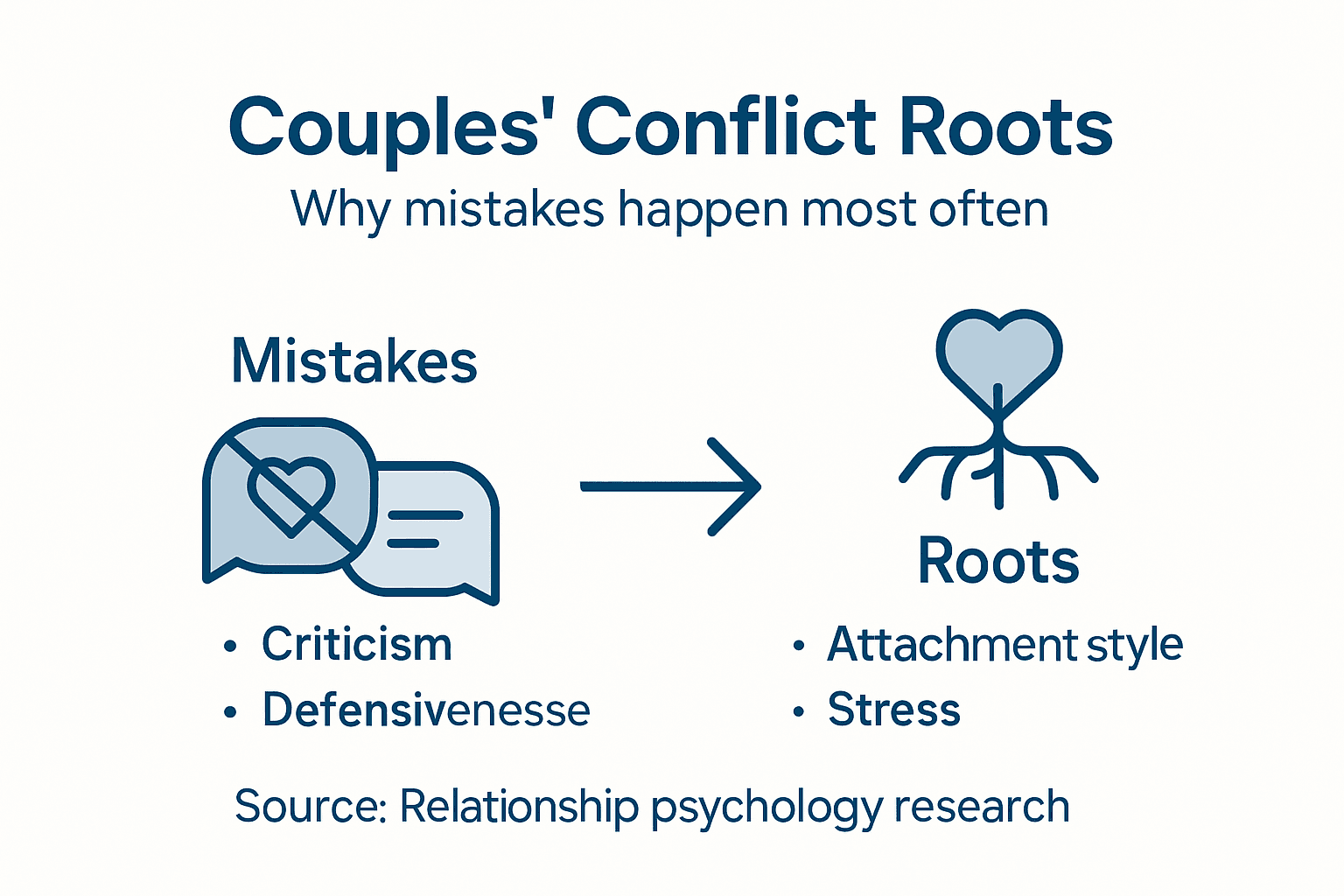
Psychological research highlights that many relationship mistakes stem from unprocessed personal histories and unexamined emotional triggers. Partners frequently project past traumas, childhood experiences, and unresolved personal wounds onto their current relationship, creating complex interaction dynamics. Some couples unconsciously repeat generational patterns of communication and conflict, perpetuating cycles of dysfunction without recognizing the underlying mechanisms driving their relational challenges.
Pro tip: Schedule regular relationship check-ins where both partners can openly and non-defensively discuss concerns, feelings, and relationship goals without blame or judgment.
Therapy And Clinical Solutions For Couples
Couple therapy interventions represent sophisticated clinical approaches designed to address complex relationship challenges and restore emotional connection. These targeted therapeutic strategies offer couples structured pathways for understanding, healing, and transforming their interpersonal dynamics.
Contemporary couple therapy encompasses multiple evidence-based methodologies, including behavioral, cognitive-behavioral, and emotion-focused approaches. Therapeutic interventions are carefully tailored to address specific relationship challenges, focusing on enhancing communication, resolving persistent conflicts, and rebuilding emotional intimacy. Different therapeutic models target distinct aspects of relationship functioning: some emphasize communication skill development, others explore underlying emotional patterns, and integrative approaches combine multiple therapeutic techniques to create comprehensive healing strategies.
Below is a summary of major therapeutic approaches for couples:
| Therapy Type | Main Focus | Key Methodology | Example Benefit |
|---|---|---|---|
| Behavioral | Skill-building | Structured practice | Improves communication |
| Cognitive-Behavioral | Thought patterns & beliefs | Reframing cognition | Reduces negative cycles |
| Emotion-Focused | Emotional connection | Empathy-driven conversations | Restores intimacy |
| Integrative | Combines multiple methods | Personalized treatment | Addresses complex needs |
Modern clinical solutions extend beyond traditional in-person counseling, leveraging technological innovations to increase accessibility and engagement. Telehealth platforms, online therapy modules, and digital assessment tools have expanded therapeutic reach, allowing couples to access professional support regardless of geographical limitations. Research demonstrates that 60-80% of couples experience significant relationship improvements through targeted therapeutic interventions, highlighting the potential for meaningful change when professional guidance is applied systematically and compassionately.
Pro tip: Select a therapist who specializes in your specific relationship challenge and feels like a collaborative partner in your healing journey, not just a passive observer.
Transform Your Relationship by Understanding the Roots of Conflict
Couples often struggle with persistent conflict because of unrecognized communication triggers, unresolved childhood attachment patterns, and unmet emotional needs. This article highlights how these deep underlying issues can turn everyday disagreements into damaging cycles. If you find yourself caught in these patterns of criticism, defensiveness, or emotional distancing it is time to take action toward healthier communication and connection.
Mastering Conflict offers specialized couples therapy designed to help you uncover the emotional dynamics behind your conflicts and develop new, more supportive ways to relate. Our evidence-based clinical methods and personalized coaching support you in rewriting negative interaction patterns and rebuilding trust. Don’t wait for misunderstandings to grow into resentment. Visit Mastering Conflict today and start healing your relationship with professional support tailored to your unique needs.
Frequently Asked Questions
What are the main causes of conflict in couples?
Conflict in couples often arises from differences in personality traits, communication styles, emotional triggers, financial management, intimacy expectations, and unresolved individual expectations.
How can childhood experiences influence adult relationships?
Childhood traumatic experiences shape attachment styles and emotional responses, which can lead to patterns of behavior and communication issues in adult relationships.
What role do communication styles play in relationship satisfaction?
Effective communication is essential for maintaining relationship satisfaction. Negative communication patterns, such as criticism and defensiveness, can disrupt emotional connection and trust between partners.
How can couples manage relationship stress effectively?
Couples can manage stress by creating a shared stress management plan that acknowledges each partner’s emotional needs, establishing clear communication protocols, and practicing emotional responsiveness.
Recommended
- Why Couples Fight: Root Causes and Real Solutions for 2025 – Mastering Conflict
- Why Couples Fight: Root Causes and Real Solutions for 2025 – Mastering Conflict
- 8 Good Reasons Couples Should Embrace Conflict
- 8 Good Reasons Couples Should Embrace Conflict
- Mindful Parenting: Strengthening Family Bonds on Sundays – Human Design Insights