
Effective Conflict Communication – Tools for Lasting Love

Arguments can leave even the most loving couples in North Carolina and South Carolina feeling misunderstood and distant. When tension rises, a simple conversation can quickly turn into a cycle of frustration and hurt. Learning effective conflict communication gives couples the tools to transform disagreements into genuine understanding, helping both partners feel seen, heard, and valued. This guide introduces clear, evidence-based strategies that empower couples to break negative cycles and build stronger connections through intentional dialogue.
Table of Contents
- Defining Effective Conflict Communication
- Recognizing Patterns and Common Misconceptions
- Evidence-Based Techniques for Couples
- Roles, Responsibilities, and Emotional Safety
- Common Pitfalls and When to Seek Help
Key Takeaways
| Point | Details |
|---|---|
| Effective Conflict Communication | Focus on clear verbal expression, active listening, and emotional intelligence to promote understanding and connection in relationships. |
| Emotional Safety in Relationships | Create judgment-free communication zones and practice mutual respect to foster trust and vulnerability between partners. |
| Recognizing Communication Pitfalls | Identify and address negative patterns such as defensiveness and blame-shifting to enhance relationship dynamics. |
| Seeking Professional Help | Consider counseling when conflicts become repetitive and unresolvable to gain structured support and improve communication skills. |
Defining Effective Conflict Communication
Conflict communication represents a critical skill set in maintaining healthy relationships, requiring strategic verbal and nonverbal interactions designed to resolve disagreements constructively. At its core, this approach transforms potential confrontations into opportunities for deeper understanding and connection.
According to research, effective conflict communication involves several key components:
- Clear verbal expression of thoughts and feelings
- Active listening without interrupting or becoming defensive
- Emotional intelligence to recognize underlying motivations
- Empathetic responses that validate each partner’s perspective
- Collaborative problem-solving instead of competitive argumentation
Researchers highlight that effective conflict communication techniques are foundational to resolving interpersonal disputes. By focusing on mutual understanding rather than winning an argument, couples can transform potential conflicts into moments of deeper connection and shared growth.
Conflict is not a battle to be won, but a conversation to be navigated.
Successful communication requires intentional strategies that go beyond simple talking. Nonverbal cues, tone of voice, and emotional regulation play equally significant roles in creating constructive dialogue. Partners must learn to communicate not just with words, but with genuine openness and respect.
Pro tip: Practice pausing and taking a deep breath before responding during heated moments to maintain emotional equilibrium and communicate more effectively.
Recognizing Patterns and Common Misconceptions
Communication patterns in conflict resolution often emerge from deeply ingrained personal and cultural habits that can significantly impact relationship dynamics. Understanding these patterns requires a nuanced approach that goes beyond surface-level interactions.
Research reveals several common misconceptions about conflict communication:
- Believing silence is always better than confrontation
- Assuming one communication style works for all situations
- Thinking emotional expression is a sign of weakness
- Expecting immediate resolution during intense emotional moments
- Believing that agreement means complete understanding
Intercultural communication research highlights how communication styles vary dramatically across different cultural contexts. These variations can lead to misunderstandings where partners interpret the same interaction completely differently, creating additional layers of complexity in conflict resolution.
Misunderstandings are not failures, but opportunities for deeper connection and learning.
Particularly problematic are communication misconceptions rooted in rigid thinking. Couples often fall into predictable traps, such as defensive listening, where they prepare their rebuttal instead of truly hearing their partner. Some individuals mistakenly believe that winning an argument is more important than maintaining emotional connection.

Successful conflict communication requires breaking these ingrained patterns by developing emotional intelligence and communication flexibility. This means being willing to adapt, listen actively, and approach disagreements with curiosity rather than judgment.
Pro tip: Practice reflecting back what you’ve heard your partner say before responding, to ensure you’ve understood their perspective accurately.
Evidence-Based Techniques for Couples
Conflict resolution is a dynamic process that requires intentional strategies and mutual commitment from both partners. Understanding evidence-based techniques can transform how couples approach disagreements and build stronger, more resilient relationships.
Relationship communication research reveals several scientifically validated techniques for effective conflict management:
- Practicing active listening with full attention
- Using nonviolent communication principles
- Implementing emotional regulation strategies
- Developing collaborative problem-solving approaches
- Creating safe communication spaces
The most successful couples develop adaptive communication strategies that evolve with their relationship. These techniques are not one-size-fits-all but require continuous learning and mutual adjustment.
Effective conflict resolution is less about winning and more about understanding.
Research consistently demonstrates that certain communication patterns significantly impact relationship satisfaction. Partners who approach conflicts with curiosity, empathy, and a genuine desire to understand each other’s perspectives are more likely to resolve disagreements constructively.
Particularly important is recognizing that negative communication patterns can erode relationship foundations. This includes avoiding criticism, defensiveness, contempt, and stonewalling – what relationship experts call the “four horsemen” of relationship destruction.
Pro tip: Schedule regular “communication check-ins” where both partners can discuss feelings and concerns without judgment or immediate problem-solving.
Here is a quick reference for evidence-based communication strategies and their relational benefits:
| Technique | Core Action | Primary Relationship Benefit |
|---|---|---|
| Active listening | Full attention to your partner | Reduces misunderstandings |
| Nonviolent communication | Express needs constructively | Lowers defensiveness |
| Emotional regulation | Stay calm under stress | Prevents escalation |
| Collaborative problem-solving | Work toward shared solutions | Builds mutual trust |
| Safe communication spaces | Schedule judgment-free talks | Increases emotional safety |
Roles, Responsibilities, and Emotional Safety
Emotional safety forms the foundational bedrock of healthy relationship communication, requiring deliberate commitment from both partners to create an environment of trust, respect, and vulnerability.
Psychological safety research highlights critical responsibilities for maintaining relational harmony:
- Consistently practicing mutual respect
- Creating judgment-free communication zones
- Demonstrating emotional vulnerability
- Establishing clear personal boundaries
- Maintaining individual accountability
Each partner carries unique responsibilities in cultivating emotional safety. This means actively listening without defensiveness, validating feelings, and creating space for authentic expression without fear of criticism or retaliation.
Emotional safety is not a destination, but a continuous journey of mutual understanding and care.
Successful couples recognize that their individual roles directly impact relationship dynamics. The responsibility for emotional safety is not one-sided but requires synchronized effort, where both partners commit to creating an environment of psychological security.
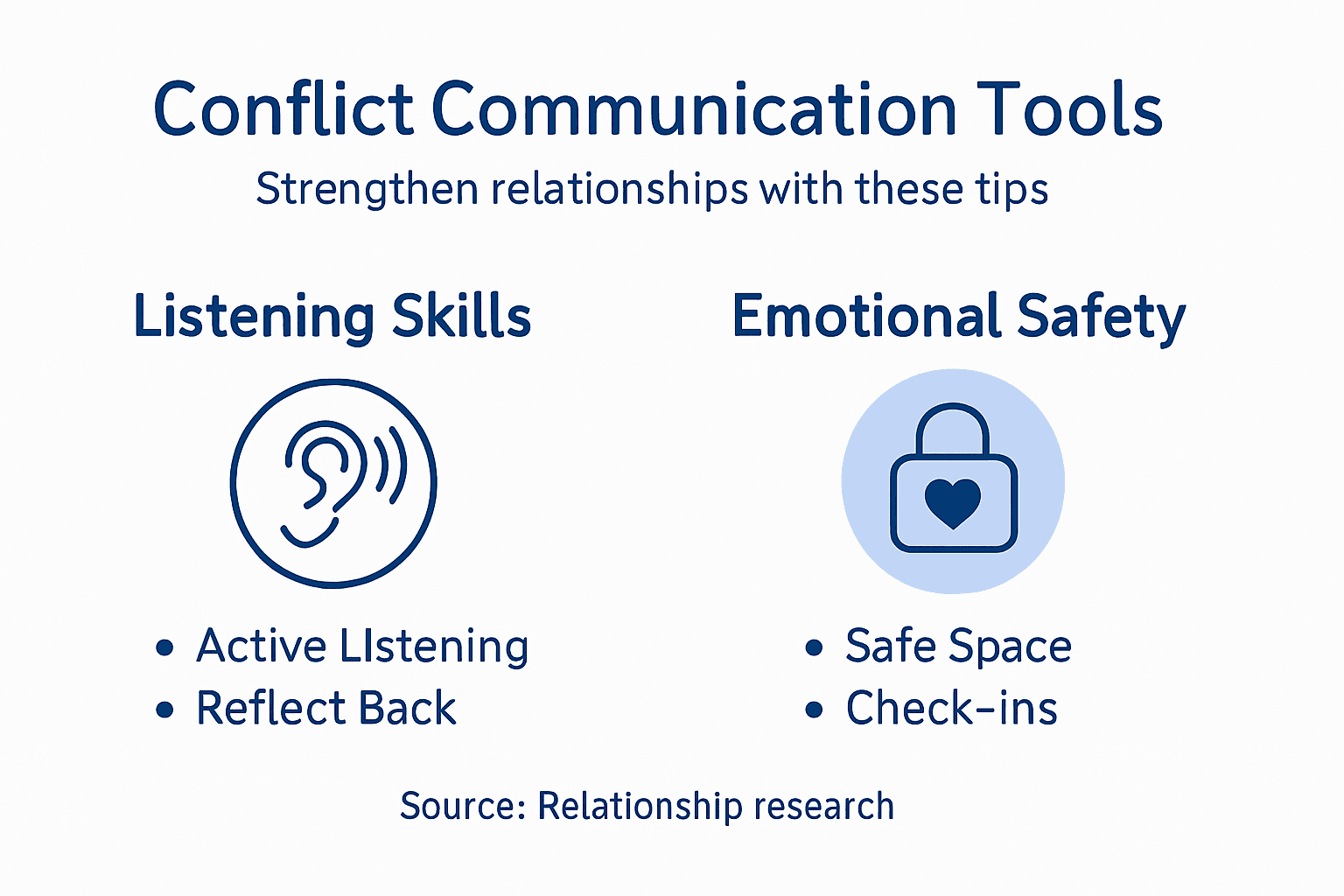
Partners must develop emotional intelligence to navigate complex interpersonal landscapes. This involves recognizing personal triggers, managing emotional reactions, and responding with empathy rather than immediate judgment or reactivity.
Pro tip: Create a weekly “safe space” conversation where both partners can share feelings without interruption or immediate problem-solving.
Common Pitfalls and When to Seek Help
Relationship conflicts are complex dynamics that often involve subtle communication traps that can escalate tensions and create long-term emotional damage if not recognized and addressed proactively.
Conflict communication research identifies several critical pitfalls couples frequently encounter:
- Defensive communication that blocks genuine understanding
- Persistent blame-shifting instead of taking personal responsibility
- Emotional stonewalling that prevents meaningful dialogue
- Unresolved historical grievances resurfacing during arguments
- Misinterpreting partner’s intentions negatively
Some conflict patterns become so entrenched that partners lose the ability to communicate effectively, signaling the need for external intervention. These persistent negative interaction cycles can erode relationship foundations if left unaddressed.
Here is a summary of common communication pitfalls and helpful alternatives for couples:
| Pitfall | Impact on Relationship | Healthier Alternative |
|---|---|---|
| Defensive communication | Causes emotional distance | Practice open, nonjudgmental replies |
| Blame-shifting | Erodes trust and respect | Take responsibility for your actions |
| Stonewalling | Blocks necessary conversations | Engage calmly, even if briefly |
| Bringing up old issues | Escalates current disagreements | Focus on present concerns |
| Negative intent beliefs | Leads to unnecessary conflict | Assume positive intentions first |
Professional help is not a sign of failure, but a commitment to relationship health.
Recognizing when professional support becomes necessary requires honest self-reflection. Warning signs include repeated communication breakdowns, increasing emotional distance, inability to resolve conflicts constructively, and persistent feelings of frustration or disconnection.
Professional counseling offers structured approaches to rebuild communication, providing neutral mediation and teaching advanced conflict resolution skills that many couples cannot develop independently.
Pro tip: If you find yourself having the same argument repeatedly without resolution, consider scheduling a session with a relationship counselor.
Transform Your Conflicts Into Lasting Connection
Struggling with patterns like defensive communication or emotional stonewalling can leave you feeling unheard and emotionally distant. This article highlighted the importance of skills like active listening, emotional regulation, and creating safe communication spaces to build emotional safety and mutual understanding. If you recognize these challenges in your relationship or personal life, you do not have to face them alone.
At Mastering Conflict, we understand the pain caused by persistent communication roadblocks. Our evidence-based counseling and coaching programs focus on practical conflict resolution and emotional intelligence development tailored for couples, families, and individuals. Whether you need specialized couples therapy, anger management classes, or personal development coaching, you can start making meaningful changes today. Visit our landing page to explore professional support grounded in clinical expertise. Don’t let unresolved conflicts undermine your relationships any longer. Take the first step toward lasting love and healthier communication now.
Frequently Asked Questions
What are the key components of effective conflict communication?
Effective conflict communication includes clear verbal expression of thoughts and feelings, active listening, emotional intelligence, empathetic responses, and collaborative problem-solving.
How can I develop emotional intelligence for better conflict resolution?
You can develop emotional intelligence by recognizing your triggers, managing your emotional reactions, and practicing empathy during disagreements.
What techniques can couples use to improve their conflict communication?
Couples can utilize active listening, nonviolent communication principles, emotional regulation strategies, collaborative problem-solving approaches, and create safe communication spaces for healthier interactions.
When should couples seek professional help for conflict resolution?
Couples should consider seeking professional help if they experience repeated communication breakdowns, increasing emotional distance, inability to resolve conflicts constructively, or persistent feelings of frustration or disconnection.
Recommended
- How to Deal With Parenting Conflicts
- Communication Skills for Couples: Guide to Connection and Conflict Resolution – Mastering Conflict
- Why Couples Fight: Root Causes and Real Solutions for 2025 – Mastering Conflict
- Effective Conflict Resolution Steps for Couples, Families, and Professionals 2025 – Mastering Conflict
- 7 Anxiety Calming Scriptures: Powerful Bible Verses for Peace.