
Coping with Grief: Effective Steps for Healing After Loss

More than one in four American adults reports struggling with grief each year, yet so many feel alone in the process. For many Black and African American individuals in North Carolina and South Carolina, finding support that reflects your experience can feel complicated. This guide offers realistic steps, practical strategies, and culturally mindful resources to help you create a safe environment, honor your emotions, and build a healing path forward.
Table of Contents
- Step 1: Prepare a Safe and Supportive Space
- Step 2: Acknowledge and Validate Your Emotions
- Step 3: Engage Healthy Coping Strategies
- Step 4: Connect with Trusted Support Systems
- Step 5: Monitor Progress and Adjust Strategies
Quick Summary
| Main Insight | Explanation |
|---|---|
| 1. Create a Safe Space for Grief | Designate a comfortable area free from distractions to process your emotions authentically and without judgment. |
| 2. Acknowledge All Emotions | Allow yourself to feel a range of emotions without guilt; journaling can help you track and understand these feelings. |
| 3. Build a Support Network | Identify trusted individuals and groups that can offer emotional support; communication about your needs is crucial. |
| 4. Monitor Your Progress | Keep a journal or checklist to track emotional changes and adjust coping strategies as necessary for your well-being. |
| 5. Utilize Healthy Coping Strategies | Establish routines for sleep, nutrition, and activity, and incorporate self-care tools to manage grief effectively. |
Step 1: Prepare a Safe and Supportive Space
Creating a supportive environment is crucial when processing grief. A safe space allows you to experience your emotions authentically and without judgment, helping you navigate the complex journey of healing. Developing compassionate support strategies requires intentional preparation and emotional awareness.
Start by identifying a physical location where you feel completely comfortable and secure. This might be a quiet room in your home, a peaceful corner with natural light, or a private outdoor area that provides calm and solitude. Choose a space that feels nurturing and allows you to relax without external pressures or interruptions. Consider elements that bring you comfort such as soft blankets, meaningful photographs, a journal, or items that remind you of positive memories.
Make your chosen space a sanctuary by establishing clear boundaries with family or roommates. Communicate that this is your dedicated healing area where you can process emotions freely. Some people find it helpful to use physical signals like a closed door or a specific item that indicates you need private time. Structured support approaches emphasize the importance of creating predictable, safe environments that facilitate emotional processing.
Pro tip: Keep a comfort kit nearby with items like tissues, water, a comforting playlist, and a soft throw blanket to support your emotional well-being during difficult moments.
Step 2: Acknowledge and Validate Your Emotions
Recovering from grief requires understanding and accepting the complex emotional landscape that follows loss. Recognizing diverse grief reactions means allowing yourself to experience whatever emotions emerge without judgment or pressure to feel a certain way.
Start by creating space for honest self reflection. Your emotions might range from profound sadness and anger to numbness or even unexpected moments of peace. There is no universal script for grieving. Some days you might feel overwhelmed and other days surprisingly calm. All of these experiences are valid. Embracing your unique grief journey means understanding that healing is not linear and emotions can shift rapidly.
Consider keeping an emotions journal to track your feelings without criticism. Write down what you experience without trying to analyze or change it. This practice helps you externalize your emotions and recognize patterns in your grief process. Pay attention to physical sensations connected to your emotions such as tension in your body or changes in energy levels. These physical signals can provide valuable insights into your emotional state.
Pro tip: Practice self compassion by speaking to yourself with the same kindness you would offer a dear friend experiencing profound loss.
Step 3: Engage Healthy Coping Strategies
Healing from grief requires intentional self care and structured approaches to managing your emotional landscape. Developing practical coping techniques is crucial for maintaining your mental and physical well being during challenging times.
Establish a consistent daily routine that prioritizes your physical and emotional health. This means creating structured habits around sleep, nutrition, and gentle physical activity. Aim to maintain regular sleep patterns even when grief disrupts your normal rhythm. Eat nutritious meals that provide sustained energy and support your immune system. Include light exercise like walking or stretching which can help release emotional tension and improve your overall mood. Consider activities that feel nurturing such as meditation, deep breathing exercises, or spending time in nature.

Reach out and build a supportive network around you. This might include trusted friends, family members, grief support groups, or professional counselors who understand your unique experience. Be specific about the type of support you need. Some days you might want someone to listen without offering advice while other times you may appreciate practical help like meal preparation or assistance with daily tasks. Remember that asking for help is a sign of strength not weakness.
Pro tip: Create a self care toolkit with items that comfort you during difficult moments such as a weighted blanket, soothing music playlist, herbal tea, and a journal for emotional processing.
Step 4: Connect with Trusted Support Systems
Building meaningful connections is essential when navigating the challenging landscape of grief. Understanding grief support networks can help you find comfort and healing through shared experiences and compassionate understanding.
Start by identifying the people and resources that feel genuinely supportive. This might include close family members, friends who have experienced similar losses, professional counselors, or structured support groups. Be honest about your emotional capacity and communicate your specific needs. Some days you might want someone to listen quietly while other times you may need practical help or direct emotional guidance. Reducing isolation through connection means being vulnerable and allowing others to support you during this challenging time.
Consider exploring different types of support systems. Online grief support groups can provide anonymity and accessibility if in person meetings feel overwhelming. Local community centers often host grief counseling sessions that offer structured environments for sharing. Religious or spiritual communities might also provide meaningful connections and emotional support. Remember that finding the right support is a personal journey and it may take time to discover what works best for you.
Here is a comparison of grief support systems with their unique benefits:
| Support System Type | Main Benefit | Accessibility |
|---|---|---|
| Family & Friends | Familiarity and trust | Usually immediate |
| Professional Counselors | Expert guidance | Appointment needed |
| Support Groups | Shared experiences | Regular meetings |
| Online Communities | Anonymity, 24/7 access | Internet required |
Pro tip: Create a communication plan with your support network that outlines how and when you want to be contacted during your grief journey.
Step 5: Monitor Progress and Adjust Strategies
Grief is not a linear journey and understanding your emotional progression requires compassionate self reflection and flexibility. Tracking grief response patterns helps you recognize how your healing process evolves and when you might need additional support.
Develop a personal grief journal or tracking system that allows you to observe your emotional shifts without judgment. Note patterns in your feelings such as triggers that intensify grief, moments of unexpected peace, or recurring emotional challenges. Pay attention to physical symptoms like changes in sleep, appetite, or energy levels which can signal how grief is impacting your overall well being. Adapting coping strategies flexibly means being willing to modify your approach when certain techniques no longer serve you effectively.
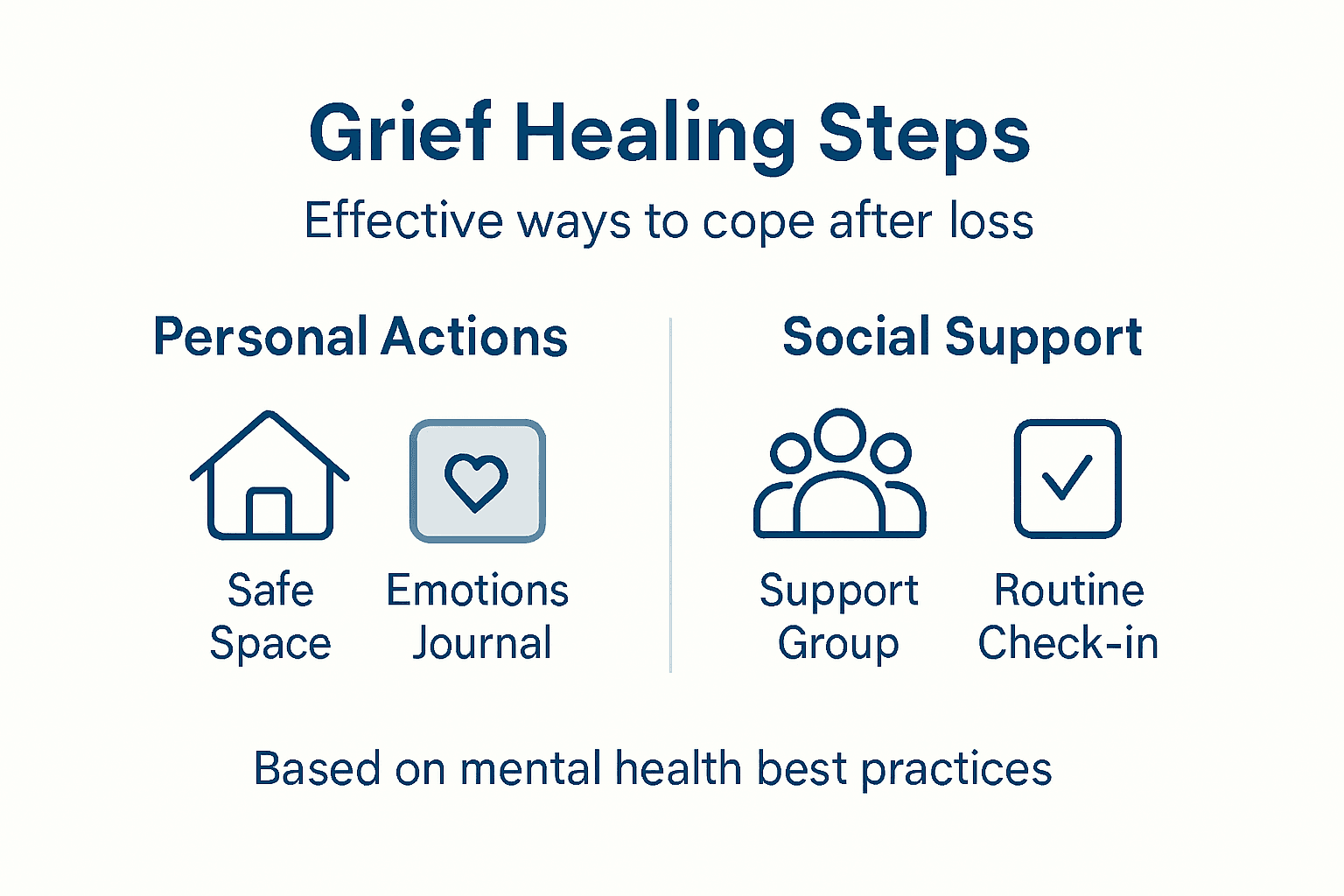
Schedule periodic check ins with yourself or a trusted counselor to assess your grief journey. These reflective moments can help you identify whether you are processing emotions in a healthy manner or if you might benefit from professional guidance. Look for signs that suggest you need additional support such as prolonged depression, inability to perform daily tasks, or persistent feelings of being stuck in your grief. Remember that adjusting your strategies is not a sign of failure but a demonstration of strength and self awareness.
Use this table to understand common signs that it’s time to adjust your grief coping strategies:
| Adjustment Indicator | What It Means | Example Action |
|---|---|---|
| Prolonged sadness | May need more support | Seek professional help |
| Difficulty with daily tasks | Coping strategies may need change | Ask for practical assistance |
| Feeling isolated | Support network not effective | Explore new support groups |
| Loss of energy/motivation | Emotional resources depleted | Focus on self-care routines |
Pro tip: Create a monthly emotional wellness checklist with specific indicators to help you objectively track your grief recovery progress.
Find Compassionate Support to Navigate Your Grief Journey
Grief can feel overwhelming and isolating as you face a complex mix of emotions and challenges. This article highlights crucial steps like creating safe spaces, acknowledging your feelings, and building trusted support systems. If you find yourself struggling with these painful experiences or need guidance to develop healthy coping strategies, you do not have to face it alone.

At Mastering Conflict, we specialize in professional mental health and counseling services tailored to help individuals process grief and loss effectively. Our expert therapists provide personalized support through individual therapy and emotional resilience coaching. Whether you need tools for self-care, anger management, or connection with compassionate professionals, now is the time to prioritize your healing. Visit Mastering Conflict to learn more and schedule your confidential appointment today.
Frequently Asked Questions
How can I create a safe space for processing my grief?
Creating a safe space involves choosing a quiet, comfortable area where you feel secure. Set clear boundaries with those around you to ensure you can process your emotions freely. Consider including comforting items like soft blankets and meaningful photographs.
What should I do if I feel overwhelmed by my emotions during grief?
If you feel overwhelmed, acknowledge that your emotions are valid and part of the healing process. Start by keeping an emotions journal to track your feelings and recognize patterns in your grief. Allow yourself to experience these emotions without judgment.
How can I develop healthy coping strategies for dealing with grief?
To develop healthy coping strategies, establish a consistent daily routine that prioritizes self-care. Focus on regular sleep patterns, nutritious meals, and gentle physical activity like walking. Create a self-care toolkit with comforting items to support you when emotions become difficult to manage.
What types of support systems should I connect with during my grief journey?
Consider connecting with trusted friends, family members, or support groups who understand your situation. Be honest about your needs and explore both in-person and online communities for support. This can provide comfort and help reduce feelings of isolation as you navigate your grief.
How can I track my progress in coping with grief?
You can track your progress by keeping a personal grief journal to observe your emotional shifts over time. Note any patterns, triggers, or changes in your energy levels to understand how your coping strategies are working. Schedule regular check-ins with yourself or a trusted counselor to assess your needs.
When should I seek additional help while coping with grief?
You should seek additional help if you experience prolonged sadness, difficulty in daily tasks, or a sense of isolation. Recognize these signs as indicators that your coping strategies may need adjustment. Actively reach out for professional guidance or practical support when necessary.