Coaching Conflict Resolution for Healthy Relationships

Most American workplaces and families experience conflict at some point, yet fewer than half feel equipped to manage these situations effectively. Interpersonal disputes can strain relationships, disrupt productivity, and undermine trust. Understanding practical conflict resolution coaching methods gives individuals the tools to address challenges confidently. This guide explores proven strategies that foster emotional intelligence and support healthier communication for American professionals and families seeking lasting solutions.
Table of Contents
- Defining Coaching Conflict Resolution Methods
- Types of Conflicts Addressed in Coaching
- Essential Skills for Conflict Resolution Coaches
- Roles and Responsibilities of Coaches and Clients
- Common Challenges and Ethical Considerations
Key Takeaways
| Point | Details |
|---|---|
| Conflict Coaching Focuses on Individual Development | This personalized approach emphasizes one-on-one support to help individuals manage and resolve conflicts effectively. |
| Important Skills for Coaches | Essential skills include active listening, emotional intelligence, and strategic questioning to guide clients through conflict dynamics. |
| Collaborative Roles in Coaching | Both coaches and clients have defined roles, with coaches facilitating the process and clients engaging in self-reflection for growth. |
| Ethical Standards in Coaching | Maintaining professional boundaries and ensuring client confidentiality are critical to successful conflict resolution coaching. |
Defining Coaching Conflict Resolution Methods
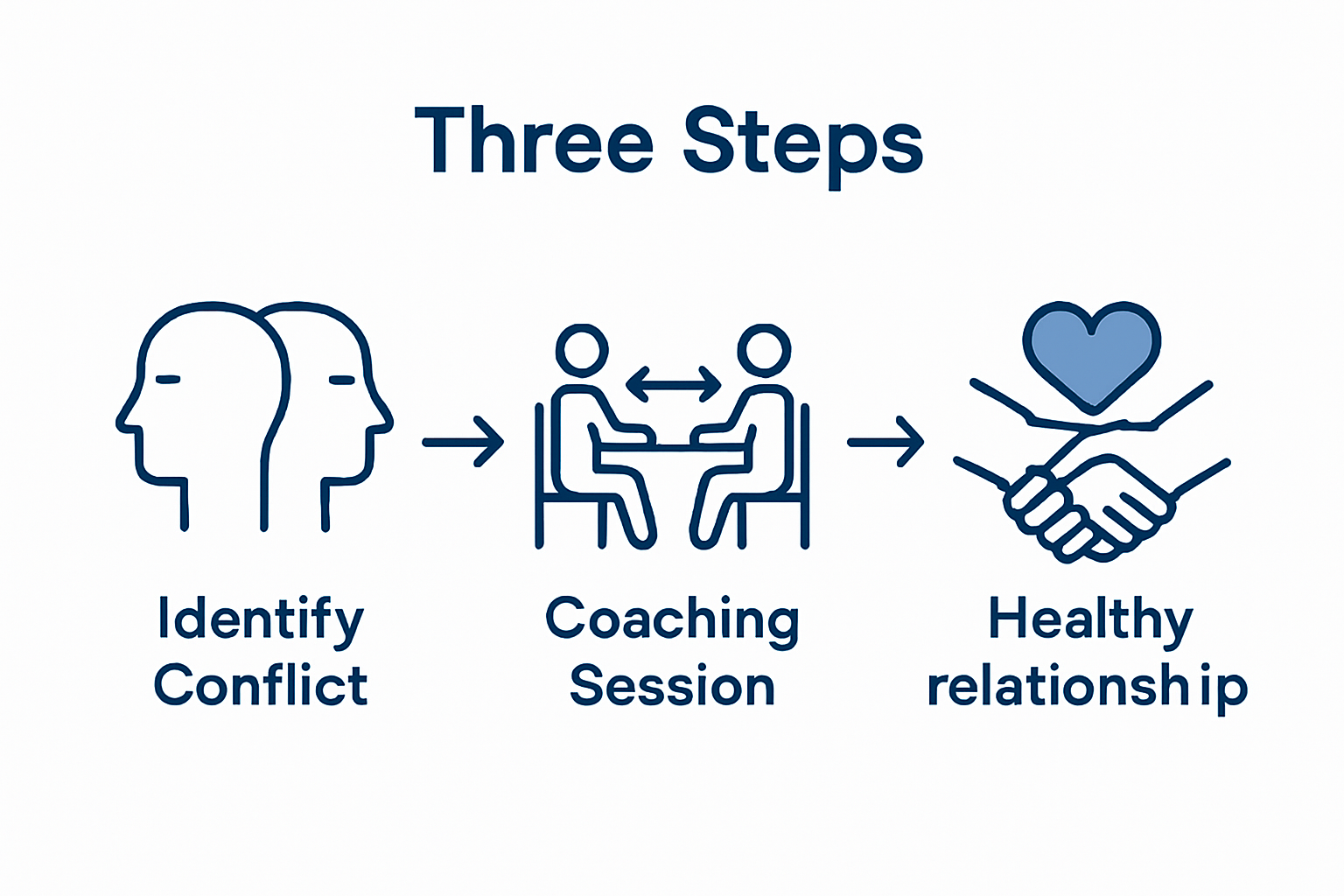
Conflict coaching is an innovative, personalized approach to helping individuals develop critical skills for navigating interpersonal challenges. Unlike traditional mediation or group therapy, conflict coaching focuses on one-on-one professional support that empowers individuals to understand, manage, and effectively resolve conflicts. Researchers have defined conflict coaching as a strategic process where trained professionals guide clients through identifying communication barriers and developing targeted resolution strategies.
The core methodology of conflict coaching centers on individual skill development and personal transformation. Coaches work closely with clients to analyze specific conflict dynamics, unpack underlying emotional patterns, and construct practical communication techniques. By providing a safe, structured environment, coaches help clients recognize their personal triggers, learn emotional regulation strategies, and build resilience. Comprehensive studies highlight the importance of personalized, one-on-one coaching sessions in helping individuals develop nuanced conflict management capabilities.
Key components of effective conflict coaching typically include:
- Identifying individual communication styles
- Analyzing personal conflict response patterns
- Developing emotional intelligence skills
- Creating personalized conflict resolution strategies
- Building confidence in negotiation and communication
Successful conflict coaching transforms how individuals perceive and interact with challenging interpersonal situations. By focusing on individual growth and targeted skill development, these coaching methods provide clients with sustainable tools for creating healthier, more productive relationships across personal and professional domains.
Types of Conflicts Addressed in Coaching
Conflict coaching addresses a broad spectrum of interpersonal and organizational challenges that individuals encounter in various life domains. Research identifying different conflict types reveals that coaching can effectively support clients navigating complex relational dynamics across personal, professional, and social contexts.
Key types of conflicts typically addressed in coaching include:
- Interpersonal Conflicts: Disputes between individuals involving communication breakdowns, misunderstandings, or emotional disconnects
- Workplace Conflicts: Professional disagreements related to roles, responsibilities, team dynamics, and organizational hierarchies
- Family Conflicts: Relationship tensions involving partners, siblings, parents, and children
- Communication Conflicts: Challenges arising from different communication styles, misinterpretations, and ineffective dialogue patterns
Comprehensive studies examining conflict categories highlight that these conflicts often emerge from underlying emotional triggers, communication gaps, and unmet expectations. Conflict coaches work strategically to help clients understand the root causes of their specific challenges, developing targeted strategies for resolution and personal growth.

By addressing these diverse conflict types, coaching provides a nuanced approach to conflict management. Coaches help clients develop emotional intelligence, improve communication skills, and build resilience, enabling them to transform potentially destructive conflicts into opportunities for understanding, connection, and meaningful personal development. The goal extends beyond immediate problem-solving to empowering individuals with sustainable interpersonal skills that foster healthier, more productive relationships.
Essential Skills for Conflict Resolution Coaches
Conflict resolution coaching requires a sophisticated set of interpersonal skills that go far beyond traditional counseling approaches. Comprehensive research on coaching competencies emphasizes the critical importance of developing a nuanced toolkit that enables coaches to guide clients through complex emotional landscapes.
Key essential skills for effective conflict resolution coaches include:
- Active Listening: Deep, empathetic engagement that goes beyond hearing words to understanding underlying emotional contexts
- Emotional Intelligence: Ability to recognize, interpret, and navigate complex emotional dynamics
- Strategic Questioning: Crafting open-ended questions that prompt self-reflection and insight
- Neutrality and Objectivity: Maintaining a balanced perspective without taking sides
- Empowerment Techniques: Supporting clients in developing their own resolution strategies
Critical research on conflict coaching competencies highlights that successful coaches must possess a rare combination of technical expertise and profound interpersonal sensitivity. These professionals act as strategic guides, helping clients deconstruct conflict patterns, understand their emotional triggers, and develop sustainable communication strategies.
Ultimately, conflict resolution coaches transform challenging interpersonal dynamics by creating safe, supportive environments where clients can explore their conflicts, learn from their experiences, and develop resilient communication skills. The most effective coaches combine professional training, deep psychological understanding, and a genuine commitment to helping individuals navigate the complex terrain of human relationships.
Roles and Responsibilities of Coaches and Clients
Conflict coaching represents a collaborative partnership with distinct yet interconnected roles and responsibilities for both coaches and clients. Comprehensive research on coaching dynamics reveals that successful conflict resolution depends on a carefully balanced relationship where each party plays a critical part in achieving meaningful transformation.
Coaches’ key responsibilities include:
- Process Facilitation: Guiding the coaching journey with structured approaches
- Skill Development: Teaching effective communication and conflict management techniques
- Objective Perspective: Providing neutral, unbiased insights
- Safe Space Creation: Establishing a supportive, non-judgmental environment
- Strategic Questioning: Helping clients explore underlying conflict dynamics
Client responsibilities are equally important and involve:
- Active Participation: Engaging fully in the coaching process
- Self-Reflection: Honestly examining personal conflict patterns
- Vulnerability: Willingness to explore challenging emotional territories
- Commitment to Change: Implementing learned strategies in real-world situations
- Personal Accountability: Taking ownership of personal growth and conflict resolution
Research on coaching interactions emphasizes that the most transformative coaching occurs when coaches and clients work as collaborative partners. This dynamic requires mutual respect, open communication, and a shared commitment to personal and interpersonal development. Successful conflict resolution coaching is not about the coach providing direct solutions, but empowering clients to discover and implement their own sustainable strategies for managing complex relational challenges.
Common Challenges and Ethical Considerations
Conflict resolution coaching requires navigating complex interpersonal dynamics while maintaining rigorous professional and ethical standards. Research examining coaching challenges reveals the intricate balance coaches must maintain between supporting clients and preserving professional boundaries.
Common challenges in conflict coaching include:
- Client Resistance: Encountering defensive behaviors or reluctance to change
- Emotional Intensity: Managing heightened emotional states during coaching sessions
- Cultural Complexity: Navigating diverse communication and conflict resolution styles
- Power Dynamics: Addressing potential imbalances between coach and client
- Confidentiality Concerns: Protecting sensitive personal information
Ethical considerations are paramount and encompass several critical dimensions:
- Informed Consent: Ensuring clients understand the coaching process
- Professional Boundaries: Maintaining clear, respectful relationship limits
- Neutrality: Providing unbiased guidance without personal judgment
- Competence: Recognizing personal limitations and referring when necessary
- Confidentiality: Protecting client privacy and sensitive information
Comprehensive studies on coaching ethics underscore that successful conflict resolution coaching requires more than technical skill. Coaches must cultivate deep self-awareness, emotional intelligence, and a commitment to professional integrity. This means continuously evaluating personal biases, maintaining transparent communication, and prioritizing the client’s well-being while adhering to the highest ethical standards in the field.
Transform Your Conflict Into Healthy Relationships Today
The article explores the challenges of personal conflict and the importance of building essential skills such as emotional intelligence, communication techniques, and self-reflection to resolve conflicts effectively. If you struggle with interpersonal tensions or want to enhance your ability to manage workplace or family conflicts, understanding these conflict coaching methods is vital. Remember that overcoming communication barriers and managing emotional triggers can be empowering steps toward healthier connections.
Take control of your conflict journey now by exploring professional support tailored to your needs. At Mastering Conflict, we offer personalized coaching programs, anger management classes, and therapy services designed to build resilience and transform how you engage in challenging relationships. Do not wait to develop the skills that will lead to lasting personal growth and stronger relationships. Visit our website and book your appointment today to start a meaningful change.
Frequently Asked Questions
What is conflict coaching?
Conflict coaching is a personalized approach that helps individuals develop skills to navigate and resolve interpersonal challenges effectively. It focuses on one-on-one support rather than group therapy or mediation.
What types of conflicts can be addressed through coaching?
Coaching can address a variety of conflict types, including interpersonal conflicts, workplace disagreements, family tensions, and communication issues arising from different styles or misunderstandings.
What skills do conflict resolution coaches need to be effective?
Effective conflict resolution coaches should possess active listening, emotional intelligence, strategic questioning, neutrality, and empowerment techniques to guide clients through their conflicts.
What are the responsibilities of clients in conflict coaching?
Clients are responsible for actively participating in the process, engaging in self-reflection, being open to exploring emotions, committing to change, and taking personal accountability for their growth.