
Balancing work and relationship: a 2026 guide for couples

When professional demands consume your energy and attention, your relationship often pays the price. Many couples find themselves caught in a cycle where work stress fuels arguments, creates emotional distance, and leaves little room for meaningful connection. The cost of ignoring this imbalance shows up in increased conflict, decreased intimacy, and growing resentment. This guide provides actionable strategies to help you reclaim harmony between your career and partnership, addressing the root causes of work-related relationship strain while building sustainable practices that strengthen both areas of your life.
Table of Contents
- Understanding The Impact Of Work Stress On Relationships
- Preparing To Balance Work And Relationship: Setting Foundations
- Executing Practical Strategies To Balance Work And Relationship
- Verifying Progress And Maintaining Long-Term Balance
- Support For Couples Balancing Work And Relationship
- Frequently Asked Questions About Balancing Work And Relationship
Key takeaways
| Point | Details |
|---|---|
| Work stress directly impacts relationship quality | Professional pressure creates conflict, emotional withdrawal, and communication breakdowns between partners. |
| Intentional boundaries protect relationship health | Setting clear limits on work intrusion and prioritizing couple time reduces stress and prevents resentment. |
| Structured communication prevents escalation | Regular check-ins and active listening help couples address issues before they become major conflicts. |
| Professional support accelerates progress | Therapy provides tools and accountability for couples struggling to maintain balance independently. |
Understanding the impact of work stress on relationships
Work stress often leads to increased conflict and decreased emotional connection in couples. When you bring unresolved professional tension home, it manifests as irritability, withdrawal, or explosive arguments over minor issues. Your partner becomes an unintended target for frustrations that originated in the office, creating a toxic cycle where neither of you feels heard or valued.
The ripple effects of workplace pressure extend far beyond occasional disagreements. Chronic stress rewires how you interact with your partner, making you less patient, more defensive, and quicker to assume negative intent. You might notice yourself canceling date nights, scrolling through emails during dinner, or feeling too exhausted for meaningful conversation. Over time, these patterns erode the foundation of trust and intimacy that relationships require to thrive.
Common relationship problems caused by work-related stress include:
- Frequent arguments about time allocation and priorities
- Emotional unavailability and reduced physical intimacy
- Resentment over perceived imbalance in household or emotional labor
- Communication breakdowns where partners stop sharing feelings or concerns
- Loss of shared activities and quality time together
Unmanaged work stress doesn’t just affect your productivity, it systematically dismantles the emotional safety and connection that keep relationships healthy and resilient.
Recognizing these patterns represents your first step toward change. When you understand how professional demands infiltrate your personal life, you can begin implementing targeted strategies to protect your relationship. The key lies in acknowledging that work stress is not just an individual problem but a partnership challenge requiring collaborative solutions. Your awareness creates space for intentional action rather than reactive conflict.
Preparing to balance work and relationship: setting foundations
Before implementing specific tactics, you need to establish core agreements that support sustainable balance. Start by having an honest conversation with your partner about current pain points, desired changes, and non-negotiable needs. This dialogue should happen during a calm moment, not in the heat of conflict, allowing both of you to speak openly about how work pressures affect your connection. Define what balance actually means for your unique situation rather than chasing an idealized version that doesn’t fit your reality.
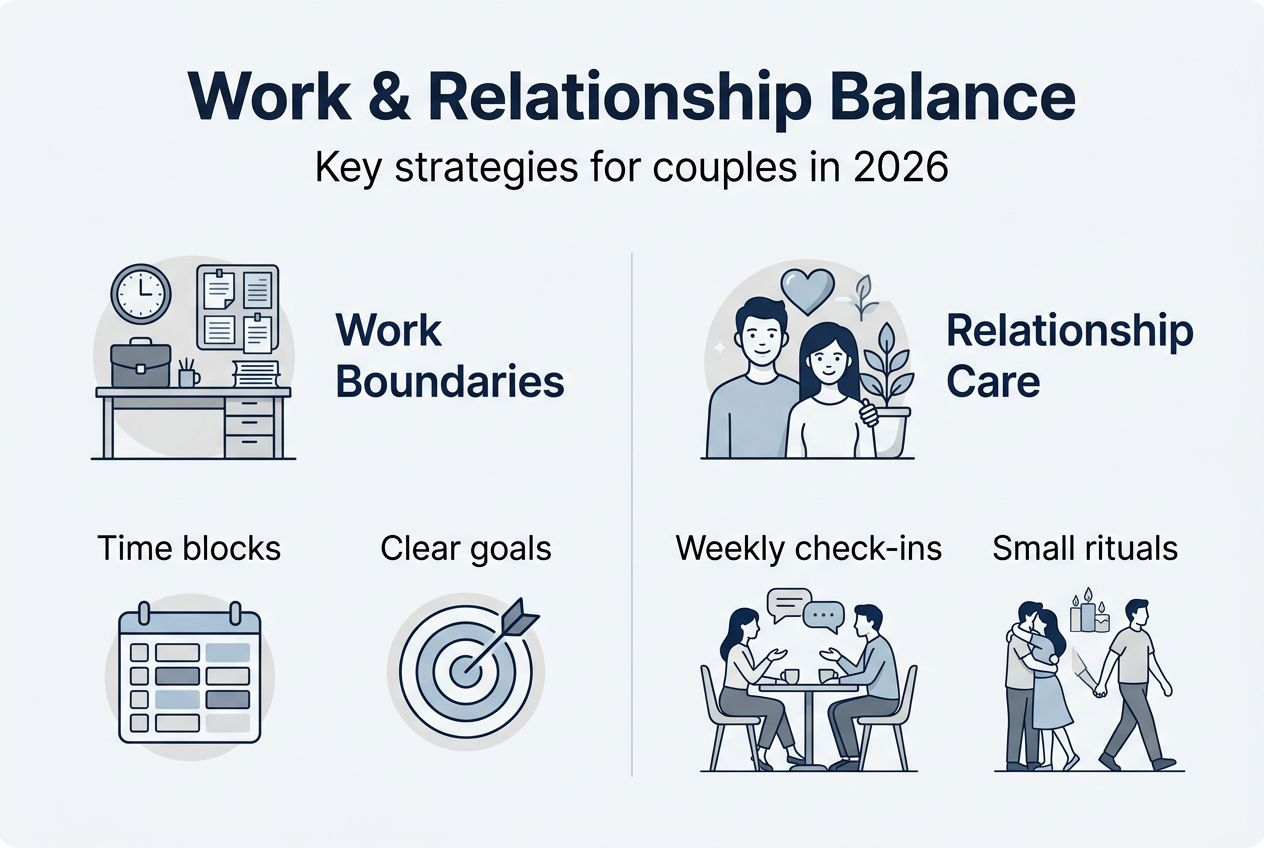
Effective communication and clear boundaries are essential prerequisites for balancing work pressures with relationship needs. Create explicit agreements about work-free zones and times, such as no phones during dinner or designating Sunday mornings for couple activities. These boundaries protect relationship space from constant professional intrusion, signaling to both partners that your connection matters as much as your careers. Without these guardrails, work will inevitably expand to fill all available time and mental energy.

Prioritizing couple time requires treating it with the same importance as work meetings. Block specific hours on your calendar for relationship activities, and defend this time against non-emergency work requests. This might mean leaving the office at a set hour twice weekly, scheduling monthly weekend getaways, or committing to a regular morning coffee ritual before the workday begins. The specific activities matter less than the consistency and protected nature of the time.
Key foundations for successful balance include:
- Mutual agreement on work boundaries and relationship priorities
- Scheduled, non-negotiable couple time that both partners honor
- Clear communication protocols for discussing stress and conflicts
- Shared responsibility for household tasks to prevent resentment
- Regular reassessment of what’s working and what needs adjustment
Pro Tip: Schedule a monthly relationship check-in where you review your balance goals, celebrate progress, and adjust strategies as needed. This prevents small issues from accumulating into major conflicts.
Establishing these foundations creates the structural support your relationship needs to withstand work pressures. Think of boundaries and agreements as the framework of a house, they don’t guarantee happiness but they make it possible. Without this preparation, even the best balancing strategies will fail because you lack the underlying systems to sustain them through busy seasons and unexpected challenges.
Executing practical strategies to balance work and relationship
Implementation starts with specific, repeatable actions that integrate into your daily routine. Begin each week by planning at least three dedicated couple activities, whether that’s a 30-minute walk, cooking dinner together, or watching a show without devices. These touchpoints maintain connection even during high-stress periods. Next, practice active listening during conversations by putting away distractions, making eye contact, and reflecting back what you hear before responding. This simple shift dramatically improves communication quality and helps both partners feel valued.
Structured conflict resolution and stress management techniques reduce tension and increase relationship satisfaction. When conflicts arise, use a framework that separates the problem from the person. State your feelings using “I” statements, identify the underlying need, and collaborate on solutions rather than defending your position. For stress relief, develop shared practices like evening decompression rituals where you each share one work challenge and one relationship appreciation before transitioning to personal time.
Step-by-step actions for maintaining balance:
- Create a shared calendar marking work commitments and relationship priorities equally.
- Establish a daily 15-minute connection ritual, such as morning coffee or evening walk.
- Practice the “two-minute rule” by addressing small irritations immediately before they escalate.
- Designate one weekend day monthly as completely work-free for relationship focus.
- Develop stress signals that alert your partner when you need support or space.
- Schedule quarterly relationship reviews to assess progress and adjust strategies.
Pro Tip: Notice early warning signs like increased irritability, withdrawal, or defensive responses. These signal that stress is building and you need to activate your balance strategies before conflict erupts.
The following table outlines various approaches to managing work demands while protecting relationship health:
| Strategy | Implementation | Expected Benefit |
|---|---|---|
| Time blocking | Designate specific hours for work and relationship, with clear transitions | Reduces mental spillover and increases presence |
| Stress decompression | Create 20-minute buffer between work and home to process the day | Prevents transferring work frustration to partner |
| Shared rituals | Establish daily or weekly activities you do together consistently | Maintains connection through busy periods |
| Communication protocols | Agree on how to discuss work stress without it dominating conversations | Keeps work from overwhelming relationship dialogue |
Shared activities and rituals serve as relationship anchors during turbulent periods. These don’t need to be elaborate, consistency matters more than complexity. A nightly 10-minute check-in where you share highs and lows creates more connection than an occasional expensive date. Physical touch, even brief hugs or hand-holding, releases oxytocin that counteracts stress hormones and reinforces your bond. The goal is building micro-moments of connection that accumulate into sustained intimacy.
Verifying progress and maintaining long-term balance
Assessing whether your strategies are working requires tracking specific relationship health indicators. Monitor frequency of positive interactions versus conflicts, quality of communication during disagreements, and whether you’re meeting your planned couple time commitments. Pay attention to how you feel about the relationship, are you experiencing more appreciation and less resentment? Do you feel heard and supported? These subjective measures often reveal progress before objective metrics shift.
Regular relationship check-ins and adjustment of boundaries help maintain balance over time. Life circumstances change, demanding flexibility in your approach. A promotion, new project, or family situation might temporarily require recalibrating your balance strategies. The key is communicating these adjustments rather than unilaterally abandoning your agreements. When one partner needs to increase work focus temporarily, explicitly discuss how you’ll maintain connection and when you’ll return to baseline commitments.
Common challenges and their solutions:
- Challenge: One partner consistently violates work boundaries. Solution: Revisit the underlying need driving the behavior and negotiate new agreements that address it.
- Challenge: Couple time feels forced or obligatory rather than enjoyable. Solution: Experiment with different activities until you find ones that genuinely energize your connection.
- Challenge: Stress levels remain high despite implementing strategies. Solution: Consider whether individual therapy or stress management support is needed alongside couple work.
- Challenge: Progress stalls after initial improvement. Solution: Introduce new rituals or activities to prevent stagnation and reignite engagement.
The following comparison weighs different ongoing approaches to sustaining work-relationship balance:
| Approach | Pros | Cons | Best For |
|---|---|---|---|
| Self-directed strategies | Low cost, high flexibility, builds self-reliance | Requires strong motivation, easy to abandon under pressure | Couples with good communication and mild stress |
| Structured programs | Clear framework, accountability, proven methods | Less personalized, may not address unique dynamics | Couples wanting guidance but not therapy |
| Professional counseling | Expert support, addresses deep patterns, accelerates progress | Higher cost, requires time commitment | Couples with persistent conflicts or communication breakdowns |
Flexibility becomes crucial as you navigate different seasons of work intensity. Rather than viewing balance as a fixed state, think of it as a dynamic process requiring constant micro-adjustments. Some weeks will lean heavier toward work, others toward relationship focus. The goal is ensuring that over months and years, both areas receive adequate attention and neither is chronically neglected. When you notice sustained imbalance, that’s your signal to recalibrate.
Don’t hesitate to seek professional support if you’re struggling to make progress independently. A therapist specializing in couples work can identify blind spots, teach advanced communication skills, and provide accountability that accelerates change. Many couples wait too long to seek help, allowing patterns to become deeply entrenched. Early intervention prevents minor issues from escalating into relationship-threatening conflicts.
Support for couples balancing work and relationship
When self-directed strategies aren’t enough, professional support can transform your relationship trajectory. Working with a therapist who specializes in couples counseling provides tools specifically designed for managing work-related stress and conflict. You’ll learn communication techniques that prevent escalation, develop personalized strategies for your unique challenges, and gain accountability for implementing changes consistently.
Mastering Conflict offers clinical services tailored to couples navigating the intersection of professional demands and relationship health. Our evidence-based approach addresses the root causes of conflict while building practical skills you can use immediately. For couples with demanding schedules, teletherapy counseling provides flexible access to support without adding commute time to your already packed calendar. Taking this step demonstrates commitment to your partnership and willingness to invest in its long-term success.
Frequently asked questions about balancing work and relationship
What are signs that work is hurting my relationship?
Watch for increased arguments about time and attention, feeling emotionally disconnected from your partner, canceling couple plans for work repeatedly, and noticing resentment building over perceived imbalances. Physical intimacy declining and conversations becoming superficial or conflict-focused also signal that work stress is damaging your relationship.
How can we improve communication around busy schedules?
Schedule specific times for relationship conversations rather than trying to connect spontaneously when you’re both exhausted. Use brief daily check-ins to stay connected and save deeper discussions for designated couple time. Practice active listening by eliminating distractions and fully focusing on your partner when they’re speaking.
When should we consider professional counseling?
Seek counseling when conflicts escalate despite your best efforts, when you feel stuck in negative patterns you can’t break independently, or when resentment has built to the point where positive interactions feel rare. Early intervention prevents minor issues from becoming relationship-threatening crises.
What are quick stress relief tips for couples?
Try synchronized breathing exercises for two minutes, take a brief walk together holding hands, or practice gratitude sharing where you each name one thing you appreciate about the other. Physical touch like hugging or gentle massage releases stress-reducing hormones and reinforces your bond.
How do we keep romance alive despite work pressures?
Prioritize small gestures like leaving notes, sending midday texts, or planning surprise moments rather than waiting for perfect conditions. Schedule date nights as non-negotiable appointments and protect them from work intrusion. Focus on quality over quantity, a fully present 30-minute conversation creates more connection than a distracted evening together.
Recommended
- Balance work and relationships: Proven strategies 2026 – Mastering Conflict
- 7 Healthy Relationship Habits Every Couple Should Practice – Mastering Conflict
- 7 Healthy Daily Routines for Stronger Couples’ Well-Being – Mastering Conflict
- Conflict Resolution for Couples: Practical Strategies for 2025 – Mastering Conflict
- Why seek couples counseling in 2026: proven benefits – ReviveHealthTherapy