
Anger Management Costs – What You Really Pay For

Over 70 percent of American adults report experiencing anger that sometimes feels hard to control. Misconceptions about anger management are common, leaving many unsure about how to address these powerful emotions in a healthy way. Learning what anger management truly means—not just for personal well-being, but for relationships and daily life—can help anyone build better emotional skills while avoiding common myths and misinformation.
Table of Contents
- Defining Anger Management And Common Misconceptions
- Types Of Anger Management Programs And Classes
- What Influences The Cost Of Anger Management
- Insurance, Sliding Scales, And Payment Options
- Comparing Online And In-Person Program Costs
Key Takeaways
| Point | Details |
|---|---|
| Understanding Anger | Anger is a natural emotion that signals when boundaries are challenged, and managing it effectively involves emotional regulation rather than suppression. |
| Program Variety | Anger management programs differ in format, duration, and focus, catering to diverse needs such as individuals, couples, and specific demographics. |
| Cost Influencers | The cost of anger management programs depends on factors like duration, format, instructor credentials, and geographic location. |
| Accessibility Options | Many programs offer flexible payment solutions, including insurance coverage and sliding scales, to ensure individuals can access essential support despite financial constraints. |
Defining Anger Management and Common Misconceptions
Anger is a fundamental human emotion that serves as a complex psychological response to perceived threats or frustrations. While many people misunderstand anger as purely destructive, it actually functions as a critical warning system that signals when our boundaries, expectations, or sense of fairness have been challenged. Understanding the nuanced nature of anger reveals that the emotion itself is not inherently problematic – it’s how we choose to express and manage it that determines its impact.
Anger management represents a structured approach to recognizing, understanding, and constructively channeling angry feelings. Contrary to popular misconceptions, effective anger management does not mean suppressing emotions or never experiencing anger. Instead, it involves developing skills to respond to provocative situations with emotional intelligence, self-awareness, and strategic communication. Emotional regulation becomes the primary goal, enabling individuals to express their needs and boundaries without causing harm to themselves or others.
Psychologists have identified several common myths about anger that can impede healthy emotional processing. One prevalent misconception is that venting anger through aggressive behavior provides catharsis. However, research from psychological experts suggests that simply expressing anger without addressing underlying needs can actually escalate conflict and reinforce negative behavioral patterns. Effective anger management requires a more nuanced approach that involves:
- Identifying trigger points and emotional patterns
- Developing self-soothing techniques
- Learning communication strategies that express feelings constructively
- Understanding the root causes of recurring anger responses
- Practicing empathy and perspective-taking
Ultimately, anger management is not about eliminating anger but transforming it into a tool for personal growth, improved relationships, and emotional resilience.
Types of Anger Management Programs and Classes
Anger management programs offer diverse approaches to help individuals develop emotional regulation skills and improve interpersonal relationships. Structured programs vary in intensity and duration based on individual needs and risk levels, ranging from brief interventions to comprehensive multi-week courses. These programs typically assess participants’ specific anger patterns and psychological profiles to create targeted strategies for emotional control and personal growth.
Group-based therapy remains one of the most common formats for anger management interventions. These sessions provide participants with a supportive environment to learn coping mechanisms, share experiences, and practice communication techniques under professional guidance. Comprehensive anger management classes often cover critical skill sets including:
- Stress management techniques
- Emotional recognition and processing
- Impulse control strategies
- Effective communication skills
- Conflict resolution methods
- Empathy development
Specialized anger management programs also exist for specific populations, recognizing that different groups may require unique approaches. These targeted interventions include:
- Adolescent-focused programs
- Couples therapy anger management tracks
- Professional workplace conflict resolution courses
- Court-mandated rehabilitation programs
- Individual counseling for personalized intervention
The goal of these diverse programs extends beyond simply controlling angry outbursts. They aim to empower individuals with comprehensive emotional intelligence skills, helping participants understand the root causes of their anger and develop healthier, more constructive ways of expressing their emotions and resolving conflicts.
What Influences the Cost of Anger Management
The cost of anger management programs varies significantly based on multiple interconnected factors that impact the overall investment required for emotional skill development. Program duration and complexity directly influence pricing structures, with more extensive interventions naturally commanding higher fees. These variations reflect the depth of psychological support, professional expertise, and tailored strategies provided to participants seeking emotional regulation.
Key Cost Determinants include several critical elements that potential clients should carefully consider:
- Program Format (group vs. individual sessions)
- Duration and intensity of the intervention
- Credentials and experience of the facilitating professional
- Geographic location and regional pricing standards
- Complexity of the participant’s emotional needs
- Delivery method (in-person, online, hybrid)
- Additional support services and follow-up resources
The financial investment in anger management goes beyond simple hourly rates. Participants are essentially purchasing a comprehensive toolkit for emotional intelligence, with costs reflecting the potential long-term benefits of improved personal and professional relationships. Specialized programs targeting specific demographics – such as workplace professionals, couples, or court-mandated participants – may have unique pricing models that account for their targeted approach and specialized curriculum.

Ultimately, the most expensive program is not always the most effective, and the cheapest option might not provide the comprehensive support needed. Potential participants should view anger management as an investment in personal growth, carefully evaluating the program’s approach, professional credentials, and potential long-term impact rather than focusing solely on immediate cost considerations.
Insurance, Sliding Scales, and Payment Options
Navigating the financial aspects of anger management programs can be complex, with multiple strategies available to make these critical services more accessible. Many organizations offer flexible payment solutions designed to accommodate diverse financial circumstances and ensure that individuals can receive the support they need regardless of economic constraints.
Payment Flexibility encompasses several key approaches to making anger management more affordable:
- Health Insurance Coverage
- Some private insurance plans partially cover mental health services
- Employee assistance programs (EAPs) might include anger management resources
- Medicaid and Medicare may cover certain psychological interventions
- Sliding Scale Options
- Income-based pricing structures
- Reduced rates for unemployed or low-income participants
- Graduated payment plans
- Discounts for students, veterans, or first responders
Alternative payment methods have emerged to break down financial barriers to mental health support. Program providers recognize the importance of accessibility and increasingly offer creative financing options such as:
- Online payment installments
- Group rate discounts
- Scholarship or grant opportunities
- Cryptocurrency and digital payment acceptance
- Nonprofit sponsorship programs
Ultimately, the goal of these diverse payment strategies is to ensure that financial limitations do not prevent individuals from accessing essential emotional regulation and mental health resources. Potential participants are encouraged to discuss payment options directly with program providers, as many organizations are willing to work collaboratively to find sustainable solutions that meet individual financial capabilities.
Comparing Online and In-Person Program Costs
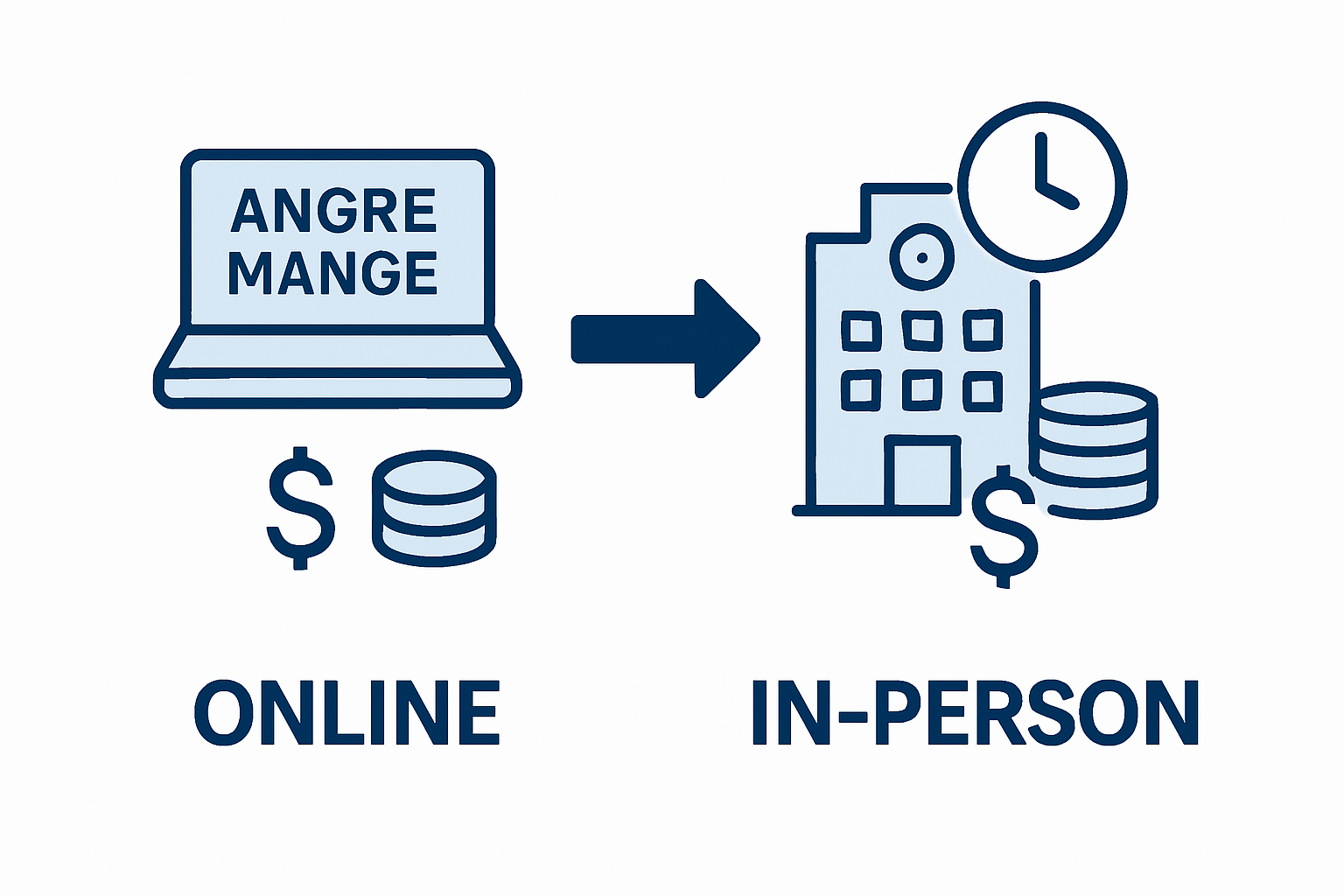
Digital and traditional anger management programs present distinct cost considerations that potential participants must carefully evaluate. Online platforms typically offer more affordable options with reduced overhead costs, while in-person sessions provide more intensive, personalized interaction at a potentially higher price point. The format selection involves balancing financial constraints with individual learning preferences and therapeutic effectiveness.
Cost Comparison Breakdown:
- Online Programs:
- Lower base pricing (typically 30-50% less expensive)
- Reduced travel expenses
- Flexible scheduling
- Minimal infrastructure costs
- Often more accessible for remote participants
- In-Person Programs:
- Higher direct session costs
- Additional expenses for physical facility maintenance
- More comprehensive interpersonal interaction
- Potential group dynamics and immediate feedback
- Professional direct supervision
Court-approved programs offer multiple format options to accommodate different participant needs and budgetary considerations. The pricing variations reflect not just the delivery method, but the depth of psychological support, professional expertise, and curriculum complexity. Factors influencing cost include:
- Instructor credentials
- Program duration
- Depth of curriculum
- Additional support resources
- Certification or completion documentation
Ultimately, participants should view these programs as an investment in personal growth. The most expensive option is not always the most effective, and the cheapest program might not provide comprehensive support. Careful evaluation of the program’s approach, professional credentials, and potential long-term impact remains crucial in making an informed decision about anger management intervention.
Take Control of Your Anger Management Journey Today
Understanding the true costs behind anger management is essential for finding the right support that matches your needs and budget. If you are struggling with recognizing triggers, developing emotional regulation skills, or seeking a program tailored to your unique situation, you deserve a solution that offers both professional expertise and flexible options. At Mastering Conflict, we specialize in providing clinically informed anger management classes, personalized counseling, and coaching programs designed to help you transform anger into personal growth and healthier relationships.
Don’t wait for disruptions in your life to escalate. Explore how our evidence-based programs and compassionate professionals can guide you through effective emotional regulation strategies. Act now to access comprehensive support designed specifically for your needs, including options for online therapy and specialized counseling for diverse populations. Visit Mastering Conflict today and take that important first step toward mastering your emotions and reclaiming peace.
Frequently Asked Questions
What factors influence the cost of anger management programs?
The cost of anger management programs is affected by several factors, including program format (group vs. individual sessions), duration and intensity of the intervention, the credentials of the facilitating professional, geographic location, and the complexity of the participant’s emotional needs.
Are online anger management programs more affordable than in-person programs?
Yes, online anger management programs typically have lower costs, often ranging from 30-50% less expensive than in-person sessions due to reduced overhead costs and no travel expenses.
Does insurance cover anger management services?
Some health insurance plans may partially cover anger management services, and employee assistance programs (EAPs) might also offer resources for anger management. Medicaid and Medicare may cover certain psychological interventions as well.
What are sliding scale payment options for anger management?
Sliding scale payment options allow providers to offer income-based pricing structures, reduced rates for low-income individuals, and payment plans that accommodate financial constraints, making services more affordable for those in need.