
Couples Therapy Process Explained: Steps to Resolving Conflict

Tension in a relationship can lead couples in North Carolina or South Carolina to feel stuck, frustrated, or disconnected. When everyday arguments start to impact emotional well-being and family life, many turn to couples therapy to break painful patterns and improve communication. This guide draws on research-backed approaches to explain how couples therapy works, what happens in sessions, and how it can create positive change for those ready to rebuild trust and deepen understanding.
Table of Contents
- Defining Couples Therapy and Its Purpose
- Types of Couples Therapy Approaches
- Session Structure and Therapeutic Methods
- Therapists’ Roles and Client Expectations
- Costs, Duration, and Insurance Considerations
- Common Mistakes and How to Avoid Them
Key Takeaways
| Point | Details |
|---|---|
| Purpose of Couples Therapy | Couples therapy aims to improve relationship dynamics, communication, and emotional connection while addressing individual and collective psychological challenges. |
| Types of Approaches | Various evidence-based therapies, including BCT, CBCT, and EFT, are tailored to specific relationship needs and focus on enhancing communication and emotional intimacy. |
| Session Structure | Couples therapy sessions typically include an assessment phase, intervention strategies, and interactive techniques to foster understanding and resolve conflicts. |
| Common Mistakes | Key pitfalls include unrealistic expectations, lack of emotional vulnerability, and therapist biases, which can hinder progress, emphasizing the need for awareness and collaboration. |
Defining Couples Therapy and Its Purpose
Couples therapy is a specialized therapeutic approach designed to help partners improve their relationship dynamics, communication, and emotional connection. At its core, this treatment modality focuses on understanding and resolving interpersonal challenges that create tension between romantic partners. Modern couple therapy approaches aim to explore interaction patterns, individual histories, and systemic relationship dynamics.
The primary purpose of couples therapy extends beyond simply resolving conflicts. It serves multiple critical functions:
- Identifying destructive communication patterns
- Understanding underlying emotional needs
- Developing healthier relationship strategies
- Rebuilding trust and intimacy
- Addressing individual and collective psychological challenges
Professional therapists recognize that relationship distress impacts not just the couple, but potentially their entire family system. Relationship quality directly influences individual emotional well-being, making couples therapy a profound intervention for holistic mental health. Committed couple relationships significantly impact adult wellness, addressing issues ranging from communication breakdowns to sexual dysfunction.
Modern couples therapy has evolved into a sophisticated, evidence-based practice that considers both psychological and systemic factors. Therapists work collaboratively with partners to unpack complex relational dynamics, helping them develop more effective emotional communication skills and mutual understanding.
Pro tip: Approach couples therapy with genuine openness and a willingness to examine your own behavioral patterns, not just your partner’s.
Types of Couples Therapy Approaches
Couples therapy encompasses multiple evidence-based approaches designed to address relationship challenges through targeted interventions. Contemporary couple therapy models have evolved to provide specialized strategies tailored to different relationship dynamics and psychological needs.
The primary approaches to couples therapy include:
- Behavioral Couple Therapy (BCT)
- Focuses on changing negative interaction patterns
- Uses direct skill-building techniques
- Emphasizes positive reinforcement
- Cognitive-Behavioral Couple Therapy (CBCT)
- Addresses thought patterns affecting relationship
- Helps partners identify and modify destructive thinking
- Combines cognitive restructuring with behavioral strategies
- Emotionally Focused Therapy (EFT)
- Centers on emotional connection and attachment
- Helps partners understand underlying emotional needs
- Rebuilds intimacy through deeper emotional understanding
Each therapeutic approach offers unique benefits, with major couple therapy models sharing the common goal of reducing relationship distress and improving overall relationship quality. Professional therapists often integrate elements from multiple approaches to create a customized treatment plan that addresses the specific needs of each couple.
These therapeutic models recognize that relationship challenges are complex, requiring nuanced and flexible interventions that consider individual psychological backgrounds, communication styles, and emotional landscapes.
Here is a summary comparing key couples therapy approaches:
| Therapy Approach | Main Focus | Typical Use | Notable Benefit |
|---|---|---|---|
| BCT | Changing behavior patterns | Communication struggles | Quick skill improvement |
| CBCT | Cognitive reframing | Negative thought cycles | Reduces blame and criticism |
| EFT | Emotional connection growth | Attachment/insecurity | Deepens intimacy |
Pro tip: Select a couples therapist who demonstrates flexibility in applying different therapeutic approaches based on your unique relationship dynamics.
Session Structure and Therapeutic Methods
Couples therapy sessions are carefully structured interventions designed to create meaningful change in relationship dynamics. Typical couples therapy sessions involve comprehensive approaches that address both individual and collective relationship challenges through strategic therapeutic techniques.
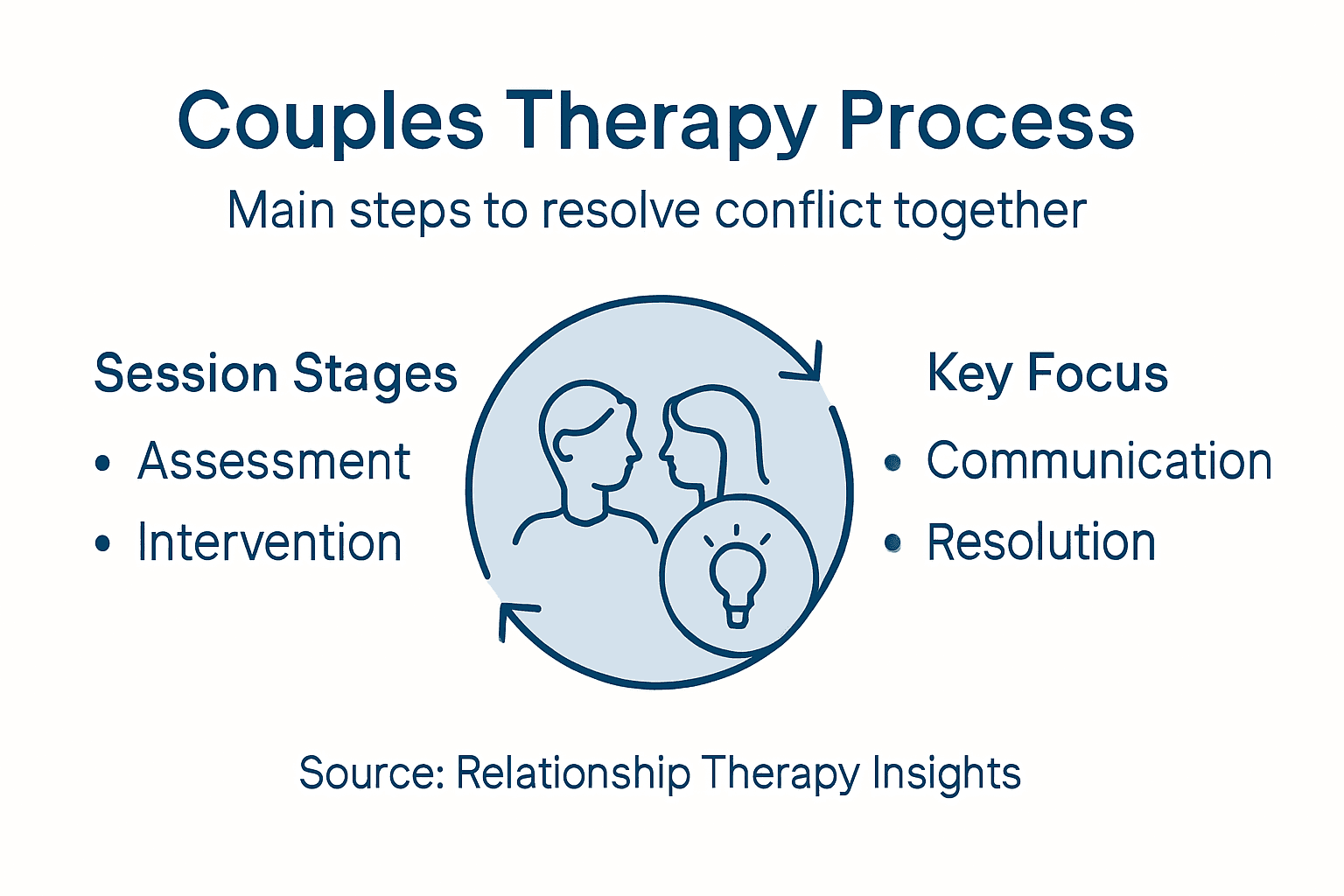
The typical session structure encompasses several key components:
- Initial Assessment Phase
- Comprehensive relationship history evaluation
- Identifying primary relationship challenges
- Establishing therapeutic goals
- Intervention Strategies
- Communication skills training
- Emotional regulation techniques
- Conflict resolution skill development
- Interactive Therapeutic Techniques
- Direct partner-to-partner communication
- Shared problem-solving exercises
- Emotional vulnerability exploration
Specific couples therapy techniques emphasize creating a collaborative therapeutic environment where both partners actively participate in the healing process. Therapists employ nuanced strategies that help couples understand their interaction patterns, reduce negative communication cycles, and develop more constructive relationship skills.
Professional therapists typically customize session lengths and frequencies based on the couple’s unique needs, ranging from short-term focused interventions to more extended therapeutic engagements. The ultimate goal remains consistent: helping partners develop deeper understanding, improved communication, and more resilient emotional connections.
Pro tip: Approach each therapy session with genuine openness and a commitment to personal growth, recognizing that meaningful change requires vulnerability and mutual effort.
Therapists’ Roles and Client Expectations
In couples therapy, the therapist plays a complex and nuanced role that extends far beyond traditional counseling techniques. Therapists must navigate intricate relationship dynamics while maintaining neutrality, fostering constructive communication, and supporting both individual and collective healing processes.
Key responsibilities of couples therapists include:
- Relationship Facilitation
- Mediating communication barriers
- Creating safe emotional spaces
- Identifying destructive interaction patterns
- Therapeutic Neutrality
- Avoiding taking sides
- Validating both partners’ perspectives
- Promoting balanced dialogue
- Strategic Intervention
- Developing personalized therapeutic approaches
- Teaching conflict resolution skills
- Guiding emotional reconnection strategies
Client therapy expectations significantly impact the therapeutic process, with most individuals seeking a supportive professional who can help them understand and transform their relationship dynamics. Successful therapists recognize that each couple brings unique challenges, requiring flexible and empathetic approaches that respect individual differences.

Effective therapists blend professional expertise with genuine human connection, creating an environment where couples feel heard, understood, and empowered to make meaningful relational changes. This delicate balance requires continuous skill refinement, cultural sensitivity, and a deep understanding of human emotional landscapes.
Pro tip: Choose a therapist who demonstrates active listening, shows genuine curiosity about your relationship, and offers practical strategies rather than generic advice.
Costs, Duration, and Insurance Considerations
Couples therapy represents a significant investment in relationship health, with financial considerations varying widely across different therapeutic approaches and geographic regions. Therapy costs range substantially depending on factors like therapist qualifications, session length, and treatment complexity.
Typical cost and duration factors include:
- Session Pricing
- Individual sessions: $100-$250 per hour
- Specialized therapists: $200-$400 per session
- Sliding scale options available for lower-income couples
- Treatment Duration
- Short-term interventions: 6-20 sessions
- Complex relationship issues: 6-12 months
- Intensive therapeutic programs: Extended multi-month engagements
- Insurance Considerations
- Limited mental health coverage
- Diagnostic requirements for reimbursement
- Telehealth expanding insurance options
Insurance reimbursement for couples therapy remains complex, often requiring specific diagnostic criteria to qualify for coverage. Most insurance providers mandate documentation demonstrating medical necessity, which typically involves identifying a diagnosable mental health condition in one partner.
Couples should approach therapy as a strategic investment in their relationship, recognizing that the potential long-term benefits often outweigh the immediate financial considerations. Open discussions with potential therapists about pricing, payment plans, and insurance compatibility can help couples make informed decisions about their therapeutic journey.
Explore typical cost, duration, and insurance aspects of couples therapy below:
| Factor | Typical Range | What to Look For |
|---|---|---|
| Session Cost | $100-$400 per session | Check for sliding scale if needed |
| Treatment Duration | 6 sessions to 12 months | Ask about short- vs long-term plans |
| Insurance Coverage | Often limited | Confirm requirements for approval |
| Payment Flexibility | Varies widely | Inquire about payment plans |
Pro tip: Request detailed pricing information upfront and explore flexible payment options before committing to a specific couples therapy program.
Common Mistakes and How to Avoid Them
Navigating couples therapy successfully requires awareness of potential pitfalls that can derail therapeutic progress. Common therapeutic mistakes can significantly impact relationship healing, making it crucial for both therapists and couples to understand and proactively address these challenges.
Key mistakes and strategies to avoid them include:
- Therapist-Related Mistakes
- Taking sides in conflicts
- Making personal value judgments
- Failing to maintain professional boundaries
- Couple-Related Mistakes
- Unrealistic expectations about therapy
- Avoiding genuine emotional vulnerability
- Blaming instead of collaborating
- Communication Errors
- Interrupting each other during sessions
- Withholding important information
- Misinterpreting therapeutic feedback
Systemic therapeutic approaches emphasize the importance of maintaining a neutral, relationship-focused perspective. Professional therapists must carefully navigate complex dynamics, avoiding individualistic interpretations that might inadvertently undermine the couple’s connection.
Successful therapy depends on creating a safe, collaborative environment where both partners feel heard, respected, and supported in their journey toward relational healing. This requires active listening, empathy, and a commitment to understanding the unique dynamics of each relationship.
Pro tip: Approach therapy as a shared learning experience, focusing on mutual understanding rather than proving who is right or wrong.
Take Control of Your Relationship Journey with Expert Couples Therapy
Understanding the couples therapy process is the first step toward resolving conflict and rebuilding trust. If you are struggling with communication breakdowns, emotional disconnection, or recurring conflicts, it is crucial to address these challenges with professional guidance. The article explains how therapy focuses on identifying destructive communication patterns, developing healthier strategies, and fostering emotional vulnerability — essential elements for lasting change.
Don’t wait for conflicts to deepen. At Mastering Conflict, we offer tailored couples therapy programs designed to meet your unique needs. Our evidence-based approaches incorporate proven techniques like emotionally focused therapy and cognitive-behavioral strategies so you can strengthen intimacy and improve communication. Whether you prefer in-person sessions in North or South Carolina and Florida or want the convenience of online therapy, our expert team led by Dr. Carlos Todd is ready to support your journey. Take the decisive step today—visit Mastering Conflict and start transforming your relationship with trusted professional help.
Frequently Asked Questions
What is the primary purpose of couples therapy?
Couples therapy aims to help partners improve communication, resolve conflicts, and strengthen their emotional connection, addressing underlying psychological challenges and relationship dynamics.
What are the common approaches used in couples therapy?
Common approaches include Behavioral Couple Therapy (BCT), Cognitive-Behavioral Couple Therapy (CBCT), and Emotionally Focused Therapy (EFT), each focusing on different aspects of relationship dynamics and communication patterns.
How are couples therapy sessions structured?
Sessions typically begin with an initial assessment to identify relationship challenges, followed by intervention strategies like communication skills training and emotional regulation techniques, fostering active participation from both partners.
What can I expect from a couples therapist during the therapy process?
A couples therapist facilitates communication, maintains neutrality, validates each partner’s perspective, and provides strategic interventions tailored to the couple’s unique needs to promote relationship healing.