
Learning Emotional Regulation: Tools for Parenting Teens

Every american parent with teens in North Carolina and South Carolina knows family conflict can quickly spiral when emotions run high. Nearly 65 percent of families report that unresolved emotional tension leads to strained communication and lasting misunderstandings. Emotional regulation is more than a psychological buzzword. Learning these skills transforms interactions, strengthens relationships, and helps you guide your teen through challenging moments with clarity and empathy.
Table of Contents
- Emotional Regulation And Its Core Concepts
- Types Of Emotional Regulation In Teens
- How Emotional Regulation Shapes Family Dynamics
- Effective Strategies For Parental Support
- Common Pitfalls And Preventing Emotional Dysregulation
Key Takeaways
| Point | Details |
|---|---|
| Emotional Regulation is Learnable | Emotional regulation is a dynamic skill that can be developed and improved over time through understanding and practice. |
| Impact on Family Dynamics | Effective emotional regulation fosters healthier family interactions, enhancing communication, empathy, and conflict resolution. |
| Parental Influence is Crucial | Parents play a key role in shaping their teen’s emotional regulation skills by modeling healthy emotional expression and providing supportive environments. |
| Avoiding Common Pitfalls | Parents should avoid dismissing teen emotions or responding with frustration, as this can lead to emotional dysregulation and hinder healthy development. |
Emotional regulation and its core concepts
Emotional regulation is a fundamental psychological skill that enables individuals to manage their emotional experiences effectively. At its core, this ability allows people to understand, process, and respond to emotional stimuli in adaptive ways that support personal well-being and healthy interpersonal relationships.
Research reveals that emotional regulation is not a fixed trait but a dynamic process that can be learned and improved over time. Adaptive strategies for managing emotions involve complex mechanisms like acceptance, reappraisal, distraction, and suppression. The intensity of an emotional experience significantly influences which regulation strategy an individual chooses in a given situation.
Psychologists understand emotional regulation as a multifaceted skill that goes beyond simple emotional control. Interpersonal emotion regulation processes highlight how our emotional management strategies extend beyond individual experiences and interact with our social environments. This means our ability to regulate emotions is not just an internal psychological mechanism but also deeply connected to our relationships and social interactions.
For parents of teens, understanding emotional regulation becomes particularly crucial. Teenagers experience intense emotional shifts due to neurological development, making it essential to provide guidance and support in navigating these complex emotional landscapes. Recognizing emotional regulation as a learnable skill can help parents approach their teens’ emotional experiences with patience and strategic understanding.
Pro tip: Practice active listening and validate your teen’s emotions before attempting to help them regulate, as feeling heard is the first step toward effective emotional management.
Types of emotional regulation in teens
Adolescents experience a wide range of emotional regulation strategies that are critical to their psychological development and mental health. Emotion regulation challenges among teens reveal a complex landscape of psychological adaptation where different strategies emerge based on individual needs and environmental contexts.
Researchers have identified several primary types of emotional regulation strategies that teenagers commonly employ. These include cognitive reappraisal, where teens reframe emotional situations to change their emotional response, and suppression, which involves controlling outward emotional expressions. Adolescent emotion regulation strategies demonstrate that social context and parental involvement significantly influence which strategies teens develop and utilize.
Some key types of emotional regulation in teens include:
- Cognitive Reappraisal: Mentally reinterpreting a situation to alter emotional response
- Emotional Suppression: Inhibiting outward emotional expressions
- Social Sharing: Discussing feelings with peers or trusted adults
- Rumination: Repeatedly thinking about negative emotional experiences
Understanding these strategies is crucial for parents, as each approach carries different psychological implications. Anxiety and depression are often linked to specific regulation difficulties, with some teens struggling with limited access to adaptive emotional management techniques. Recognizing these patterns can help parents provide targeted support and guidance during this critical developmental period.
Here is a summary comparing key emotional regulation strategies teens use and their effects:
| Strategy | Typical Outcome | Role of Parental Support |
|---|---|---|
| Cognitive Reappraisal | Healthier adaptability | Encouragement and guidance needed |
| Emotional Suppression | Short-term tension relief | Risk increases without validation |
| Social Sharing | Emotional connection | Requires a non-judgmental listener |
| Rumination | Risk of persistent stress | Monitoring and redirection helpful |
Pro tip: Create a safe, non-judgmental environment where your teen feels comfortable exploring and discussing their emotional experiences without fear of criticism.
How emotional regulation shapes family dynamics
Emotional regulation is a powerful force that fundamentally transforms family interactions and relationships. Bidirectional nature of family emotions reveals that parents and children continuously influence each other’s emotional landscapes, creating a complex dynamic of mutual emotional adaptation.
Within family systems, emotional regulation acts as a critical mechanism for maintaining healthy communication and resolving conflicts. Some key ways emotional regulation impacts family dynamics include:
- Creating a supportive emotional environment
- Reducing interpersonal tensions
- Improving conflict resolution skills
- Enhancing mutual understanding and empathy
- Strengthening overall family cohesion
Family cohesion through emotional strategies demonstrates that families who prioritize emotional communication tend to be more resilient and adaptable. The process is not about suppressing emotions, but learning to express and manage them constructively. Parents who model effective emotional regulation provide their children with invaluable life skills, teaching them how to navigate complex emotional territories with grace and understanding.
Understanding this interconnected emotional system helps parents recognize that their own emotional regulation directly impacts their children’s psychological development. When parents demonstrate healthy emotional management, they create a powerful blueprint for their teenagers to follow, ultimately shaping more harmonious and supportive family dynamics.

See how family emotional regulation patterns shape overall dynamics:
| Parental Modeling | Teen Response | Long-term Family Impact |
|---|---|---|
| Calm conflict handling | Learns self-control | Stronger resilience |
| Emotional dismissiveness | Feels misunderstood | Increased tension or withdrawal |
| Open emotional sharing | Greater trust built | Higher cohesion and empathy |
Pro tip: Practice emotional transparency by sharing your own emotional regulation strategies with your teens, demonstrating that managing emotions is a learned skill everyone continues to develop.
Effective strategies for parental support
Supportive parent-adolescent relationships play a critical role in helping teenagers develop healthy emotional regulation skills. Parents are not just observers in their child’s emotional journey, but active participants who can significantly influence their teen’s psychological development and emotional intelligence.
Effective parental support strategies include:
- Practicing active and empathetic listening
- Creating a non-judgmental emotional environment
- Validating teens’ emotional experiences
- Teaching emotional recognition and labeling
- Modeling healthy emotional expression
- Demonstrating constructive conflict resolution
Complex parental emotion socialization strategies reveal that parents must balance multiple approaches to effectively support their teenagers. This means understanding that emotional support is not about eliminating negative emotions, but helping teens learn to process and manage them constructively. Rewarding positive emotional responses and avoiding punitive approaches can help teenagers develop more robust emotional regulation skills.
The key is consistency and patience. Parents who demonstrate emotional openness, provide consistent support, and create a safe space for emotional exploration can help their teenagers develop lifelong emotional intelligence skills. By understanding that emotional regulation is a learned skill, parents can approach their teen’s emotional challenges with compassion and strategic guidance.
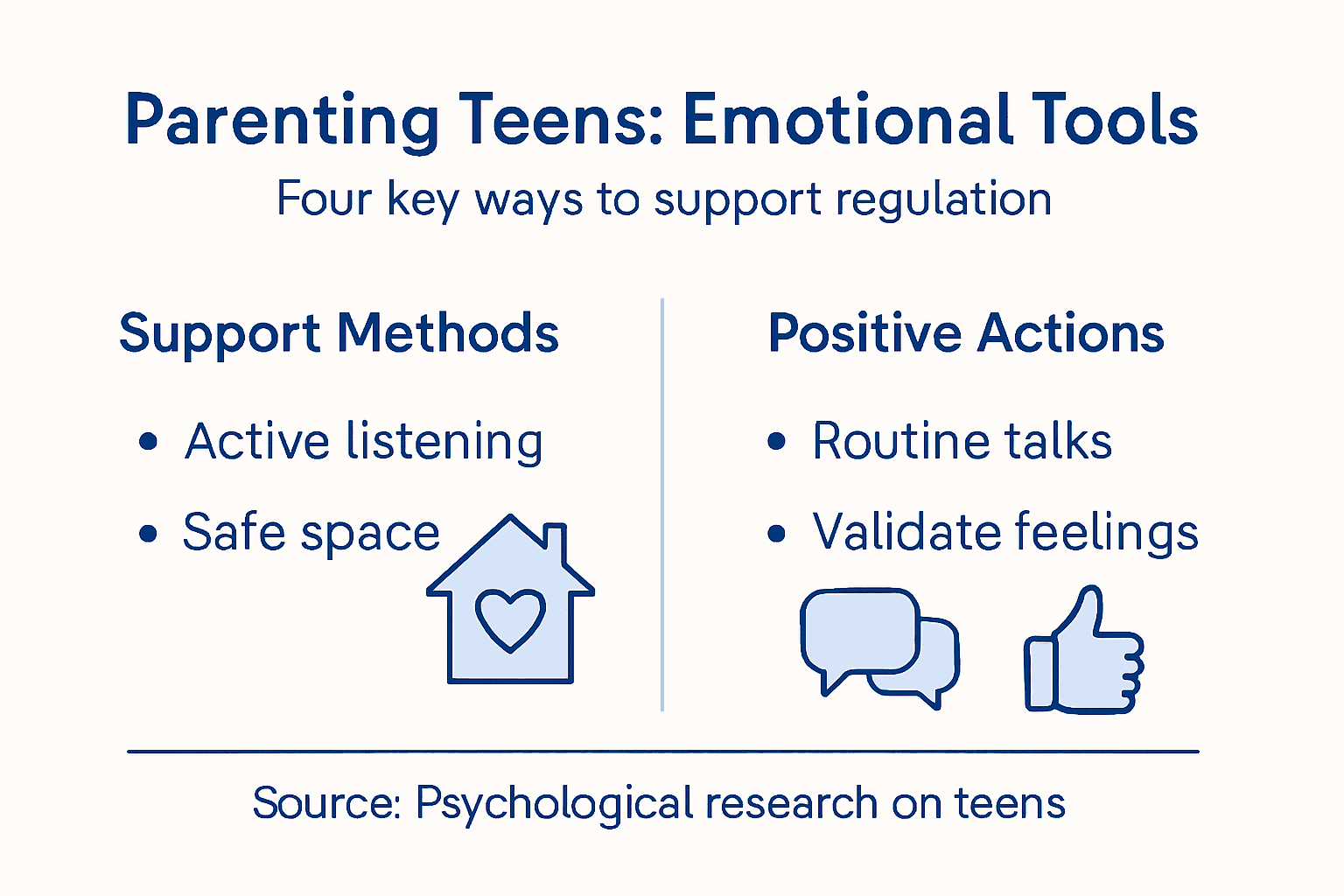
Pro tip: Create a weekly check-in routine where you discuss emotions openly, allowing your teen to share without fear of judgment or immediate problem-solving.
Common pitfalls and preventing emotional dysregulation
Parent-child emotion regulation challenges reveal a complex landscape of potential emotional disconnection. Parents often unintentionally contribute to emotional dysregulation by failing to recognize the intricate, bidirectional nature of emotional interactions with their teenagers.
Common pitfalls in emotional regulation include:
- Dismissing or minimizing teen emotions
- Responding with frustration or anger
- Over-controlling emotional expressions
- Inconsistent emotional boundaries
- Lack of personal emotional self-regulation
- Avoiding difficult emotional conversations
Maladaptive parenting approaches demonstrate that overprotective or emotionally distant parenting significantly increases the risk of adolescent emotional dysregulation. Teenagers need a balanced approach that provides emotional support while simultaneously encouraging autonomy and independent emotional processing. This means creating an environment where emotions are acknowledged, validated, and constructively explored without judgment or immediate attempts to fix or suppress them.
Prevention requires a proactive and nuanced strategy. Parents must develop their own emotional intelligence, model healthy emotional regulation, and create a supportive family environment that allows teenagers to learn and practice emotional management skills. This involves active listening, demonstrating empathy, and helping teens understand the complexity of their emotional experiences without overwhelming them.
Pro tip: Develop a personal emotional regulation practice for yourself, as your own emotional skills will directly influence your teenager’s emotional learning.
Help Your Teen Master Emotional Regulation Today
Navigating the emotional challenges that teens face requires more than patience it demands effective strategies to support their emotional regulation growth. This article highlights key techniques like cognitive reappraisal and social sharing that parents can encourage to build healthier emotional responses and stronger family bonds. If you are concerned about emotional suppression, rumination, or conflict within your family it is crucial to get guidance from professionals who understand these dynamics and can help you foster a supportive environment.

Start transforming your family’s emotional health with expert support tailored to parenting teens. At Mastering Conflict, Dr. Carlos Todd and his team offer proven counseling and coaching services focusing on emotional regulation, anger management, and healthy communication. Don’t wait until emotional struggles become overwhelming. Visit our website now and take the first step toward empowering your teen with lifelong emotional skills.
Frequently Asked Questions
What is emotional regulation and why is it important for teens?
Emotional regulation refers to the ability to manage and respond to emotional experiences in healthy ways. It is important for teens as it supports their mental health, helps them adapt to emotional shifts, and improves their relationships with peers and parents.
How can parents help their teens improve their emotional regulation skills?
Parents can support their teens by practicing active listening, creating a non-judgmental environment, validating their feelings, and modeling healthy emotional expression. Establishing open communication about emotions is crucial.
What are some common emotional regulation strategies used by adolescents?
Common strategies include cognitive reappraisal (reframing a situation), emotional suppression (controlling emotional expressions), social sharing (talking with others), and rumination (repeatedly thinking about negative experiences). Each strategy impacts emotional health differently.
What pitfalls should parents avoid to prevent emotional dysregulation in their teens?
Parents should avoid dismissing or minimizing their teens’ emotions, responding with anger, being overly controlling, and lacking consistent emotional boundaries. Recognizing the importance of open discussions about emotions is essential to fostering healthy emotional development.