
Managing Sibling Rivalry: Step-by-Step Strategies for Parents

Nearly eighty percent of American households report frequent sibling disputes, making family life in North Carolina and South Carolina feel especially challenging for parents. Sibling rivalry can disrupt peaceful routines and create lasting stress, yet many families struggle to find real solutions amid daily pressures. This guide shines a light on practical and proven approaches that help transform tense sibling interactions into opportunities for growth, harmony, and stronger family bonds.
Table of Contents
- Step 1: Assess Family Triggers And Sibling Needs
- Step 2: Establish Clear Boundaries And Expectations
- Step 3: Teach Respectful Communication Skills
- Step 4: Implement Positive Conflict Resolution Tools
- Step 5: Monitor Progress And Reinforce Growth
Quick Summary
| Key Point | Explanation |
|---|---|
| 1. Observe Sibling Interactions | Document patterns of sibling behavior to identify triggers and needs. |
| 2. Set Clear Family Guidelines | Involve children in creating rules to foster accountability and cooperation. |
| 3. Teach Empathetic Communication | Use ‘I’ statements and role playing to develop respectful dialogue skills. |
| 4. Implement Structured Conflict Resolution | Provide a framework for resolving disagreements collaboratively without blame. |
| 5. Monitor Progress Together | Regular check-ins can help track developments and reinforce positive interactions. |
Step 1: Assess Family Triggers and Sibling Needs
Understanding the dynamics that fuel sibling rivalry requires a thoughtful approach to recognizing the unique emotional landscape within your family. Sibling relationships involve complex interactions that go beyond simple surface conflicts.
To effectively assess family triggers, start by observing patterns of interaction between your children. Pay attention to specific situations that consistently spark tension – these might include shared resources, perceived parental attention, or competitive scenarios. Notice how age differences, individual personalities, and personal strengths create friction. Some siblings might feel threatened by academic or athletic achievements of their brother or sister, while others struggle with feeling overshadowed.
Careful observation requires creating a neutral environment where you can document these interactions without direct intervention. Consider keeping a brief journal noting triggers like time of day, specific activities, and emotional responses. This systematic approach helps reveal underlying needs and patterns that contribute to sibling conflict.
Pro tip: Create a simple tracking sheet with columns for date, trigger event, children involved, and emotional response to help you identify recurring patterns more objectively.
Here’s a comparison of common sibling rivalry triggers and tailored strategies for addressing them:
| Trigger Type | Possible Cause | Recommended Strategy |
|---|---|---|
| Competition | Seeking parent attention | Rotate one-on-one time |
| Resource Conflicts | Limited shared toys or space | Schedule turns, define ownership |
| Age Differences | Differing abilities or interests | Set age-appropriate expectations |
| Personality Clashes | Opposite temperaments | Teach empathy, celebrate strengths |
| Achievement Rivalry | Comparisons in school or sports | Recognize individual accomplishments |
Step 2: Establish Clear Boundaries and Expectations
Establishing clear boundaries helps create a framework of respect and understanding within your family. Explicit rules support healthier sibling interactions by providing children with a structured approach to resolving conflicts.
Start by developing family guidelines that address common sources of tension. These might include rules about personal space, sharing toys, taking turns, and respectful communication. Involve your children in the rule-making process to increase their sense of ownership and commitment. For instance, create a visual chart that outlines acceptable behaviors and consequences for rule violations. This approach helps children understand expectations and feels more collaborative than simply dictating rules.
Consistency is key when implementing these boundaries. Apply rules evenly across all children, avoiding perceptions of favoritism. When conflicts arise, refer back to the established guidelines and help your children work through disagreements using the framework you have created. This method teaches problem solving skills and demonstrates that family rules apply to everyone equally.
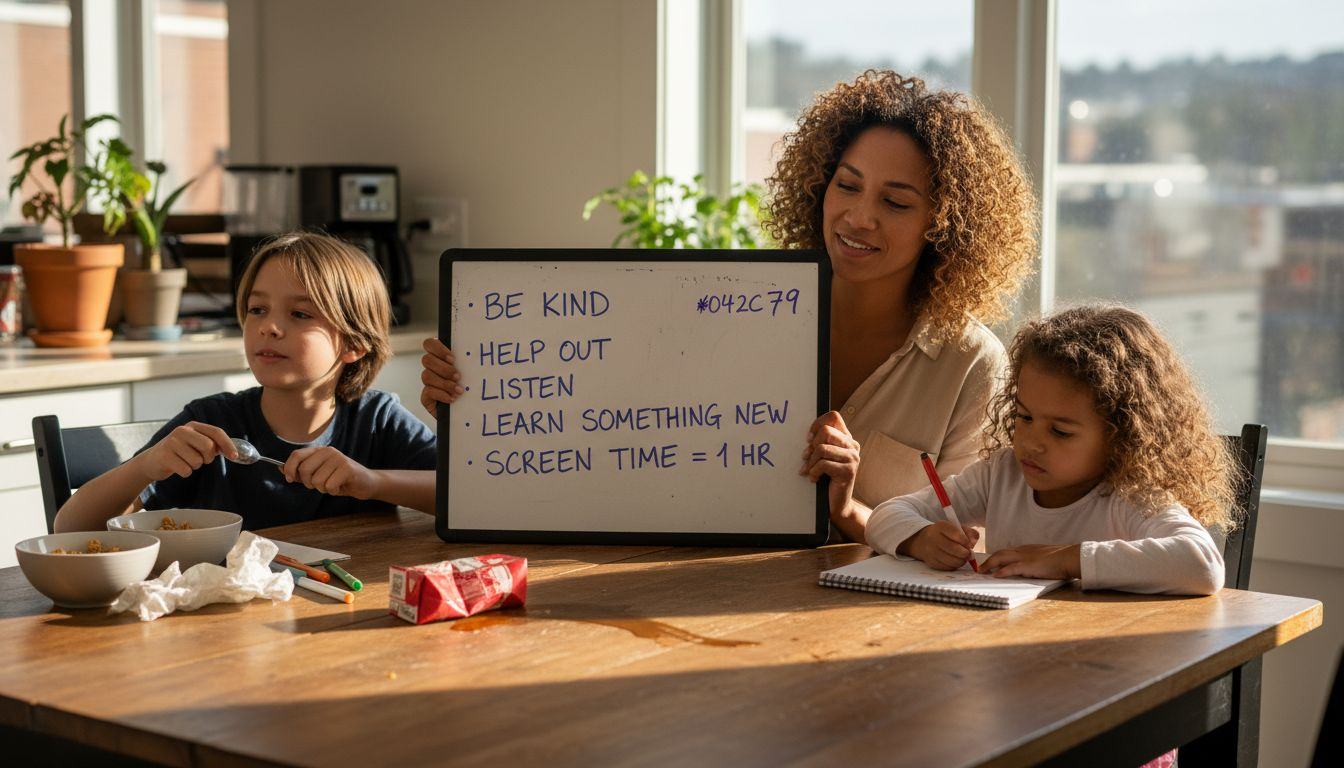
Pro tip: Review and adjust your family boundaries every few months, as children grow and their understanding of cooperation evolves.
Step 3: Teach Respectful Communication Skills
Teaching respectful communication is crucial for transforming sibling conflicts into opportunities for connection and understanding. Effective communication strategies help siblings navigate emotional interactions by providing them with practical tools for expressing themselves constructively.
Start by modeling calm and empathetic language in your own interactions. Encourage your children to use ‘I’ statements that express their feelings without blaming or attacking. For example, teach them to say ‘I feel frustrated when you take my toys without asking’ instead of ‘You always steal my stuff.’ This approach helps children articulate their emotions while maintaining respect. Create opportunities for active listening by teaching your children to hear each other out without interrupting, and to acknowledge the other person’s feelings before responding.
Role playing can be an excellent method for practicing these communication skills. Set up scenarios where siblings can take turns expressing their feelings and responding with empathy. Reinforce positive communication by acknowledging and praising moments when they successfully use these skills. Remember that learning respectful communication is a gradual process that requires patience and consistent guidance.
Pro tip: Practice communication skills during calm moments, not just during conflicts, to help children internalize these strategies more effectively.
Step 4: Implement Positive Conflict Resolution Tools
Positive conflict resolution requires strategic tools that transform sibling disagreements into learning opportunities. Brief parenting interventions can improve sibling relationships by teaching emotional regulation and cooperative problem solving.
Begin by introducing a structured problem solving framework your children can use independently. This might include steps like taking turns speaking, listening without interrupting, identifying the core issue, and brainstorming mutually acceptable solutions. Teach them to use calm voices and avoid blame language. For instance, instead of saying ‘You always get your way,’ encourage phrases like ‘I feel upset and want to find a solution that works for both of us.’
Encourage emotional regulation by helping your children recognize and name their feelings before attempting to resolve conflicts. Practice deep breathing techniques together, and create a ‘calm down corner’ where siblings can retreat when emotions run high. Demonstrate how to take a pause and return to the conversation more constructively. Consistently reinforce that the goal is not winning an argument, but understanding each other and finding collaborative solutions.
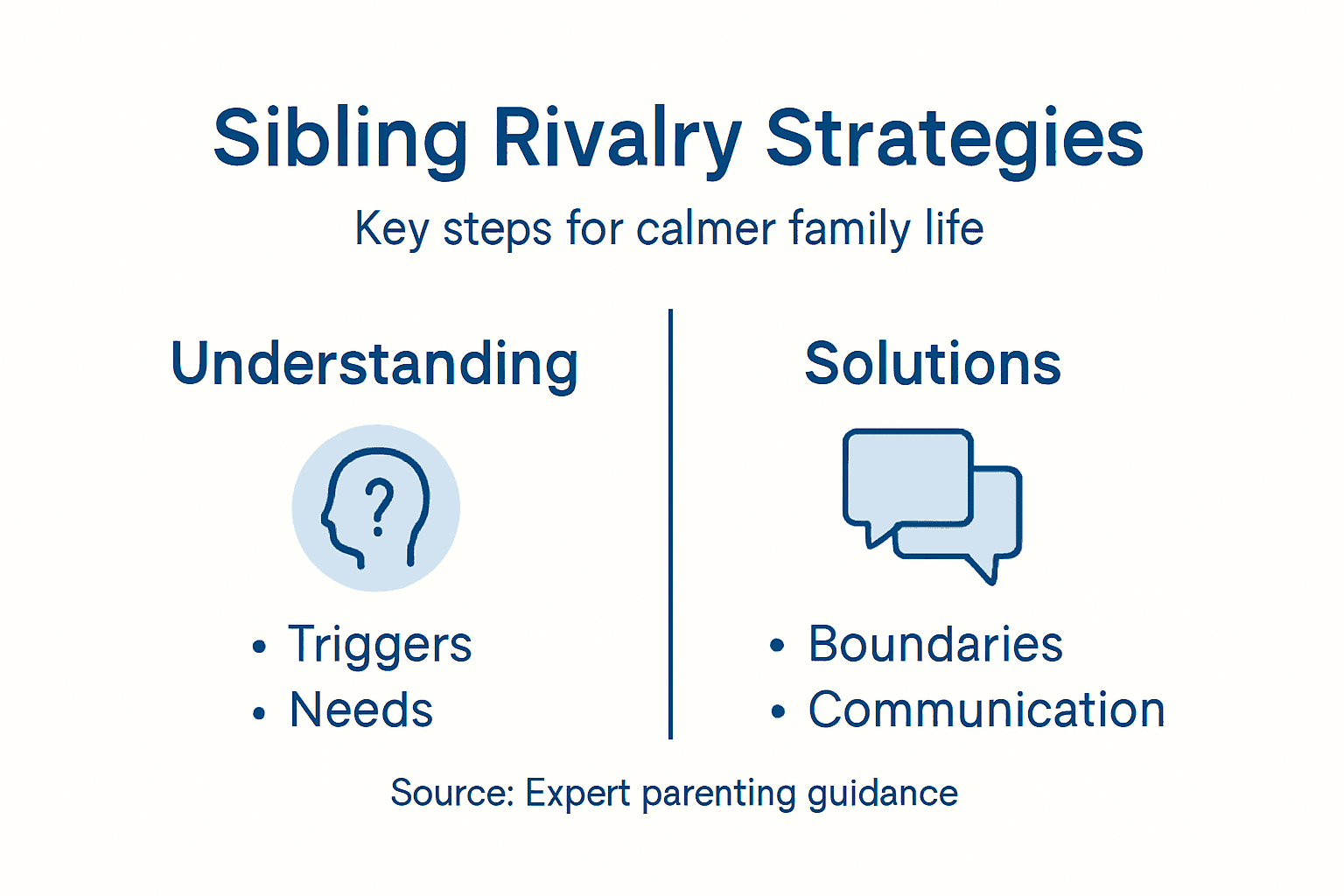
Pro tip: Create a family conflict resolution chart with visual steps that children can reference during disagreements to help them navigate emotional challenges independently.
Step 5: Monitor Progress and Reinforce Growth
Tracking your children’s sibling relationship development requires consistent and compassionate observation. Authoritative parenting influences sibling conflict dynamics by creating opportunities for positive interaction and emotional growth.
Establish a regular check in process where you discuss sibling interactions openly and constructively. This might involve weekly family meetings where each child can share their feelings about their relationship with their siblings. Create a safe space for honest communication without judgment. Pay attention to both verbal and nonverbal cues that indicate improvements or ongoing challenges. Look for signs of increased empathy, willingness to compromise, and moments of spontaneous kindness between siblings.
Remember that progress is not linear. Some weeks will show significant improvement while others might feel like regression. Celebrate small victories and remain patient. Use specific positive reinforcement when you notice siblings handling conflicts more maturely. For example, acknowledge when they use respectful communication or work together to solve a problem. This approach encourages continued growth and helps children recognize their own emotional development.
Pro tip: Keep a private journal documenting sibling interaction improvements to help you track long term progress and recognize subtle positive changes.
To help you track progress in sibling relationship improvement, consider these key indicators:
| Progress Indicator | What to Observe | Example Outcome |
|---|---|---|
| Empathetic Behavior | Spontaneous kindness or concern | Sharing toys without prompting |
| Respectful Disagreement | Calm conflict resolution | Using ‘I’ statements during spats |
| Collaborative Play | Joint problem-solving or games | Cooperative building or teamwork |
| Independent Resolution | Solving issues with minimal help | Siblings negotiate without parent |
Strengthen Your Family Bonds with Expert Support
Managing sibling rivalry is a challenging journey that requires understanding conflict triggers, setting clear boundaries, and fostering respectful communication as outlined in the article. If you find yourself overwhelmed by constant disputes, emotional stress, or struggling to implement positive conflict resolution, you are not alone. These pain points can impact your family’s peace and your children’s emotional growth.
At Mastering Conflict, we specialize in clinical mental health services and personalized coaching programs designed to help families like yours navigate these exact challenges. Our expert-led anger management classes, family counseling sessions, and communication skill workshops provide practical tools to transform sibling rivalry into opportunities for connection and empathy.

Take the first step toward a calmer home environment and healthier sibling relationships. Visit Mastering Conflict today to explore how professional guidance from Dr. Carlos Todd and his team can empower your family with lasting conflict resolution strategies. Don’t wait for tension to escalate. Act now to build a foundation of respect and harmony among your children.
Frequently Asked Questions
How can I assess the triggers of sibling rivalry?
To assess the triggers of sibling rivalry, observe your children’s interactions to identify patterns and specific situations that lead to conflicts. Keep a brief journal noting the date, trigger events, and emotional responses to reveal underlying issues within a few weeks.
What strategies can help reduce competition among siblings?
To reduce competition among siblings, rotate one-on-one time with each child to ensure they feel equally valued. By scheduling dedicated time within each week for individual attention, you can help each child feel acknowledged and reduce feelings of rivalry.
How do I establish clear boundaries for my children’s behavior?
To establish clear boundaries, involve your children in creating family guidelines about sharing, personal space, and respectful communication. Review these rules regularly, and apply them consistently to avoid perceptions of favoritism, ensuring that everyone understands and follows them.
What are effective communication skills to teach siblings?
Teach siblings to use ‘I’ statements to express their feelings respectfully, such as saying ‘I feel sad when you take my toys without asking.’ Model calm communication and practice active listening, which can help them resolve conflicts more constructively over time.
How can I implement positive conflict resolution tools with my children?
To implement positive conflict resolution tools, introduce a simple problem-solving framework involving steps like taking turns speaking and brainstorming solutions together. Encourage them to use this method during disagreements and practice emotional regulation techniques to handle conflicts calmly.
How should I monitor and reinforce my children’s progress in their relationship?
To monitor your children’s progress, hold weekly family check-ins where they can share their feelings about their relationships. Recognize and celebrate small victories, such as empathetic behavior and respectful disagreements, to encourage continued growth in their relationship.