Conflict Management Training Courses: Skills for Real Life

Over eighty percent of American professionals encounter workplace conflicts each year, yet few feel equipped to handle them with confidence. Understanding and resolving disagreements effectively matters for anyone aiming to thrive in both personal and professional life. This guide unpacks how conflict management training courses can empower American individuals with proven skills, practical tools, and real-world strategies that help transform potential tensions into opportunities for growth.
Table of Contents
- Defining Conflict Management Training Courses
- Types of Conflict Management Programs Offered
- Essential Skills Taught in Training
- Practical Applications in Personal and Work Life
- Risks, Limitations, and Common Pitfalls
Key Takeaways
| Point | Details |
|---|---|
| Conflict Management Training Courses Focus on Essential Skills | These courses teach interpersonal skills, such as communication and emotional intelligence, to effectively resolve conflicts in various contexts. |
| Diverse Learning Formats Available | Online courses and in-person workshops cater to different learning preferences and offer various benefits for skill development. |
| Practical Applications Extend to Personal and Work Life | Mastering conflict management fosters healthier relationships and improves team dynamics in professional settings. |
| Challenges Exist in Training Implementation | Participants should be aware of limitations and adapt learned strategies to real-world complexities for successful conflict resolution. |
Defining Conflict Management Training Courses
Conflict management training courses represent strategic educational programs designed to equip individuals with essential interpersonal skills for navigating complex human interactions. These specialized courses focus on teaching participants how to identify, understand, and effectively resolve conflicts across various personal and professional environments. Conflict management involves identifying and handling disputes fairly and efficiently to minimize negative impacts and achieve positive outcomes.
Typically, these training courses cover a comprehensive range of critical skills including communication techniques, emotional intelligence, negotiation strategies, and active listening. Participants learn to recognize underlying emotional triggers, understand different conflict styles, and develop pragmatic approaches for de-escalating tense situations. The goal is not just conflict resolution, but transforming potential confrontations into opportunities for mutual understanding and collaborative problem solving.
Most conflict management training programs are structured to address multiple contexts – from workplace dynamics to personal relationships. These courses teach strategies to resolve disputes and prioritize positive results through creative thinking and advanced interpersonal techniques. Participants often engage in role-playing exercises, case study analyses, and interactive workshops that simulate real-world scenarios, allowing them to practice newly learned skills in a supportive environment.
Pro Tip – Skill Development: Practice active listening and empathy in everyday conversations to gradually build your conflict management skills without formal training. Start by consciously focusing on understanding others’ perspectives before formulating your response.
Types of Conflict Management Programs Offered
Conflict management training programs come in diverse formats, catering to different learning styles and professional needs. Online courses provide strategic approaches to identifying early conflict signs and teaching participants effective resolution techniques across various personal and professional contexts. These digital platforms offer flexibility, allowing individuals to learn at their own pace and convenience.
Traditional in-person programs remain highly effective, featuring immersive workshops, interactive seminars, and hands-on training sessions. Comprehensive conflict management courses often include role-playing scenarios, group discussions, and expert-led instruction that simulate real-world confrontational situations. These programs provide hands-on learning and expert guidance designed to help participants grow in their conflict resolution capabilities.
Specialized conflict management programs target specific environments and professional domains. Some key program types include:
- Workplace conflict resolution training
- Corporate leadership communication workshops
- Healthcare professional conflict management
- Educational institution mediation programs
- Family and relationship conflict navigation courses
These targeted programs recognize that conflict dynamics vary significantly across different contexts, requiring nuanced approaches and specialized skill sets for effective resolution.
Here’s a comparison of conflict management training delivery methods and their unique benefits:
| Training Format | Flexibility Level | Interaction Style | Ideal For |
|---|---|---|---|
| Online Courses | High | Self-paced, remote | Busy professionals seeking access |
| In-Person Workshops | Moderate | Hands-on, group-based | Teams needing practical experience |
| Specialized Programs | Variable | Context-specific cases | Roles with unique conflict needs |
Pro Tip – Program Selection: Research multiple conflict management programs and choose one that offers practical, scenario-based learning matching your specific professional or personal development goals.
Essential Skills Taught in Training
Conflict resolution training programs systematically develop critical interpersonal skills that enable individuals to navigate complex human interactions with confidence and empathy. These comprehensive courses focus on transforming potential confrontations into opportunities for mutual understanding, teaching participants how to recognize, analyze, and effectively address conflicts across various personal and professional contexts.
The core curriculum typically encompasses a diverse range of essential skills, including communication strategies, emotional intelligence, and advanced problem-solving techniques. Conflict resolution courses delve deep into understanding root causes of conflicts, exploring power dynamics, and developing nuanced negotiation techniques. Participants learn to analyze complex interpersonal situations, recognize underlying emotional triggers, and develop strategic approaches to de-escalating tension.
Key skills taught in conflict management training programs often include:
- Active listening techniques
- Emotional regulation
- Non-verbal communication interpretation
- Empathy development
- Strategic problem-solving
- Mediation and negotiation strategies
- Professional communication under pressure
- Conflict style recognition
- Constructive feedback delivery
These skills are designed to be universally applicable, empowering individuals to handle conflicts more effectively in workplace environments, personal relationships, and community interactions. The goal is not just to resolve conflicts, but to transform them into opportunities for growth, understanding, and collaborative problem-solving.
Pro Tip – Skill Practice: Regularly practice active listening and emotional self-awareness in daily interactions to gradually internalize conflict management skills without formal training.
Practical Applications in Personal and Work Life
Effective conflict management skills are essential for navigating complex human interactions in both personal and professional environments, transforming potentially destructive disagreements into opportunities for understanding and growth. These skills enable individuals to approach challenging situations with emotional intelligence, strategic communication, and a collaborative mindset.

In workplace settings, conflict management techniques prove critical for maintaining productive team dynamics, resolving interpersonal tensions, and creating collaborative professional environments. Managers and employees who understand conflict resolution can address workplace challenges more effectively, reducing stress, improving communication, and preventing minor disagreements from escalating into significant organizational disruptions.
Conflict management training also plays a crucial role in educational settings, preparing students, teachers, and parents to navigate daily challenges. The skills learned extend far beyond immediate interactions, helping participants develop long-term strategies for:
- Maintaining healthy relationships
- Reducing emotional reactivity
- Developing empathy and understanding
- Creating constructive dialogue
- Promoting mutual respect
- Solving problems collaboratively
- Managing emotional triggers
Personal relationships benefit significantly from these skills, as individuals learn to communicate more openly, listen more deeply, and approach disagreements with curiosity and compassion rather than defensiveness. The ability to manage conflicts effectively can transform potential relationship breakdowns into moments of deeper connection and mutual understanding.
Pro Tip – Daily Practice: Choose one conflict management technique each week and intentionally practice it in your personal and professional interactions to gradually build your emotional intelligence and communication skills.
Risks, Limitations, and Common Pitfalls
Conflict management training presents complex challenges in translating theoretical models into practical real-world applications, requiring participants to recognize the inherent limitations of structured learning approaches. While these programs offer valuable insights, they cannot entirely predict the nuanced emotional landscapes of human interactions.
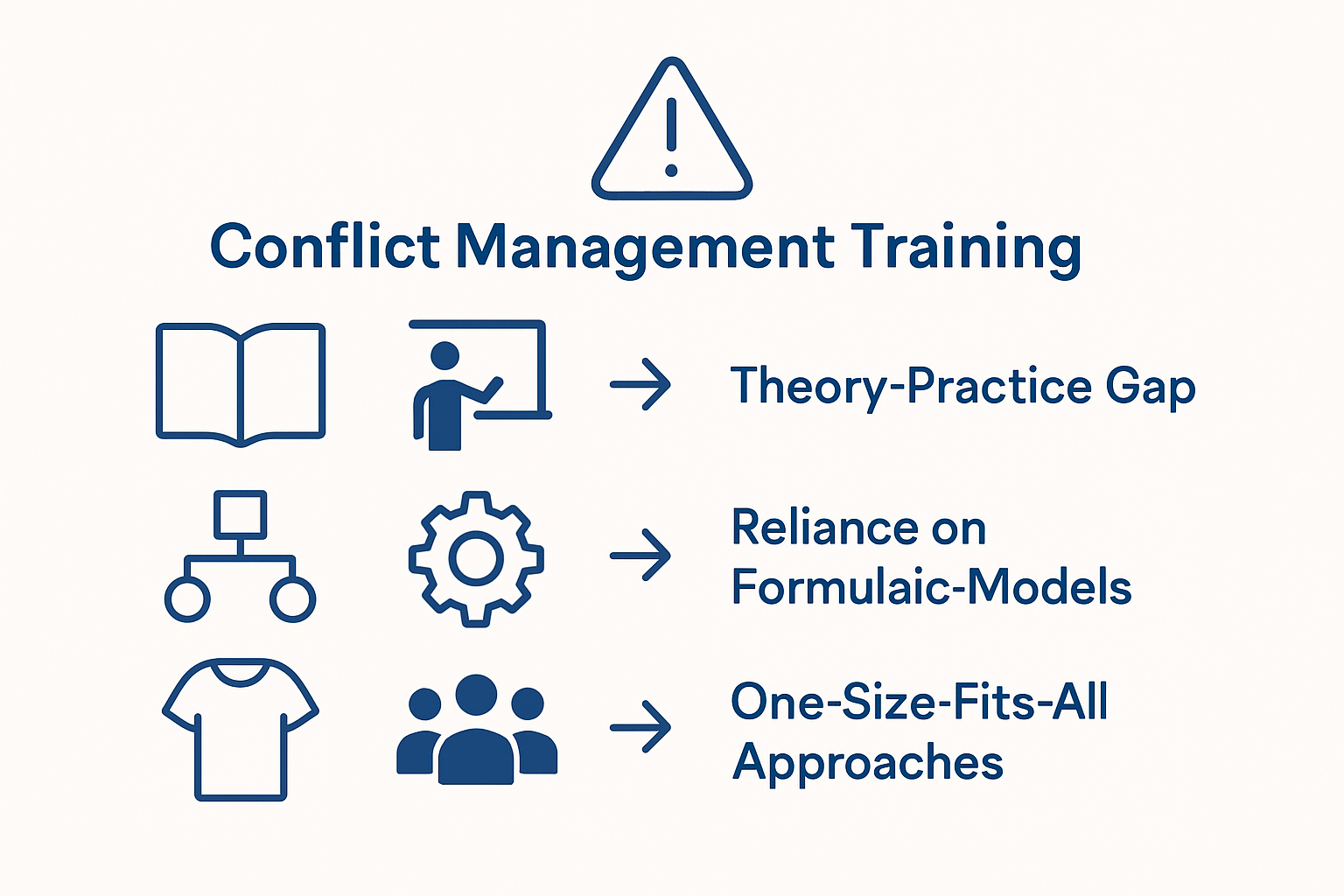
Key limitations in conflict management training often emerge from the disconnect between simulated scenarios and authentic interpersonal dynamics. Theoretical frameworks may struggle to capture the spontaneity and emotional complexity of genuine conflicts. Research highlights significant challenges in aligning theoretical models with actual human behavior during social interactions, underscoring the need for flexible, adaptive learning strategies.
Common pitfalls in conflict management training include:
- Over-reliance on prescriptive techniques
- Inadequate recognition of individual emotional contexts
- Insufficient practice with real-world complexity
- Failure to account for cultural and personal variations
- Rigid application of learned strategies
- Underestimating emotional intelligence requirements
- Limited understanding of power dynamics
Participants must approach conflict management training with a critical mindset, understanding that these programs provide foundational tools rather than universal solutions. Successful implementation requires ongoing practice, self-reflection, and a willingness to adapt learned techniques to specific, unique interpersonal situations.
The following table summarizes typical challenges and adaptive solutions in conflict management training:
| Common Challenge | Impact on Learning | Adaptive Solution |
|---|---|---|
| Over-reliance on theory | Skills difficult to apply | Integrate real-life practice regularly |
| Ignoring cultural differences | Misunderstood interactions | Customize approaches to participant needs |
| Limited emotional intelligence | Incomplete conflict handling | Focus on self-awareness and empathy |
Pro Tip – Adaptive Learning: Treat conflict management training as a continuous learning process, regularly reassessing and adjusting your approach based on actual interaction experiences.
Build Real-Life Conflict Management Skills with Expert Support
Navigating the complexities of conflict requires more than just theory. This article highlights the challenges of applying conflict management training in authentic situations, emphasizing skills like active listening, emotional regulation, and empathy. Many people struggle with rigid techniques and miss the deeper emotional context involved in disputes. If you find yourself overwhelmed by workplace tensions or personal conflicts, seeking professional guidance tailored to your unique needs can make all the difference.
At Mastering Conflict, we offer personalized mental health and conflict resolution services that empower you to transform difficult interactions into opportunities for growth. Whether you need anger management classes, couples therapy, or individualized conflict coaching, our evidence-based clinical interventions focus on practical skills that work in real life. Don’t wait for tensions to escalate when you can start building resilience today. Visit Mastering Conflict now and take the first step towards mastering your personal and professional relationships.
Frequently Asked Questions
What is conflict management training?
Conflict management training is an educational program designed to help individuals develop skills to identify, understand, and resolve conflicts effectively in personal and professional environments.
What skills are taught in conflict management courses?
Conflict management courses teach essential skills such as active listening, emotional regulation, negotiation strategies, empathy development, and techniques for delivering constructive feedback, among others.
What types of formats are available for conflict management training?
Conflict management training is available in various formats, including online courses for flexible learning, in-person workshops for hands-on experience, and specialized programs tailored to specific environments like workplaces or educational settings.
How can conflict management skills be applied in real life?
Conflict management skills can be applied in various scenarios, including workplace interactions, personal relationships, and community engagements, by promoting healthy communication, understanding, and collaborative problem-solving.
Recommended
- Mastering Empathy in Conflict Resolution: A Step-by-Step Guide – Mastering Conflict
- Master Conflict Resolution Skills for Real-Life Success – Mastering Conflict
- Effective Conflict Resolution Steps for Couples, Families, and Professionals 2025 – Mastering Conflict
- 7 Reasons Anger and Conflict Still Exist with in the Workplace
- Effective Training for Food Managers: Boost Your Skills – Probe IT