
Parenting Through Divorce: Practical Strategies for Success

Over half of American children will experience their parents’ divorce before age eighteen. This reality shapes countless families and demands thoughtful strategies to ease the transition for kids. Strong communication and consistent routines can make a world of difference, helping children feel stable even as family life changes. These practical steps can empower any American parent to create a nurturing environment and guide their children through one of life’s most challenging moments.
Table of Contents
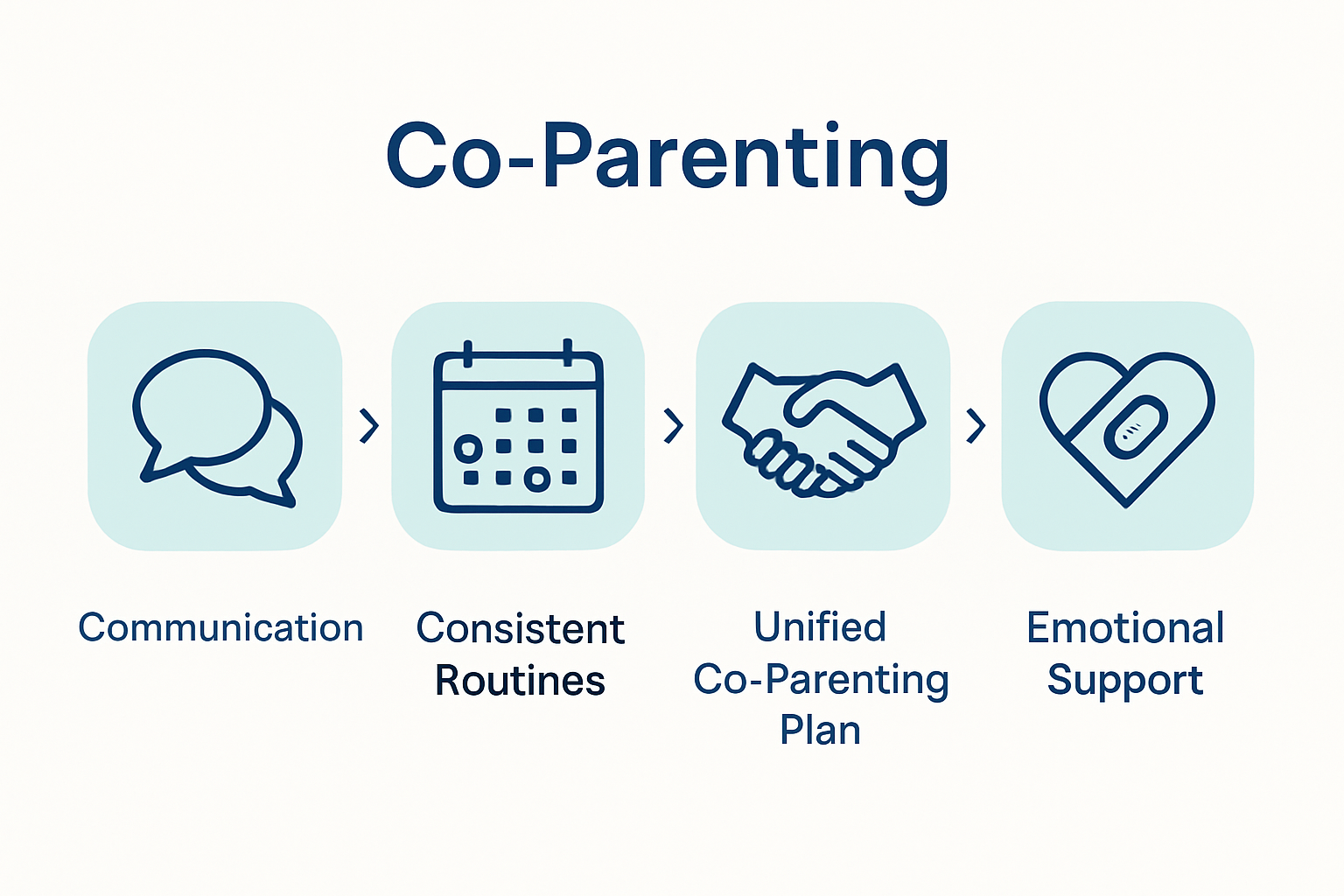
- Step 1: Establish Open and Age-Appropriate Communication
- Step 2: Create Consistent Routines Across Households
- Step 3: Develop a Unified Co-Parenting Plan
- Step 4: Address Emotional and Behavioral Needs
- Step 5: Monitor Progress and Adjust Strategies
Quick Summary
| Important Insight | Explanation |
|---|---|
| 1. Use Age-Appropriate Language | Tailor your conversations to match your children’s age and maturity for effective communication during the divorce. |
| 2. Maintain Consistent Routines | Collaborate with your co-parent to establish predictable routines across households, promoting stability for your children. |
| 3. Develop a Unified Co-Parenting Plan | Create a comprehensive co-parenting plan that outlines decision-making and responsibilities to provide your children with a sense of security. |
| 4. Monitor Emotional and Behavioral Needs | Pay attention to your children’s emotional state and behavioral changes, providing support as needed during the transition. |
| 5. Regularly Review Strategies | Schedule consistent check-ins with your co-parent to assess the effectiveness of your parenting strategies and make necessary adjustments. |
Step 1: Establish Open and Age-Appropriate Communication
Communicating effectively with your children during divorce requires strategic and compassionate approaches that respect their emotional development and comprehension levels. Your goal is to create a safe emotional environment where your children feel heard, supported, and secure during this significant family transition.
Start by choosing language that matches your children’s age and maturity. For younger children, use simple, concrete explanations without overwhelming details. Preschoolers might need brief statements like “Mom and Dad will live in different houses, but we both still love you.” Older children and teenagers can handle more nuanced conversations about relationship changes, emphasizing that the divorce is not their fault. Child psychology research consistently demonstrates that direct, honest communication reduces anxiety and helps children process complex family dynamics.
One critical strategy is maintaining emotional neutrality when discussing divorce. Avoid blaming language, negative comments about your former partner, or attempting to draw your children into adult conflicts. Your communication should focus on reassurance, stability, and continued parental love. Family therapy experts recommend creating predictable communication routines where children know they can ask questions and express their feelings without judgment. This approach helps children feel emotionally safe and supported during a challenging life transition.
Remember that communication is an ongoing process. Be prepared to revisit conversations, answer unexpected questions, and provide consistent emotional support as your children process the changes in their family structure.
Step 2: Create Consistent Routines Across Households
Establishing consistent routines across two different households is crucial for helping children feel secure and emotionally stable during and after divorce. Your primary goal is to create a sense of predictability and continuity that helps children adapt to their new family dynamic.

Comprehensive research on family dynamics shows that family routines significantly impact children’s behavioral and emotional well-being. Start by collaborating with your co-parent to develop synchronized schedules for key daily activities. This might include consistent bedtimes, homework routines, meal structures, and communication protocols. Scientific evidence on routine importance demonstrates that maintaining familiar patterns helps children feel safe and reduces stress during challenging transitions.
Practical implementation requires open communication and flexibility. Consider creating a shared digital calendar or communication tool where both parents can track schedules, school events, and important routines. Be willing to make minor adjustments while keeping core elements consistent. This approach shows your children that despite living in separate households, their parents can still work together effectively to support their well-being.
Remember that routines are not about rigid control but about creating a sense of security. Small, predictable moments like a regular weekend video call, consistent rules about screen time, or matching bedtime rituals can provide tremendous emotional comfort for children navigating the complex landscape of divorce.
Step 3: Develop a Unified Co-Parenting Plan
Creating a unified co-parenting plan is essential for providing stability and emotional support for your children during and after divorce. Your goal is to establish a collaborative approach that prioritizes your children’s well-being and minimizes potential conflicts between parents.
Comprehensive research on family dynamics highlights the critical importance of clear communication and consistent parenting strategies across households. Begin by scheduling a formal meeting with your co-parent to discuss key aspects of your children’s lives. This includes educational goals, disciplinary approaches, health care decisions, and emotional support strategies. Practical conflict management techniques can help you navigate potentially challenging conversations with a focus on mutual respect and shared commitment to your children’s needs.
Develop a detailed written agreement that outlines specific protocols for decision making, schedule management, and communication expectations. Include guidelines for handling holidays, birthdays, school events, and unexpected situations. Be prepared to remain flexible while maintaining clear boundaries. This approach demonstrates to your children that despite personal differences, you can work together effectively as co-parents.
Remember that a successful co-parenting plan is a living document. Schedule periodic reviews to assess what is working and make necessary adjustments as your children grow and family dynamics evolve. The most powerful message you can send your children is a united front of love, support, and mutual respect.
Step 4: Address Emotional and Behavioral Needs
Navigating your children’s emotional landscape during divorce requires thoughtful strategies and consistent support. Your goal is to create a safe emotional environment that helps children process their feelings and maintain healthy behavioral patterns.
Research on family dynamics reveals that children’s behavior is deeply influenced by family relationships and emotional cohesiveness. Pay close attention to potential signs of emotional distress such as changes in sleep patterns, school performance, social interactions, or mood swings. Emotional intelligence techniques can help you recognize and respond to your children’s underlying emotional needs more effectively.
Create structured opportunities for emotional expression by establishing regular check-in conversations where your children can share their feelings without judgment. This might involve weekly family meetings, one on one time, or using age appropriate communication tools like journals or art activities. Be prepared to listen more than you speak, validating their emotions while offering consistent reassurance that both parents love them unconditionally.
Remember that healing is not linear. Some days will be harder than others, and your children may experience complex emotions they struggle to articulate. Patience, compassion, and professional support can make a significant difference in helping your family navigate this challenging transition.
Step 5: Monitor Progress and Adjust Strategies
Successful co-parenting is an ongoing journey that requires consistent evaluation and flexibility. Your goal is to create a dynamic approach that adapts to your children’s changing emotional and developmental needs throughout the divorce transition.
Research on family dynamics emphasizes the importance of continuous assessment and adaptation in co-parenting strategies. Schedule quarterly review meetings with your co-parent to discuss your children’s progress, noting changes in behavior, academic performance, social interactions, and emotional well-being. Emotional regulation strategies can help you objectively evaluate and respond to your children’s evolving needs.
Develop a tracking system that allows both parents to document observations, concerns, and positive developments. This might include shared digital journals, monthly summary reports, or structured check-in conversations. Be open to modifying your co-parenting plan based on your children’s feedback and observable changes. Pay attention to their verbal and non-verbal cues, and be willing to seek professional guidance if you notice persistent challenges.
Remember that successful adaptation is not about perfection but about demonstrating commitment, flexibility, and unwavering love for your children during this complex transition.
Strengthen Your Co-Parenting Journey with Expert Support
Divorce brings complex challenges like maintaining open communication, creating consistent routines, and managing emotional needs for your children. These goals can feel overwhelming when navigating changing family dynamics. You are not alone in this process. Mastering conflict and emotional upheaval requires professional guidance and compassionate strategies designed specifically for families facing divorce.

Take control now by exploring personalized conflict resolution and family counseling services at Mastering Conflict. Our evidence-based approach, led by Dr. Carlos Todd, supports your efforts to develop a unified co-parenting plan and foster a nurturing environment for your children. Visit Mastering Conflict today to schedule online therapy or find resources tailored to help you and your family move forward with strength, stability, and hope.
Frequently Asked Questions
How can I communicate effectively with my children during divorce?
To communicate effectively, use age-appropriate language that matches your children’s maturity. Begin by offering simple explanations, then encourage open conversations to help them express their feelings. Set up regular check-in times to discuss their emotions and reassure them of your continued love.
What routines should I establish between two households after divorce?
Create consistent daily routines across both households to help your children feel secure. This includes synchronized schedules for bedtimes, meals, and homework. Use a shared calendar to track important activities and maintain familiar patterns that provide emotional comfort.
How do I create a co-parenting plan that works?
Develop a co-parenting plan focused on your children’s needs, outlining decision-making processes and schedule management. Meet with your co-parent regularly to discuss important aspects of your children’s lives, and adjust the plan as needed based on their feedback and evolving needs.
What signs of emotional distress should I look for in my children?
Watch for changes in sleep patterns, academic performance, social interactions, or mood swings that may indicate emotional distress. Establish opportunities for emotional expression, such as weekly family meetings or one-on-one time, to discuss their feelings without judgment.
How can I monitor my children’s emotional well-being during the divorce?
Regularly evaluate your children’s emotional state by scheduling quarterly meetings with your co-parent to discuss their progress. Develop a system to document observations and concerns, and be open to adjusting your co-parenting strategies based on their evolving needs.
Recommended
- How to Deal With Parenting Conflicts
- How to Deal With Parenting Conflicts
- Parenting Conflict Resolution: Steps for Healthier Family Bonds – Mastering Conflict
- Navigating Family Conflict for Positive Relationships – Mastering Conflict
- Master the Parental Self-Awareness Process for Growth – Wisdom
- Positive Eltern-Kind Bindung: Der komplette Ratgeber – Edory AI – Edukative Kindergeschichten